
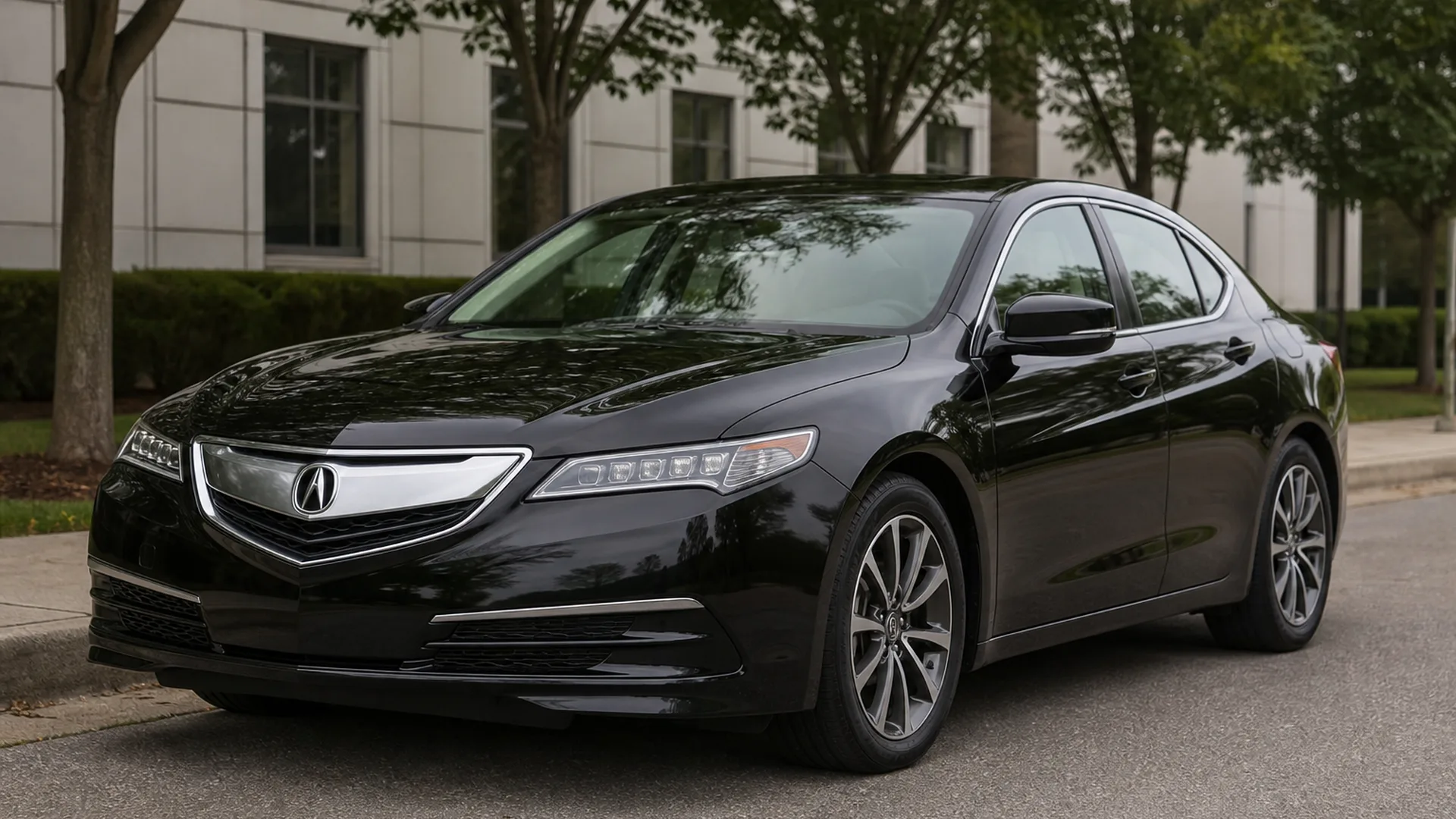
The Acura TLX landed in showrooms back in 2015 as Acura’s answer to compact luxury sedans like the BMW 3 Series and Audi A4. On paper, it looked great: sharp styling, a choice between a fuel-efficient four-cylinder or a muscular V6, and tech features that felt fresh. Fast-forward a few years, though, and the picture got messier. Some TLX model years earned reputations for transmission nightmares, engine recalls, and electrical gremlins that left owners frustrated. If you’re shopping for a used TLX, knowing which years to skip can save you thousands in repair bills and a lot of headaches.
How we rated the best and worst Acura TLX years
We pulled data from multiple trusted sources to build this picture. That includes NHTSA complaint databases, where owners file official grievances about safety and reliability issues. We cross-referenced those with Acura’s own recall bulletins and technical service bulletins (TSBs), which detail known fixes. Consumer Reports reliability scores, CarComplaints user submissions, and owner forums like AcuraZine gave us real-world context—what actually breaks, when it breaks, and how much it costs to fix.
We also tracked class-action lawsuits, particularly the one filed over the troublesome 9-speed transmission, and verified which years fell under critical recalls like the connecting rod bearing defect. By comparing complaint volumes year-over-year and contrasting the four-cylinder DCT models against the V6 9-speed variants, we identified clear patterns in which TLXs hold up and which ones crack under pressure.
Most Common Acura TLX Problems
1. Transmission Troubles
If there’s one issue that defines early Acura TLX ownership, it’s the 9-speed automatic transmission fitted to 2015–2016 V6 models. Owners describe shifts so rough they thought someone rear-ended them at a stoplight. The ZF9 transmission hunts for gears, lurches between ratios, and sometimes refuses to engage Park.
Acura rolled out software patches and even issued a recall for the Park malfunction, but many drivers never got a real fix. Out of 174 complaints logged for the 2015 Acura TLX, 127 were transmission-related. A class-action lawsuit followed, and some units failed outright before hitting 40,000 miles. The four-cylinder TLX uses an 8-speed dual-clutch setup that’s been far more dependable, so if you’re looking at a first-gen TLX, the I4 is the safer bet.
2. Engine Failures and Stalling
Most Acura TLX engines run fine, but there’s a big exception: Acura recalled 2015–2020 V6 models for a crankshaft manufacturing defect that can destroy connecting rod bearings. When that bearing wears out, the engine can seize mid-drive—a dangerous failure that Honda logged over 1,400 warranty claims for. The recall offers a fix (sometimes a full engine replacement), but any used V6 TLX from those years needs proof that recall was completed. Beyond that, some early TLXs had issues with the Auto Idle Stop system failing to restart the engine, requiring frantic button-mashing to get moving again. Cleaning or replacing the throttle body usually cleared up erratic idle problems, but these glitches added up to a less-than-confident driving experience.
3. Electrical and Infotainment Bugs
Early Acura TLX models packed advanced tech, but that tech didn’t always work. Screens would black out, backup cameras froze mid-reverse, and Bluetooth connections dropped constantly. One 2018 owner’s AcuraLink system kept dialing 911 on its own. The 2015 model year alone generated 60+ NHTSA electrical complaints, from dead batteries to dashboard warnings that lit up for no reason. Acura pushed out software updates, but problems like adaptive cruise control errors and parking sensor false alarms persisted, especially in 2015–2017 builds.
4. Brake and Steering Concerns
The 2015 TLX saw multiple brake complaints: warped rotors that pulsed under braking, electronic parking brakes that malfunctioned, and even a recall for brake control software that could cause sudden pressure loss. Some 2016 owners dealt with ABS failures around 30,000 miles. Steering posed an even scarier risk—a few 2015–2016 and 2018 TLXs lost power steering assist completely while driving, traced to defective electric power steering units that cost roughly $5,500 to replace. These incidents were rare, but one resulted in a crash.
5. Suspension Clunks and AC Hiccups
The TLX’s suspension mostly holds up, but owners have reported front-end clunking over bumps, typically fixed by replacing strut mounts or sway bar links (Acura issued TSB 15-006 for this). Control arm bushings can wear early, causing popping noises past 50,000 miles. Air conditioning problems crop up occasionally—weak cooling, early compressor failures, or musty odors from the evaporator. These aren’t widespread, but they’re worth checking during a test drive.
The Worst Acura TLX Years You Should Skip
2015 – The Debut Disaster
Steer clear of the 2015 Acura TLX. This first model year earned a “Beware of the Clunker” label for good reason. The 9-speed transmission’s violent jerking hit its peak here, with over 50 detailed owner reports of gear changes so harsh they felt dangerous. Electrical gremlins ran rampant—dead batteries, random dashboard warnings, and infotainment crashes.
Brakes had warped rotors and recall-worthy software bugs. Steering failures, though rare, did happen, including at least two cases where the wheel locked up mid-drive. Consumer Reports gave the 2015 TLX a 1/5 owner satisfaction score, and it was included in major recalls for the transmission Park issue and the V6 rod bearing defect. If you see a 2015Acura TLX on a lot, walk away.
2016 – Better, But Still Risky
Acura updated transmission tuning for 2016, which helped, but complaints didn’t disappear. The V6’s 9-speed still hesitated and jerked, and a few 2016 owners faced early transmission replacements. This year also falls under the connecting rod bearing recall, so engine seizure risk is real if that service wasn’t done. Electrical bugs lingered, though brake problems decreased. Consumer Reports actually rated the 2016 worse than the 2015 in reliability (1/5), likely because the combination of unresolved drivetrain issues and recall exposure looked grim. Unless you’re getting a screaming deal and proof of all recall work, skip the 2016 as well.
2018 – Steering Scares and Software Glitches
The 2018 refresh brought sharper styling and a new A-Spec trim, but it also introduced a new problem: electric power steering failures. “Electronic Power Steering Failed” became the top complaint for 2018 on CarComplaints, with some units losing assist around 25,000 miles. Repairs weren’t cheap.
The car’s AcuraLink system also had a bizarre bug where it would call 911 by itself. Add in the fact that 2018 V6 models are part of the engine recall, and you’ve got a year that looks better than 2015 but still carries serious risk. Total complaint volume was low, but the severity of those complaints—steering failure and potential engine seizure—makes 2018 one to avoid unless you can verify recall completion and a clean service history.
2021 – Launch-Year Quirks (Use Caution)
The redesigned second-gen TLX arrived in 2021 with a new platform, new engines, and a new 10-speed transmission. It’s nowhere near as problematic as 2015, but first-year models did have some teething issues: windshield stress cracks, backup camera failures, and a couple of transmission failures at low mileage. Acura fixed most of these under warranty, and 2022–2023 models saw those problems dry up. If you’re eyeing a second-gen TLX, the 2022 or 2023 is the smarter pick.
The Best Acura TLX Years to Buy
2017 – First-Gen Sweet Spot
If you want a first-generation TLX, the 2017 is your best bet. By this point, Acura had sorted out most of the transmission chaos. Complaint volume dropped to around five total issues for the year. No widespread electronics bugs, no steering failures, and the 9-speed felt significantly smoother. The 2017 is included in the rod bearing recall if it’s a V6, so check that the service was done, but otherwise this year is stable and refined. Consumer Reports owner satisfaction ticked up to 2/5, and many owners report trouble-free driving well past 50,000 miles.
2019–2020 – Peak Reliability for Gen One
The last two years of the first-gen TLX are the most dependable of the bunch. By 2019 and 2020, Acura had five years of production experience and had fixed nearly every issue that plagued early models. Complaint counts for these years sit at just two each—a massive drop from 2015’s 180+. Consumer Reports gave the 2019 TLX a 3/5 satisfaction score, the highest of that generation. The transmission (both ZF9 and DCT) ran smoothly, engines were solid, and electronics stabilized. These models also came with updated infotainment, including Apple CarPlay. If you’re shopping used, a 2019 or 2020 TLX offers the best combination of features, refinement, and reliability in the first generation.
2022–2023 – Second-Gen at Its Best
The second-gen TLX ditched the troublesome 9-speed for a new 10-speed automatic and a 2.0L turbo four-cylinder (or a twin-turbo V6 in Type S trims). Early 2021 models had minor build bugs, but by 2022 and 2023, Acura had ironed those out. Complaint volumes are near zero, reliability scores improved, and the driving experience got sharper. If you have the budget for a newer car, a 2022 or 2023 TLX is the safest, most modern choice in the lineup.
Better Alternatives If the Acura TLX Isn’t Your Thing
Lexus IS (2014–2016, 2018–2019)
If reliability is your top priority, the Lexus IS is hard to beat. The 2015 model year is especially solid, with Toyota’s proven naturally aspirated V6 and minimal reported problems. Owners routinely push these past 200,000 miles with basic maintenance. The IS doesn’t pack as much tech as the TLX, but the build quality and resale value more than make up for it.
BMW 3 Series (2015–2018, 2020+)
The benchmark sports sedan offers better driving dynamics than the TLX, and later F30 models (2015–2018) have strong reliability once BMW worked out early bugs. The 2016–2017 330i, in particular, earned above-average marks. If you want something newer, the 2020+ G20 generation benefits from updated engines and electronics. Just budget for higher maintenance costs.
Audi A4 (2015–2016, 2018–2020)
The end-of-run B8 Audi A4 (2015–2016) earned 4/5 reliability ratings, and the later B9 generation (2018–2020) fixed early coolant pump and electrical gremlins. The 2018 and 2019 A4 received perfect reliability scores, making them a refined, tech-heavy alternative to the TLX with a surprisingly solid track record.
Infiniti Q50 (2016–2017) and Honda Accord 2.0T Touring (2018–2020)
The Q50 offers a powerful V6 or twin-turbo setup with Nissan’s durable architecture, and the 2016–2017 years ironed out most launch issues. For a budget-friendly pick, the Honda Accord Touring with the 2.0T turbo (same engine as newer TLXs) delivers near-luxury refinement with Honda’s legendary reliability—and no premium badge markup.
Final Takeaway
The Acura TLX can be a solid sedan if you choose the right year. Skip the 2015, 2016, and 2018 models—those years are riddled with transmission, engine, and steering problems that can turn ownership into a nightmare. The 2017, 2019, 2020, and 2022+ models offer much better reliability and fewer headaches.
If you’re shopping for a first-gen TLX, make sure the V6 rod bearing recall was completed, and don’t buy anything without a clean maintenance history. And if the TLX’s troubled track record gives you pause, alternatives like the Lexus IS or a late-model BMW 3 Series can deliver similar features with stronger reputations. Do your homework, verify recalls, and get a pre-purchase inspection—your wallet will thank you later.