
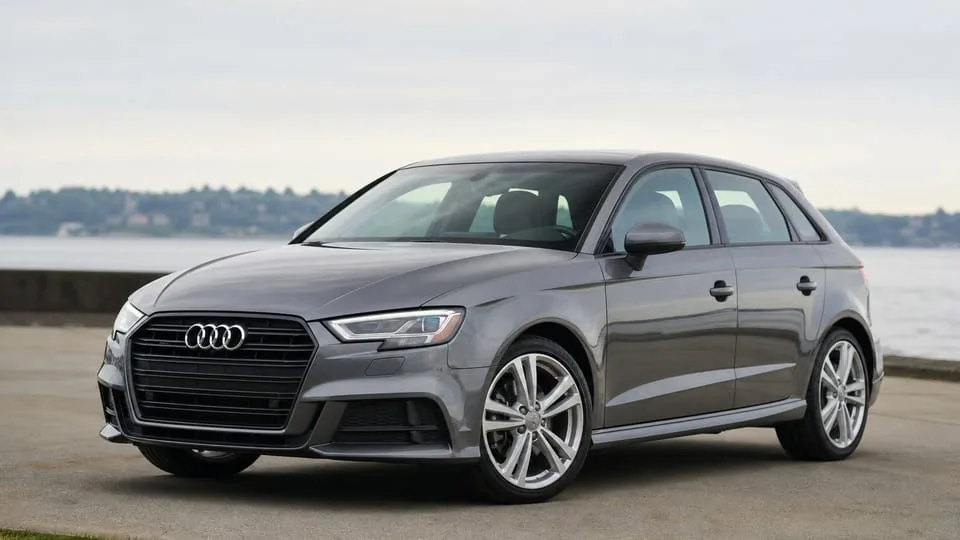
The Audi A3 looks great on paper. You get German engineering, a premium badge, zippy turbocharged engines, and that upscale cabin feel—all in a compact package that won’t break the bank like a full-size luxury sedan. Whether you’re eyeing the punchy 2.0T, fuel-sipping diesel TDI, or even the hot S3 variant, the A3 promises style and performance without the size or price tag of an A4.
But here’s the reality check: not all A3 model years are created equal. Some have earned reputations for disastrous transmission failures, engines that guzzle oil like it’s going out of style, and electrical gremlins that’ll have you second-guessing every dashboard warning light. The worst offenders—2006, 2015, and 2016—can turn your dream of affordable luxury into an expensive nightmare. This guide breaks down exactly which Audi A3 years you should avoid, which ones are rock-solid, and what alternatives might save you thousands in repair bills down the road.
How we rated the best and worst Audi A3 years
We didn’t just skim a few forum threads and call it research. Our team dug through multiple databases to figure out which A3 years consistently let owners down:
Official complaint trackers like the NHTSA database and CarComplaints.com gave us hard numbers on how often things went wrong—and how serious those failures were. We cross-referenced those with CarProblemZoo’s detailed problem reports, which track everything from minor annoyances to catastrophic engine failures.
Then we looked at Audi’s own technical service bulletins and recall campaigns, paying special attention to the airbag sensor fiasco that hit 2015–2017 models and the DSG transmission issues that plagued early cars. We also combed through owner forums where A3 drivers share unfiltered experiences—the kind of real-world feedback that doesn’t make it into glossy brochures.
Finally, we factored in reliability rankings from Consumer Reports, J.D. Power, and UK-based surveys like WhatCar. When multiple independent sources flag the same year for the same problems, that’s when you know there’s a pattern worth avoiding.
Most Common Audi A3 Problems
Before we call out specific bad years, let’s talk about the A3’s common weak spots. Knowing what tends to break helps you spot red flags when shopping used—or decide if you even want to take the risk.
1. Engines That Drink Oil Like Water
The 2.0-liter turbocharged four-cylinder (especially in 2015 models) has a nasty habit of burning through oil. We’re not talking about a quart between changes—some owners report needing top-ups every 1,000 miles or less. Left unchecked, low oil levels can trash piston rings and lead to full engine rebuilds that cost $4,000–$6,000. Performance variants like the S3 and RS3 also show higher oil consumption than you’d expect from a modern engine, so keeping an eye on the dipstick isn’t optional—it’s survival.
Older A3s (2009–2012) faced different engine drama: timing chain tensioner failures. If the tensioner wears out or the chain stretches, you’re looking at catastrophic internal damage. Early warning signs include a rattling noise on cold starts, but by the time you hear it, the damage might already be done.
And then there’s the garden-variety stuff: ignition coil failures causing misfires (common in late-2000s and mid-2010s 2.0Ts), high-pressure fuel pump failures (2006–2008 models), and clogged carbon deposits in the intake manifold that choke power and fuel economy.
2. Transmissions That Forget How to Shift
Audi’s dual-clutch DSG transmission is brilliant when it works—lightning-fast shifts, no torque loss, the whole bit. But when it goes wrong, it goes really wrong. The 2006 A3 (the first U.S.-market year) earned a terrible reputation for DSG failures. Owners reported cars hesitating during acceleration, slipping into neutral randomly, or—most terrifying—stalling mid-intersection when pulling into traffic. The culprit is usually the mechatronic unit, which costs $2,500–$4,000 to replace.
Later DSG-equipped A3s (especially 2015 models) continued the trend with jerky shifts and occasional slipping. Even manual-transmission A3s aren’t immune: high-mileage 8P-generation cars (2006–2013) often develop stiff, grinding shifts thanks to worn clutches and synchromesh rings.
3. Electrical Gremlins and Safety Recalls
Audi packed the A3 with tech, but that complexity comes at a cost. Throttle body sensor faults pop up across multiple years (2006, 2007, 2008, 2010, 2016), causing sudden power loss and check-engine lights. Audi eventually released a wiring harness repair kit, but many older cars still have the original faulty setup.
The most serious electrical issue? The passenger occupant detection system (PODS) in 2015–2016 A3s. This sensor was supposed to detect when someone was sitting in the front passenger seat and activate the airbag accordingly. Instead, it malfunctioned and deactivated airbags even with adults present—a massive safety hazard that triggered recalls. Many owners waited months for replacement sensor mats while driving around with non-functional airbags.
Other electrical headaches include flickering instrument clusters, battery drains, alternator failures, and infotainment systems that freeze or reboot randomly.
4. Suspension Noise and Brake Wear
As A3s age, the front suspension starts making itself heard. Clunking, rattling, or squeaking over bumps usually points to worn bushings, ball joints, or strut mounts. The 2012–2020 A3s are particularly prone to this. It’s not dangerous, but it’s annoying—and replacing all the worn rubber bits can run $800–$1,500 depending on which components need attention.
Brakes are another frequent complaint. Rotors warp, pads wear prematurely, and some owners report grinding noises even with plenty of pad left. Regular inspections help, but expect to replace brake components more often than on, say, a Honda or Toyota.
5. Climate Control and Cooling Hiccups
AC failures aren’t rare on older A3s. Compressors give out, refrigerant leaks spring up, and expansion valves fail, causing whistling noises from the vents. Some 2000s models needed full compressor replacements. On the engine side, thermostats and water pumps can fail and cause overheating—monitor your coolant levels and address leaks right away.
6. Infotainment Bugs
Audi’s MMI system looks slick, but it can be frustratingly glitchy, especially in early years of a new generation. Screens freeze, the pop-up display (in 2015–2016 models) gets stuck, and Bluetooth pairing can be hit-or-miss. Most of these are software issues—a hard reset (hold the volume knob) often fixes a frozen screen—but they’re a constant reminder that high-tech features sometimes mean high-tech headaches.
7. Diesel-Specific Nightmares
If you’re considering a TDI diesel A3 (popular outside the U.S.), brace yourself for additional problems. Diesel particulate filters (DPFs) clog if you don’t do enough highway driving to regenerate them. EGR valves and intake manifolds get choked with carbon. Early 2.0 TDIs (2005–2009) suffered fuel injector failures and even balance shaft/oil pump failures that could destroy the engine if oil pressure dropped.
In fact, a UK reliability survey ranked the 2003–2013 Audi A3 diesel as the least reliable used car in its class—37% of owners reported faults, 22% of which involved the engine. Diesel A3s demand more maintenance (regular DPF cleaning, intake walnut blasting) and carry higher repair costs than their gasoline counterparts.
The Three Worst Audi A3 Years (and Why You Should Skip Them)
Now that you know what can go wrong, let’s zero in on the specific years that combine the worst of these issues into truly problematic packages.
2006: The Disastrous U.S. Debut
The 2006 A3 marked Audi’s first year selling the model in America, and it was a rough start. The biggest culprit? The DSG transmission. Owners reported losing power mid-acceleration, the car slipping into neutral on its own, and—most dangerously—the A3 stalling when pulling into traffic. These failures traced back to a faulty mechatronic unit in the dual-clutch gearbox.
Transmission control module replacements became common (and expensive). Audi eventually extended warranties on some DSG components, but not before the 2006 earned a terrible reputation. CarProblemZoo logged over 130 problem reports for the 2006 A3, even though relatively few were sold in the U.S.
Beyond the transmission, 2006 models also battled excessive oil consumption in some early 2.0T engines and later got caught up in the Takata airbag recall, meaning many needed airbag replacements for safety. If you’re shopping for a second-generation (8P) A3, the 2006 is one to walk away from unless you find proof of a transmission rebuild and all recalls completed.
2015: The Worst A3 Year, Period
By every measurable standard, 2015 is the A3’s most problematic model year. It launched the third generation (8V) in the U.S. and immediately ran into serious trouble on three fronts.
First, the airbag sensor debacle. A defective passenger occupant detection system (PODS) could deactivate the front passenger airbag even with an adult sitting there. Audi issued a recall, but replacement parts were in short supply—many owners waited months to get their cars fixed, and some were told not to let anyone ride in the passenger seat in the meantime. That’s not just inconvenient; it’s a major safety risk.
Second, engine failures. The 2015 A3 racked up complaints about excessive oil consumption, often requiring full engine rebuilds under warranty. Some owners reported engines dying at highway speeds, sudden power loss, or turbocharger failures. These weren’t isolated incidents—CarComplaints shows 2015 has far more complaints (34) than any other A3 year, with many occurring at low mileage.
Third, drivetrain oddities. Some 2015 models suffered cracked differential crown wheels, an unusual and expensive failure that left cars undrivable. Between the airbag recall, oil-guzzling engines, and drivetrain issues, the 2015 A3 earns its spot as the absolute worst year. If reliability matters to you, cross 2015 off your list completely.
2016: Same Problems, Different Year
The 2016 A3 inherited many of 2015’s issues and added a few quirks of its own. The airbag sensor problem persisted—2016 models were included in the extended recall, and owners faced the same frustrating parts shortages. Beyond that, 2016 A3s showed drivetrain hesitation and jerking, often linked to transmission tuning or engine software.
Build quality took a hit too. Water leaks into the cabin (through door or sunroof seals) became common complaints, and headlights burned out prematurely. CarProblemZoo tallied 100+ distinct problem reports for 2016 A3s, and UK reliability surveys ranked the 2015–2017 range below average due to sensor and electronics troubles.
If you’re shopping the third-generation A3 used, treat 2015 and 2016 with extreme caution. Make sure the airbag sensor recall has been completed, and expect potential drivetrain quirks even on lower-mileage examples.
Honorable Mention: 2017 and Early 2009–2010 Models
The 2017 A3 was the last year affected by the airbag sensor recall, and it still saw a relatively high number of complaints. Many 2015–2016 bugs were ironed out by 2017, but it’s not quite in the clear.
Meanwhile, early 8P-generation models from 2009–2010 faced timing chain tensioner failures on the updated 2.0T engine, making them less desirable than the more reliable 2011–2013 years. If you’re considering those years, get a pre-purchase inspection that specifically checks timing chain condition.
Checking a used Audi?
Scan for hidden fault codes from your phone in minutes — before you buy.
REREV may earn a commission if you sign up through this link. Learn more.
The Best Audi A3 Years: When They Got It Right
Not every A3 is a lemon. In fact, some model years are genuinely dependable and satisfying to own. If you want the A3 experience without constant trips to the shop, focus on these proven winners.
2011–2013: The Sweet Spot of the Second Generation
By 2011, Audi had spent years refining the 8P-generation A3 and fixing early problems. These late-model years benefitted from improved engine components, refined transmissions, and better overall quality control.
The 2011 A3 introduced an updated 2.0L TFSI engine with 200 hp—peppy and durable. The six-speed dual-clutch and manual transmissions had received software updates by then, smoothing out earlier rough edges. While no used European car is flawless (carbon buildup and minor electrical glitches can still pop up), 2011–2013 A3s have far fewer serious complaints than earlier 8P models.
Owner satisfaction reflects this. Kelley Blue Book users give these years around 4.6 out of 5.0, and complaint databases show very few issues. If you want an affordable used A3—especially the diesel TDI (sold 2010–2013) or gasoline 2.0T—the 2011–2013 range is your best bet in the older generation.
2018–2020: The Third Generation Finally Matures
After the rocky 2015–2016 launch, Audi got the third-generation A3 sorted out by 2018. A mid-cycle refresh addressed the airbag sensor issue, and updated infotainment software reduced glitches. Industry data shows 2018–2020 A3s have very low complaint and recall numbers—sources call them “the finest of the 8V generation.”
The 2020 A3 earned an above-average J.D. Power reliability score of 83 out of 100. Noteworthy improvements include updated water pump and thermostat designs (fixing earlier overheating issues) and refined DSG transmission logic. CarComplaints lists near-zero complaints for 2018–2020 A3s, and NHTSA databases show only a handful of minor recalls.
If you’re eyeing a third-generation A3, the 2018–2020 models combine modern tech with dependability. They’re excellent used buys that won’t keep you up at night worrying about the next breakdown.
2023: The New Generation Hits Its Stride
The current fourth-generation A3 (8Y chassis) launched for 2022, but 2023 is the year it really came together. Early reviews are glowing—the 2023 A3 received perfect 5-out-of-5 scores from Edmunds and KBB, and so far it’s avoided any major recall issues.
Audi seems to have learned from past mistakes. The new infotainment system (while entirely redesigned) hasn’t generated widespread complaints, and the mechanicals share proven components with the VW Golf Mk8. The 2022 launch year saw a few software bugs and minor service bulletins, but 2023 is smooth sailing.
If you’re shopping new, the 2023 A3 is a strong candidate—and likely to hold up well with proper maintenance. (Of course, long-term reliability won’t be fully clear for a few more years, but early signs are encouraging.)
Smarter Alternatives If You’re Worried About Reliability
If the A3’s spotty track record makes you nervous, you’re not stuck with it. Several compact luxury cars offer similar features and performance with better reputations for dependability—and often lower long-term costs.
Lexus CT 200h (2011–2017): Bulletproof Hybrid Reliability
The Lexus CT is essentially Lexus’s answer to the A3: a premium compact hatchback with upscale materials and modern tech. But there’s one huge difference—it’s built on Toyota’s rock-solid hybrid platform (shared with the Prius).
A major UK reliability survey crowned the Lexus CT “the UK’s most reliable used car” with a 99.5% reliability rating. Only 4% of owners reported any fault at all. The 1.8L hybrid drivetrain is proven, and Lexus build quality is legendary.
The CT200h isn’t as quick or sporty as an A3, and the back seat is tighter. But if you value peace of mind, excellent fuel economy, and a high-quality interior, a 2014–2017 Lexus CT is one of the safest bets you can make.