
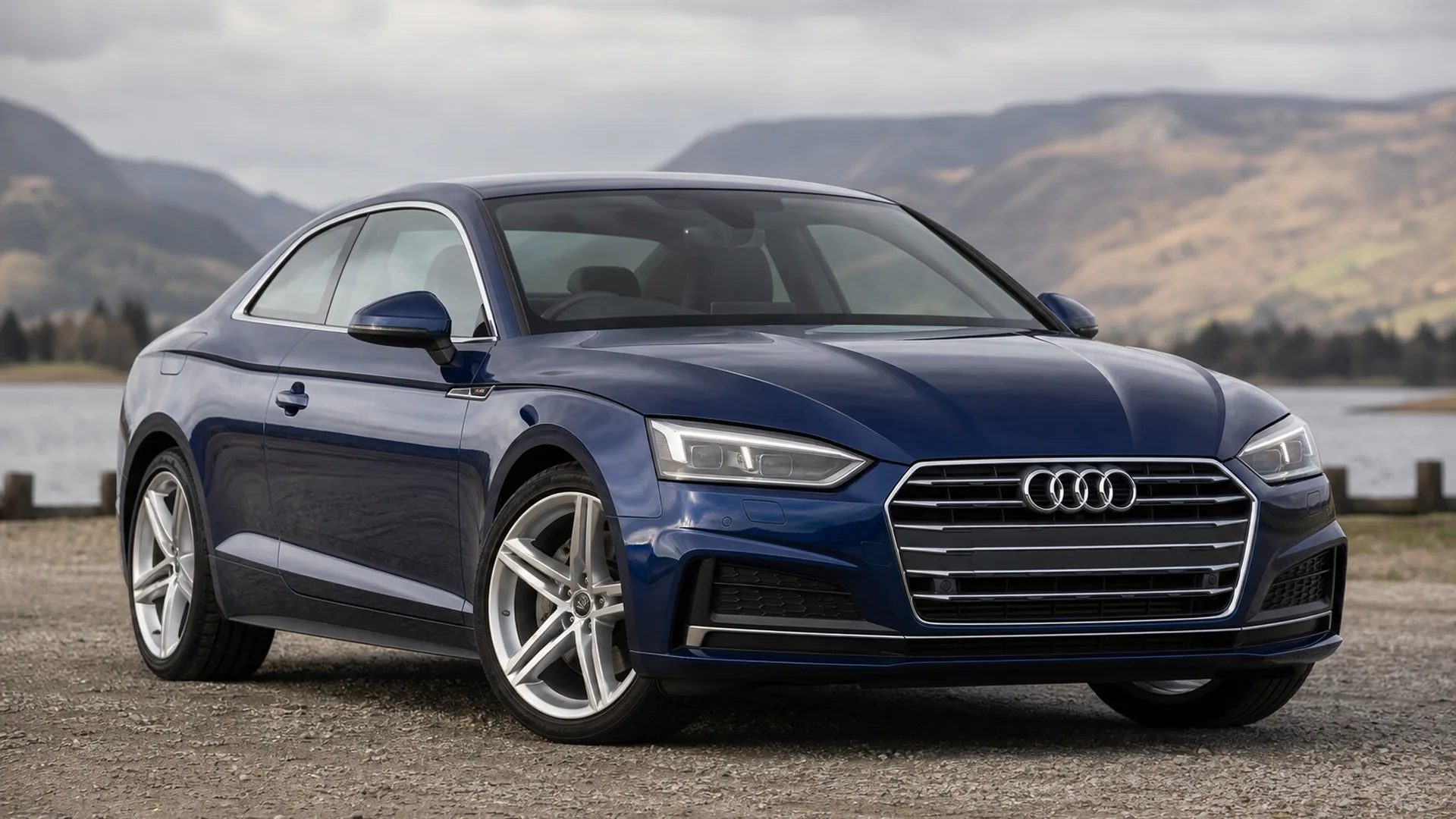
The Audi A5 turns heads wherever it goes. Sharp lines, a beautifully crafted cabin, and enough power to make your morning commute fun—what’s not to love? But here’s the thing: not every A5 year delivers the same ownership experience. Some model years hide expensive engine issues, electrical headaches, and tech glitches that can drain your wallet faster than premium gas. This guide walks you through the Audi A5 years you should skip, the common problems owners face, and which years actually deliver reliable, enjoyable driving.
How we rated the best and worst Audi A5 years
We pulled data from multiple sources to give you the full picture. Owner complaint databases helped us spot patterns across thousands of real-world A5s. Safety recall records revealed which years had factory-acknowledged defects. Reliability scoring from independent testing organizations showed how A5s held up over time. We also reviewed the class-action settlement related to oil consumption issues and cross-checked technical service bulletins for recurring problems.
Our approach grouped model years by their shared platforms and redesign cycles. Instead of isolated incidents, we focused on “risk clusters”—patterns that suggest a systemic issue rather than bad luck. We prioritized problems that hit owners hardest: those requiring expensive repairs, affecting drivability, or creating safety concerns. Engine, transmission, electrical, braking, suspension, climate, and infotainment systems all got equal attention.
Most Common Audi A5 Problems
Audi A5 owners have dealt with a wide range of issues over the years. The trouble spots show up most often in the engine, transmission, electrical system, and technology features. Brakes, suspension, and climate control cause problems less frequently but still deserve attention.
1. Engine Troubles
The 2.0 TFSI turbo engine in early A5s became infamous for burning oil at alarming rates. Some owners watched their oil warning light appear every 1,000 miles. The culprit? Faulty piston rings that let oil seep into the combustion chambers. Audi faced a class-action lawsuit and eventually settled, covering 2012–2014 models with extended warranties or reimbursements. But owners of 2009–2011 cars often got stuck with the bill.
One 2018 A5 owner watched their turbocharger fail at just 24,000 miles because oil starvation destroyed it—a $20,000 repair. Another driver’s 2016 A5 engine blew at 42,000 miles from oil consumption, requiring an $11,000 rebuild. The lesson? Check oil levels obsessively in any 2.0T A5 and confirm that factory fixes were completed.
Timing chains should last the life of the engine, but A5s don’t always cooperate. Stretched chains or failed tensioners cause misfires and rattling cold starts. Worst case? The chain jumps timing and destroys internal engine parts. A 2014 A5 owner faced exactly this—timing chain tensioner failure led to zero compression in one cylinder, costing $6,000 to repair. Audi issued technical bulletins for timing chain tensioners on some 2.0 engines, but the problem persists as cars age.
Water pumps fail on A5s across multiple years with no particular pattern—plastic impellers and seals wear out prematurely. When they go, coolant leaks and overheating follow. Repair bills typically land between $800 and $1,200 at dealers. Audi recalled some 2020 A5s for moisture entering the belt-driven starter/alternator system, which could indirectly affect cooling if the belt slips.
Direct injection brings carbon buildup—a slow-motion performance killer. Soot accumulates on intake valves (especially after 60,000+ miles), causing rough idle, misfires, and power loss. The fix requires walnut blasting to clean intake ports. Not a crisis, but budget for periodic cleaning on higher-mileage A5s.
2. Transmission Issues
Early front-wheel-drive A5s came with Audi’s Multitronic CVT, which earned a terrible reputation. Models from 2008–2015 with this transmission saw high failure rates—shuddering, jerking during acceleration, and complete loss of drive. CVT overheating happened during long trips or in hot weather. Audi updated software and fluids over time, but the damage to the Multitronic’s reputation stuck. Replacing a failed CVT costs $4,000–$5,000 or more. Most US A5s use Quattro AWD with a conventional 6 or 8-speed automatic, which holds up much better.
Newer A5s with the 7-speed S tronic dual-clutch transmission generally perform well. But some owners report mechatronic unit failures or clutch-pack wear before 100,000 miles—harsh shifting or clutch slip give it away. Sometimes a software update or sensor replacement fixes the problem without a full rebuild.
Manual transmission A5s have faced clutch complaints—stiff pedals, difficult shifts, premature slippage. When the clutch fails, the engine revs without the car accelerating. Clutch replacement runs $1,500+ including labor. This often comes down to how previous owners drove rather than a design flaw.
3. Electrical Gremlins
Early A5s earned a reputation for electrical problems. Central locking, parking sensors, entertainment systems, and phone connectivity all acted up in 2008–2011 models. Key fobs stopped working, parking sensors beeped for no reason, interior lights flickered. Faulty sensors, control modules, or low battery voltage usually cause these issues. A failing comfort control module can knock out door locks and the alarm system. Diagnosing electrical faults costs around $80 just to find the problem.
The MMI infotainment system caused headaches, especially in first-generation A5s. The 2010 model year logged the most complaints—screens freezing or going blank, systems rebooting mid-drive, Bluetooth refusing to connect. Sometimes the entire unit needed replacement. Second-generation A5s (2018+) brought new tech and new bugs. Some 2020 A5 Sportback owners dealt with MMI crashes that disabled navigation or audio while driving. Software updates help, but out-of-warranty MMI replacements cost thousands.
Water leaks silently destroy electronics in some A5s. Clogged sunroof drains or poor cabin seals let water pool in footwells or the trunk—right where electronic modules live. Amplifier and infotainment modules mounted low in the trunk can get fried. Owners have found soaked carpets and water in the spare tire well. Audi issued a bulletin about keeping sunroof drain hoses clear. Water-related electrical repairs get expensive fast—wiring harness replacement, module replacement, and often no warranty coverage.
4. Other Systems
Brakes aren’t a major weak point, but A5s chew through front pads and rotors faster than some cars—new pads and rotors by 30,000 miles isn’t unusual. The electronic parking brake occasionally throws malfunction messages or the motor seizes on one wheel. Fixes range from software resets to replacing a brake caliper motor.
Suspension components wear like any car. Early A5s (2008–2012) sometimes develop front suspension clunks from worn control arm bushings. Replacing all front control arms can cost over $1,000. Audi recalled 2020 A5s for rear suspension issues—casting errors in shock absorber forks and loose lock nuts that could fail. Those defects create safety risks if left uncorrected.
Air conditioning problems pop up occasionally. Refrigerant leaks, failed pressure sensors, or compressor failures leave you sweating. A 2010 owner traced their A/C failure to a pressure sensor fault. Fixing leaks and recharging the system costs a few hundred dollars; replacing the compressor runs $1,000+.
The MMI system’s problems extend beyond just freezing. Backup cameras switch to graphic mode randomly in 2018 A5s. Parking sensors give false warnings. The 2019 A5 Sportback’s Audi Pre Sense system slammed on brakes for phantom obstacles—turning a safety feature into a safety hazard. Some 2019 owners experienced sudden power steering failure at highway speeds, forcing them to wrestle the wheel. For A5 Cabriolet owners, the power roof adds complexity—failed microswitches, sensors, or hydraulic pumps can leave the top stuck open or closed.
The A5 Years You Should Skip
2011 Audi A5 – Avoid Completely
The 2011 stands out as one of the worst A5 years. It racked up 41 owner complaints with no corresponding recalls to fix them. Excessive oil consumption dominated the complaints—2011 models with the 2.0T triggered oil lights after just 1,000 miles in some cases. One owner spent $900 on parts and diagnosis only to discover Audi’s lawsuit settlement had expired, leaving them stuck with the bill. The 2011 also got caught in the Takata airbag recall, requiring replacement of potentially explosive airbags. Unless you have documentation proving the oil consumption issue was fixed under warranty, stay away from 2011 A5s.
2012–2013 Audi A5 – High Risk
These years fall under Audi’s extended warranty settlement for piston-ring oil consumption. While better than 2011, they share the same vulnerable engine internals. Audi agreed to cover 75% of repair costs for excessive oil consumption on 2012–2014 A5s (up to 8 years/80,000 miles—now expired) and even reimbursed some previous repairs. The fact that Audi settled tells you how serious the problem was. If you’re considering a 2012 or 2013, verify that pistons and piston rings were updated under warranty. Without that documentation, you’re inheriting an oil-burning engine and potential five-figure repair bills.
2018 Audi A5 – First-Year Redesign Problems
After a decade, Audi launched the fully redesigned second-generation A5 for 2018—and it arrived with growing pains. Owner reports paint a troubling picture: rapid tire wear (some found tires unsafe by 13,000 miles), electronic trunk lids that don’t stop closing (causing injuries), sun visors snapping off suddenly, backup cameras switching off randomly. The powertrain wasn’t immune either—oil leaks, abrupt transmission shifts, power loss, faulty thermostats, and water pumps showed up in 2018 models. One serious case involved excessive oil burning destroying the turbo at low mileage. Audi issued technical bulletins for some problems but no broad recalls or extended warranties. Many 2018 owners paid for fixes themselves. Unless you find a 2018 with an extended certified pre-owned warranty and documented resolution of all issues, skip this year.
2019 Audi A5 Sportback – Tech and Safety Concerns
The 2019 coupe and convertible improved, but the Sportback variant raised red flags. The Audi Pre Sense automatic emergency braking system malfunctioned in multiple 2019 Sportbacks—slamming on brakes for no reason on highways or while turning. What should increase safety instead created dangerous situations. Some 2019 A5/S5 owners (coupe and Sportback) experienced sudden power steering failure at speed, turning normal driving into a fight to control the car. At least one resulted in a crash or near-miss. Audi didn’t issue widespread recalls for steering failures, handling cases individually. If you’re set on a 2019, confirm all software updates (especially for Pre Sense) were completed and get a thorough inspection. Better yet, look at 2020 or newer.
2020 Audi A5 – Proceed with Caution
By 2020, Audi had resolved many earlier issues, but this year still carried baggage. The 2020 Sportback faced four separate recalls: rear axle alignment issues causing uneven tire wear or instability, loose rear suspension nuts risking suspension failure, passenger airbag disabling fault from defective seat heater cables, and a missing protective cap on rear light wiring that could lead to water damage. Owners also dealt with infotainment crashes and electrical problems. One bizarre issue: a defective module caused a loud SOS emergency call alarm to blare every few minutes while disabling Bluetooth. Software updates didn’t always solve it. The 2020 is better than 2018–2019, but verify all recall work is complete before buying.
Checking a used Audi?
Scan for hidden fault codes from your phone in minutes — before you buy.
REREV may earn a commission if you sign up through this link. Learn more.
The Best A5 Years to Buy
2016–2017 Audi A5 – Best Value Pick
The final years of the first generation delivered mature, sorted platforms. By 2016–2017, Audi had addressed earlier problems through continuous improvements. These years logged very few complaints—single digits in owner databases. The 2017 in particular had virtually no reported common issues. These later first-gen models benefit from all mid-cycle upgrades while remaining newer with less wear. If you find a 2016–17 with low mileage and full service records, you’re looking at one of the most reliable A5s available. They also hit a sweet spot in depreciation—old enough to be affordable, new enough to avoid age-related problems.
2021–2023 Audi A5 – Best Overall
If your budget allows, the 2021–2023 A5 models represent the pinnacle of reliability in the lineup. By 2021, Audi had several years to refine the second-generation platform and implemented a mid-cycle refresh with updated infotainment hardware. Consumer Reports gave the 2021 A5 a perfect 5/5 reliability rating and strong owner satisfaction scores. It earned their “Recommended” stamp—meaning it performed well in testing and showed above-average reliability. Being nearly new, these models generate almost no complaints, and any issues that arise get covered under Audi’s warranty. Owners praise the 2021’s blend of modern technology (Virtual Cockpit, standard CarPlay) and the fact that it simply works without drama. If you want worry-free ownership and can spend extra, a 2021 or newer A5 delivers.
2014 Audi A5 – First-Gen Sweet Spot
The 2014 model year earned its place as the most reliable first-generation A5. Audi had updated engine internals and addressed earlier issues by this point, resulting in far fewer complaints. It logged only 29 complaints and 3 minor recalls—the lowest of any first-gen year. Consumer Reports gave the 2014 A5 a perfect 5/5 reliability score and above-average owner satisfaction. Every major system—engine, transmission, electrical, body hardware, in-car electronics—scored well above average. In fact, 2014 is the only first-gen A5 that earned Consumer Reports’ “Recommended” rating. The 2.0T engine received updated pistons that mitigated oil burning, and the 2013 styling refresh ironed out infotainment quirks. If you want a relatively modern A5 on a budget, 2014 stands out.
2008 Audi A5 – Budget Option
It’s unusual for a debut model to be reliable, but the 2008 A5 beat the odds. As the launch year featuring a 3.2L V6 and Quattro AWD, it logged only 7 total complaints and 1 recall—remarkably low for a luxury car now over 15 years old. If well maintained, a 2008 can provide budget-friendly entry into A5 ownership with a simpler drivetrain (no turbo) and less electronic complexity. Expect diligence with any 15+ year old car—rubber components age and things will need attention. But many owners report their early A5s running strong past 150,000 miles. Find one with full service records and the recall addressed, and you could have a solid buy.
Better Alternatives to Consider
Lexus RC (2016–2020)
If reliability tops your priority list, the Lexus RC coupe offers a compelling alternative. Lexus consistently ranks at the top of reliability charts, and the RC follows that tradition. Consumer Reports predicts the RC will be more reliable than most new cars based on Lexus’ brand history. The RC doesn’t match German rivals in sportiness, but it compensates with build quality and dependability. The naturally-aspirated V6 (RC350) or the proven 2.0T (RC300) have shown excellent durability. Many RC owners report years of trouble-free ownership. The 2015 first year had minor glitches (fuel pump issues, sunroof rattles), so look at 2016 or newer. A 2017 or 2018 RC 350 makes an excellent choice—you get updated infotainment and likely zero major repairs. Lexus also delivers lower maintenance costs and better dealer service experiences. The main downside? Driving dynamics and tech aren’t as cutting-edge. But if you value hassle-free ownership, the RC might be your best bet.
BMW 4 Series (2017–2020)
BMW’s 4 Series offers sharper driving dynamics than the A5 with fairly solid reliability, especially in later years. Early models (2014–2015) with the inline-6 (435i) showed very few complaints—the N55 engine proved durable. Later years (2017, 2018, 2019) benefit from continuous improvements with no glaring faults. The 2018+ models with updated engines (430i/440i) have proven reliable so far. The 4 Series delivers a sportier experience than the A5 and ranks near the top of its class in dependability according to industry testing. Avoid the 2014 428i with the N20 four-cylinder if possible—that engine had timing chain issues in early years. BMW maintenance isn’t cheap, but at least you won’t be refilling oil every week like some early A5s.
Mercedes-Benz C-Class Coupe (2017–2019)
The C-Class Coupe provides a luxury-focused alternative with decent reliability in later model years. Mercedes’ reliability runs hot and cold, but the 2017–2019 C-Class performed reasonably well. These years earned around 80–82/100 in reliability scores—indicating above-average dependability for the luxury segment. They’re part of the W205 generation introduced in 2015, and by 2017 the kinks were worked out. A 2019 refresh added updated electronics. Owners report fewer problems in 2018–2019 models, enjoying refined comfort and technology. Mercedes cars typically don’t top reliability charts—they’re generally average. But the C-Class Coupe could work well if you prioritize luxury and accept average dependability. Maintenance and repair costs will be similar to Audi or BMW.
Audi A4 (2016–2018)
If you like the A5’s style but want better availability and pricing, consider the A4 sedan. It shares the A5’s platform and delivers a similar driving feel with better used-market availability. The 2016–2018 A4 generally shows good reliability and costs less than comparable A5s.
Final Advice for A5 Buyers
Avoid 2011–2013 and 2018 Audi A5 models due to high-risk engine and tech issues. Approach 2014–2015 and 2019–2020 with caution unless you can verify maintenance history and confirm all updates were completed. Your best used choices are 2016–2017 and 2021–2023 models.
Don’t chase low prices on high-risk years. A cheaper 2011 or 2018 A5 can quickly cost more than a well-maintained newer model once major repairs hit. Always prioritize documentation, independent pre-purchase inspections by Audi-experienced mechanics, and recall completion verification. Check oil levels religiously on any 2.0T model—even “fixed” engines deserve regular monitoring.
Test all infotainment functions, climate control, and driver-assistance systems during test drives. Confirm the MMI screen doesn’t freeze, Apple CarPlay connects properly, and Pre Sense doesn’t trigger false warnings. Any dampness inside the car should be a deal-breaker—water damage to electronics gets expensive fast.
A used Audi A5 from the wrong year can turn into a money pit. Choose the right year, not just the right price, and you’ll enjoy that beautiful coupe without the constant trips to the repair shop.