
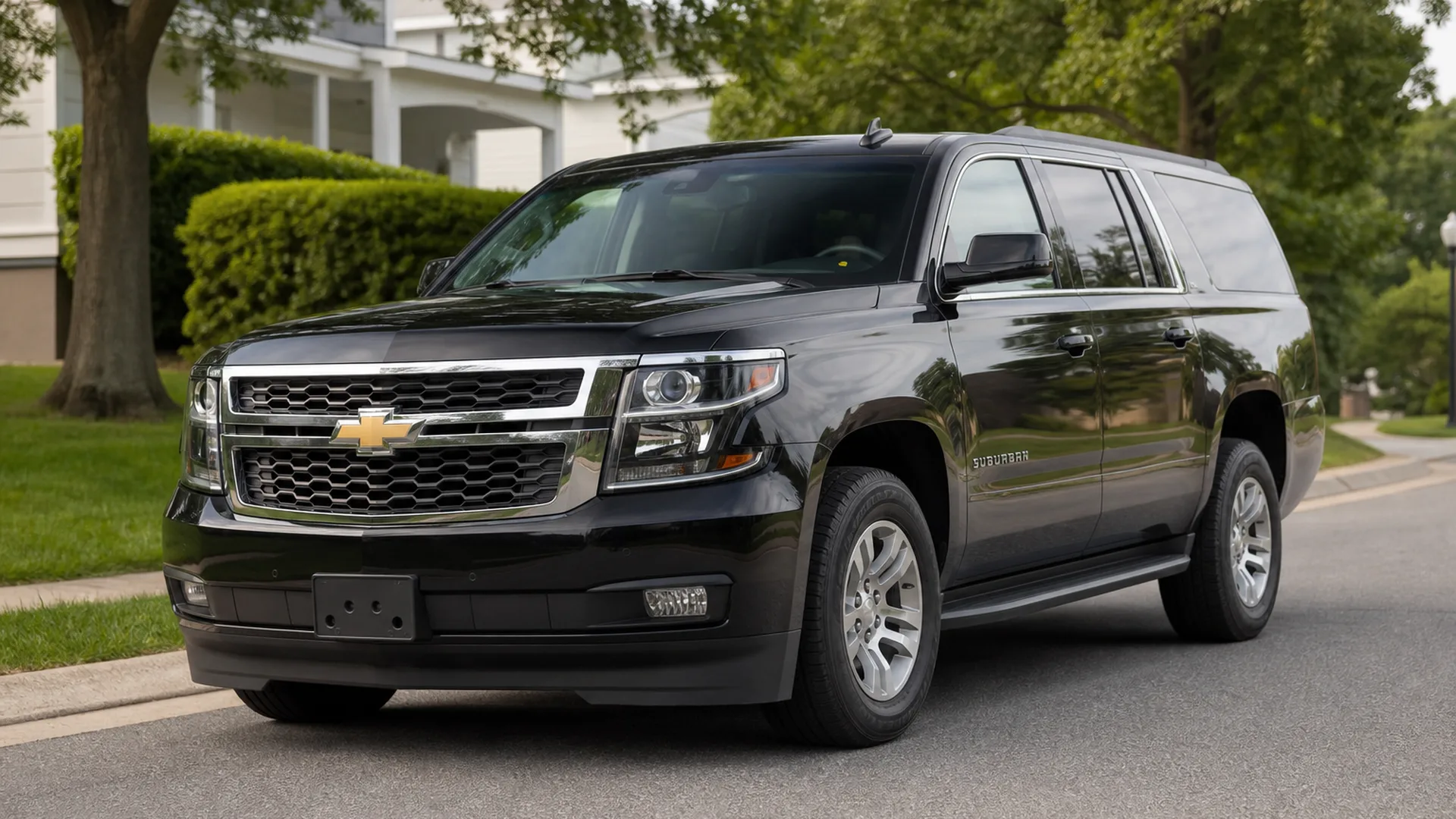
The Chevy Suburban has been hauling American families since 1935, earning its place as one of the most trusted names in full-size SUVs. With three rows of seating, serious towing muscle, and a reputation for going the distance, it’s easy to see why so many buyers choose the Suburban for road trips, work duty, and everyday life.
But here’s the catch: not every Suburban lives up to that legacy. Some model years have become infamous for expensive transmission failures, oil-guzzling V8s, cracked dashboards, and air conditioning systems that quit before 60,000 miles. In fact, certain years racked up over 500 NHTSA complaints—a red flag for any used SUV shopper.
How we rated the best and worst Chevy Suburban years
Our team combed through official NHTSA complaint databases, Consumer Reports reliability scores, and J.D. Power owner satisfaction data to build this analysis. We cross-checked those findings with real-world feedback from Suburban owners on forums like Reddit and CarComplaints, plus insights from Chevy technicians who’ve seen these trucks come through the shop.
We also reviewed class-action lawsuit filings (like the 2015–2017 A/C condenser case), recall histories, and repair cost estimates from owner logs. The goal? Give you a clear picture of which Suburban years will cost you thousands in repairs—and which ones are safe bets.
Shopping for a used Chevrolet?
 Ask a Mechanic about your Chevrolet →
REREV may earn a commission if you sign up through this link. Learn more.
Most Common Chevy Suburban Problems
Before we call out specific years, let’s talk about the recurring issues that show up across multiple generations. Knowing these patterns helps you spot trouble before you sign the paperwork.
1. Engine Trouble: Oil Consumption and Shutdowns
The 5.3L Vortec V8—especially models from 2007 to 2014—has a nasty habit of burning oil. GM’s Active Fuel Management (AFM) system, designed to save fuel, ended up causing piston ring wear and excessive oil consumption. Some owners reported adding a quart every 1,000 miles, while others experienced complete engine shutdowns after the oil level dropped too low.
The worst cases? Total engine failures around 100,000 miles, with replacement costs climbing past $5,000. If you’re looking at a Suburban with the 5.3L V8 from this era, ask for oil change records and check for blue smoke from the exhaust—a telltale sign of oil burning.
2. Transmission Failures: A $3,000+ Headache
Suburban transmissions have been a weak link for two decades. Early 2000s models (2001–2005) often saw transmissions fail around 90,000 miles, costing $1,800 to $3,000 to rebuild or replace. The 2007 model—first of a new generation—became notorious for transmission failures at just 83,000 miles, with repair bills hitting $3,000.
Even the 2016 Suburban had cases of catastrophic transmission failure in otherwise low-mileage trucks, sometimes costing over $4,400 to fix. Symptoms include rough shifting, delayed engagement when moving from park to drive, and a shuddering sensation during acceleration.
3. Electrical Gremlins: Dashboard Clusters and Passlock Issues
If you’ve ever seen a speedometer bounce randomly or go dark, you’ve met the Suburban’s electrical demons. The 2003–2005 models were plagued by instrument cluster failures—speedometers reading wrong speeds, gauges dropping to zero, and warning lights flickering on for no reason.
The 2004 Suburban alone had hundreds of complaints about faulty clusters, which GM eventually addressed with a recall. Separately, the Passlock security system (common in 2000s-era GMs) sometimes refused to let owners start their trucks, requiring expensive relearning procedures or replacement modules.
4. Brake and Suspension Concerns
Brakes have been a sticking point in certain years. The 2004 Suburban logged 108 NHTSA complaints about brakes, with many owners reporting ABS systems that wouldn’t engage at low speeds—a serious safety issue. Early 2000s models also saw corroded brake lines that could fail, and some suffered from spongy brake pedals traced to master cylinder problems.
Suspension components wear faster on Suburbans due to the truck’s weight. Rust-prone older models (2000–2001) sometimes had suspension parts that corroded badly, and there was even a recall for rear axle cross-pin failure on 2011 models.
5. Air Conditioning Failures: The Class-Action Lawsuit
Here’s a big one: A/C systems in 2015–2017 Suburbans failed so often that owners filed a class-action lawsuit. The problem? Leaking condensers and weak hoses that let refrigerant escape, leaving families sweating in the summer heat. Most failures happened around 50,000 to 60,000 miles, and repairs cost roughly $1,200.
GM eventually extended warranty coverage for some owners, but the backlog of condenser replacements meant long wait times. If you’re considering a 2015–2017 Suburban, confirm that the A/C condenser has been replaced—or budget for it.
6. Interior and Tech Annoyances
Cracked dashboards are almost a given in 2007–2014 Suburbans. The hard plastic dashes develop cracks around the passenger airbag area, and GM refused to cover the issue, calling it “cosmetic.” Some years also suffer from the “Chevy Shake”—a mysterious vibration at highway speeds above 35 mph, often paired with buffeting wind noise.
Tech glitches pop up too: malfunctioning rear liftgates, backup cameras that freeze, and infotainment systems that restart randomly. While these aren’t as catastrophic as engine or transmission trouble, they add frustration to an otherwise capable truck.
The Worst Chevy Suburban Years to Avoid Completely
Now for the main event: the Chevy Suburban years that should make you walk away from the dealer lot (or keep scrolling past that Craigslist ad). These models are notorious for expensive, recurring problems that often start well before 100,000 miles.
2007: The Single Worst Suburban Year
If there’s one Suburban year to avoid at all costs, it’s 2007. This was the first model of the 10th generation, and GM clearly rushed it to market. The 2007 Suburban holds the record for the most NHTSA complaints—over 570—and earned a “Beware of the Clunker” badge from CarComplaints.com.
What went wrong?
Transmission failures hit hard and early, typically around 80,000 to 85,000 miles, with repair bills averaging $3,000. Engine problems were just as bad: excessive oil consumption, sudden low oil pressure, and even complete engine failures shortly after 100,000 miles. Engine replacements ran $5,000 to $6,500.
To make matters worse, 2007 Suburbans were caught in the Takata airbag recall mess, meaning airbags might not deploy in a crash. This combination of drivetrain failures and safety concerns makes 2007 the poster child for Suburban years to avoid.
2008 and 2009: The Problems Continued
The 2008 Chevy Suburban logged over 400 NHTSA complaints and kept many of the 2007’s issues alive. Airbag malfunctions persisted (137 complaints, some with injuries), and the engine still suffered from excessive oil consumption by 80,000 miles. Cracked dashboards started appearing without warning, and some owners faced major engine repairs costing around $4,000.
The 2009 Suburban actually had fewer total complaints, but many experts consider it worse than 2007 when you factor in cost and early failures. Oil consumption showed up as early as 55,000 miles, and by 98,000 miles, many owners were dealing with the same engine problems as 2007–08. Transmissions often failed just past 100,000 miles, requiring $3,800 rebuilds. These expensive troubles arrive well before the Suburban should even be considered “old.”
2015 and 2016: A New Generation, Old Problems
After a decent early-2010s stretch, the 2015 Chevy Suburban (first year of the 11th generation) proved to be another problem child. It generated 500+ complaints—rivaling 2004 for the second-highest total ever.
The biggest issue? Brakes failing or losing effectiveness around 55,000 to 60,000 miles, often traced to vacuum pump and brake assist problems (around $1,000 to fix). The A/C system was another weak link, with condensers leaking refrigerant by 65,000 miles. Water leaks into the cabin, electronic liftgate failures, and various tech glitches all showed up well before 50,000 miles.
The 2016 Suburban improved slightly but still lands on the avoid list. Brake issues continued, and transmission failures remained a concern—some owners got hit with a $4,000+ replacement bill relatively early. The 2016 also earned an unfortunate 3-star NHTSA rollover rating, lower than most large SUVs. Like 2015, the A/C could quit early, making 2016 a year to skip if long-term reliability matters to you.
2001 and 2004: Early 2000s Trouble
The 2001 Suburban is notorious for drivetrain failures. Transmissions often failed without warning around 92,000 miles (costing roughly $1,850 to replace), and fuel pumps died around 80,000 to 90,000 miles (another $900 repair). Combined with other early-generation bugs, 2001 is a risky pick.
The 2004 Suburban received about 500 NHTSA complaints, with electrical issues topping the list. Hundreds of owners reported faulty instrument clusters—speedometers displaying wrong speeds or going completely dark. At least 108 brake complaints rolled in, primarily about ABS systems failing to engage at low speeds. GM issued recalls for both the instrument panel and brake valve, but the 2004’s blend of electrical and brake troubles earns it a spot on the avoid list.
Years to Approach with Caution
A few other years deserve scrutiny but aren’t quite as bad as those above:
- 2000 and 2003: Early 9th-gen models with stalling engines, steering issues, and brake problems.
- 2011: A spike in complaints, including recalls for ignition and axle defects (rear axle cross-pin failure).
- 2014: The last year of the 10th generation, still plagued by oil burn and some electrical gremlins.
These years can be acceptable if you find a well-maintained example with full service records, but they’re not the safest bet.
The Best Chevy Suburban Years You Can Trust
Fortunately, the Suburban lineup includes several standout years known for solid reliability and performance. If you’re shopping for a used Suburban (2000 or newer), the following models are often recommended by both experts and long-time owners.
2006: The Refined Final Year of Gen 9
The 2006 Suburban is widely regarded as the most trouble-free model of the early 2000s. By this point, GM had ironed out most of the generation’s issues, resulting in fewer complaints and recalls. The 2006 offered robust engine options—like the 5.3L and 6.0L V8s—without the oil consumption problems of later years. One owner reported a rare steering rattle, but overall, 2006 stands out as a reliable used SUV choice.
2010: A Solid Mid-Generation Pick
The 2010 Suburban combines modern features with dependability. J.D. Power rated the 2010 “Great” for driving experience and reliability, and Consumer Reports praised its nine-passenger seating and solid performance. While 2010 isn’t entirely problem-free (airbags were a recall focus, and a few cracked dashboards occurred), it had far fewer complaints than the troublesome 2007–2009 models. With excellent resale value retention and no major recurring flaws, 2010 is a year worth considering.
2012–2013: The Sweet Spot of the 10th Generation
These late 10th-gen models are among the best of the bunch. Both 2012 and 2013 saw under 100 NHTSA complaints—a strong indicator of reliability. Aside from a handful of excessive oil consumption reports (the 5.3L V8’s quirk that GM largely mitigated by 2014), there were no widespread mechanical problems in these years.
Both models received solid owner satisfaction scores for their comfortable ride and towing capacity, and they maintained top safety ratings (5-stars in most categories). For buyers, 2013 in particular offers an excellent balance of reliability and affordable pricing on the used market.
2017: Gen 11 Stabilizes
By 2017 (third model year of the 11th generation), Chevrolet had addressed many earlier bugs and implemented safety upgrades. The 2017 Suburban had around 100 or fewer complaints—a big improvement from 2015. There was an issue with unintended low-speed braking (false activation of automatic braking), but a recall in late 2019 corrected it.
Beyond that fix, the 2017 delivered strong results: it continued to earn 5-star overall safety ratings, featured improved driver-assist tech on LT/LTZ trims, and offered very high owner satisfaction for comfort. J.D. Power ranked the 2017 Suburban #2 in the Large SUV category for that year, making it a safe bet for a used full-size SUV.
2018–2020: The Best Used Suburbans You Can Buy
These late-model 11th gen Suburbans are arguably the best used Suburbans available (short of buying brand-new). By 2018, GM had worked out all the issues from earlier years. The 2018 model logged less than 50 complaints in NHTSA data, and the few lingering brake complaints from 2017 were significantly reduced.
The trend continued—2019 models remained very solid, and 2020 (the last year before a redesign) went out with a bang: fewer than 20 total complaints, with virtually no reports of the prior generation’s brake or airbag problems. These years also benefit from modern amenities (advanced infotainment and driver aids) and strong resale value.
One source flatly states that a 2018, 2019, or 2020 Suburban should give you “nothing to worry about,” as they had essentially zero significant complaints on record. If budget allows, a 2018–2020 Suburban will likely offer the most hassle-free ownership among used models.
Better Alternatives: Full-Size SUVs That Match (or Beat) the Suburban
The Suburban is one of the largest SUVs on the market, but it’s not your only option. If you’re concerned about the Suburban’s known trouble years or just exploring other full-size SUV choices, here are a few alternative vehicles to think about—along with their notable model years for reliability.
Ford Expedition (and Expedition Max)
Ford’s full-size SUV is the Suburban’s closest rival, and recent Expeditions have an excellent track record. The 2017 model (last of its generation) is praised for solid dependability and low repair costs. The newer 2018–2019 Expeditions (next-gen with aluminum body and turbo V6) also earned excellent reliability scores and come with modern safety tech.
Owners report these late 2010s Expeditions to be robust long-term performers—many easily exceed 200,000 miles with proper maintenance. If you’re looking at older ones, the 2010 Expedition is another standout year with very few recalls and consistent performance. For a large SUV, a well-kept Expedition—especially 2010, 2017, or 2018+—can be a dependable alternative to a Suburban.
Toyota Sequoia
The Sequoia is often cited as the safest bet for reliability in this class. Toyota’s full-size SUV isn’t as cavernous as a Suburban, but it still offers three rows and a stout V8. The second-generation Sequoia (2008–2022) is legendary for its durability—these SUVs routinely run 200,000+ miles with minimal issues.
For the best value, look at 2013–2015 Sequoias, which provide a great blend of dependability and more affordable pricing on the used market. Those years have proven very reliable (the Sequoia had few changes and ironed-out components by then). If you prefer more modern features, the 2018–2020 Sequoias received refreshed styling and updated safety tech like adaptive cruise control, all while maintaining Toyota’s rock-solid build quality.
In short, almost any second-gen Sequoia is a good pick—it’s hard to go wrong with this SUV, which enthusiasts call “nearly indestructible.”
GMC Yukon XL / Cadillac Escalade ESV
If you like the Suburban but want something similar, the GMC Yukon XL and Cadillac Escalade ESV are solid alternatives. Both are built by GM, sharing the same platform and engine options. The Yukon XL offers great towing capacity and space at a more affordable price, with reliable years like 2015 and 2016. The Cadillac Escalade ESV gives you all the luxury features, advanced tech, and a smooth ride, with the 2015-2017 models being top choices
Final Thoughts
The Chevrolet Suburban is a top pick for those needing a spacious, reliable SUV. To avoid costly repairs, stick with the 2006, 2010, 2012-2013, or 2017-2020 models. If you’re exploring alternatives, the GMC Yukon XL and Cadillac Escalade ESV offer similar size and reliability, with added luxury in the Escalade. Whichever you choose, make sure it’s well-maintained to ensure long-term reliability.