
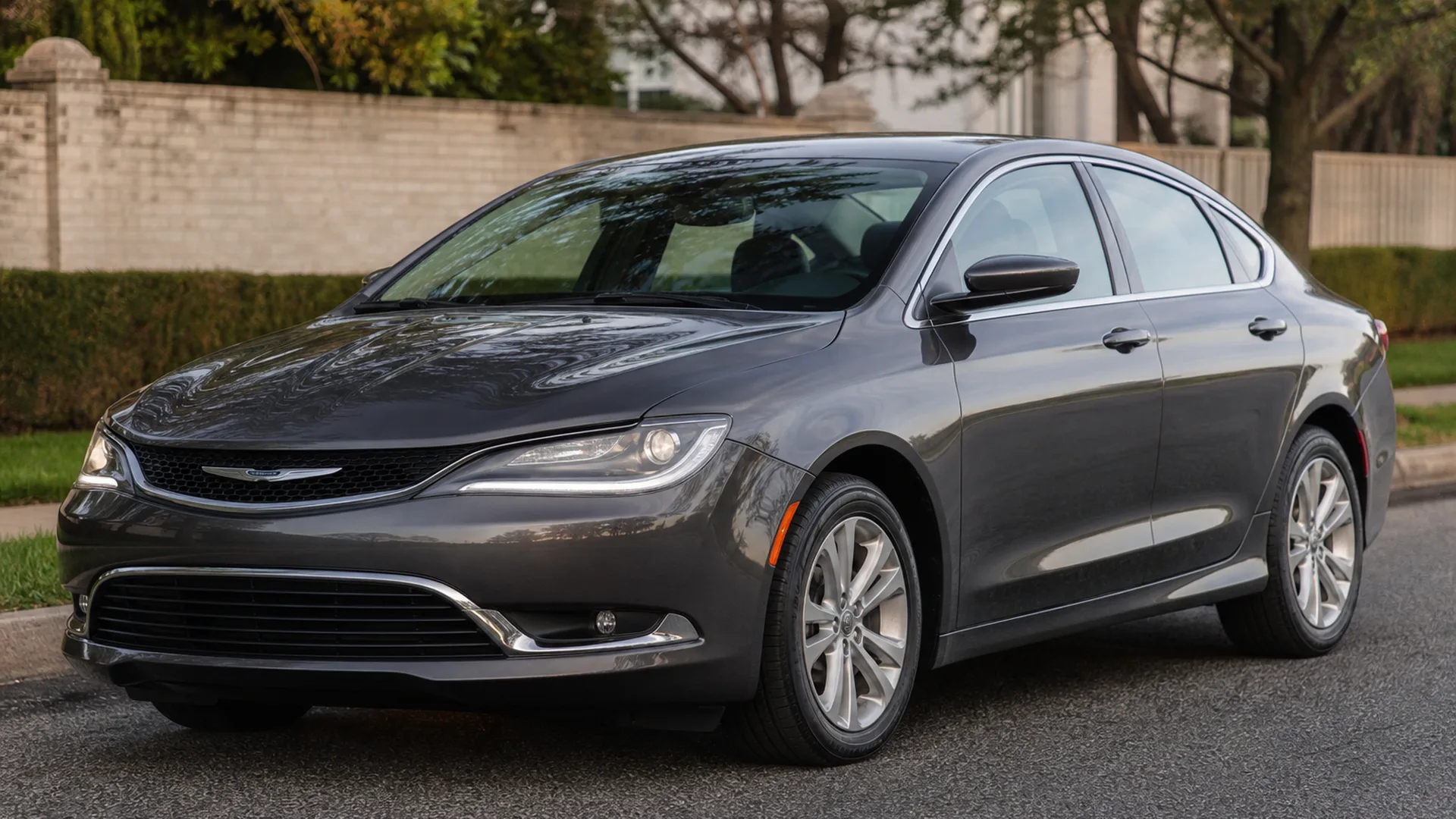
The Chrysler 200 looked promising when it debuted in 2011. With its sleek styling and competitive pricing, it seemed ready to challenge the Toyota Camry and Honda Accord in the midsize sedan market. But beneath that attractive exterior lurked serious reliability issues that would plague owners for years. From engines that stalled without warning to transmissions that shifted into neutral on busy highways, the 200’s problems were both expensive and dangerous. This guide breaks down exactly which Chrysler 200 years you should avoid and points you toward better alternatives that won’t leave you stranded.
How we rated the best and worst Chrysler 200 years
We analyzed thousands of owner complaints through NHTSA databases, CarComplaints.com, and major automotive forums to identify the most problematic Chrysler 200 model years. Our team cross-referenced recall data with Consumer Reports reliability ratings and real-world repair costs from RepairPal and warranty claim databases. We also reviewed FCA service bulletins and tracked long-term ownership patterns to separate isolated incidents from widespread defects.
Most Common Chrysler 200 Problems
1. Engine Troubles That Stop You Cold
The most serious issue across multiple Chrysler 200 years is sudden engine stalling while driving. This isn’t your typical rough idle situation – we’re talking about engines that completely shut off at highway speeds with zero warning. A 2012 NHTSA investigation traced many of these stalls to faulty powertrain control software that would cut power during deceleration.
But software wasn’t the only culprit. The 2.4L Tigershark engines in 2015-2016 models had a nasty habit of burning through oil at an alarming rate – some owners reported losing a full quart every 1,000 miles due to poorly matched piston rings. When your engine is that thirsty for oil, you’re looking at potential seizure if you don’t stay on top of frequent top-offs.
The scariest part? When these engines stall, you often lose power steering and power brakes too. Several owners described having to muscle their cars to the shoulder while dealing with significantly reduced braking power.
2. Transmission Nightmares
If you see a 2015 Chrysler 200 on a used car lot, keep walking. The 9-speed ZF automatic transmission in that model year earned the car an “Avoid Like the Plague” rating from consumer watchdogs – and for good reason.
These transmissions would jerk violently between gears, hesitate when you needed acceleration, and sometimes just slip into neutral while you were driving. We found reports of shifts so violent they actually knocked headlights out of their housings. In the worst cases, the transmission problems would cause brake and parking brake failures, forcing drivers to coast to a stop using only engine braking.
Chrysler issued multiple recalls trying to fix the 2015’s transmission woes, including updates to the wiring harness and control software. But many owners found these fixes didn’t solve the underlying problems.
3. Electrical Gremlins Everywhere
First-generation models (2011-2014) are notorious for complete electrical system failures while driving. Picture this: you’re cruising down the interstate when suddenly your engine dies, all your gauges drop to zero, your lights cut out, and your wipers stop working. No warning, no error codes, just total electrical death.
Most of these failures trace back to a faulty Totally Integrated Power Module (TIPM). This central computer controls everything from your fuel pump to your airbags, so when it goes bad, the results can be both expensive and dangerous. Some owners even reported random airbag deployments linked to TIPM malfunctions.
The 200 also had a bizarre issue with its active head restraints. These safety devices were supposed to move forward during rear-end crashes, but a defect caused them to randomly deploy while driving, sometimes causing minor injuries to unsuspecting drivers.
4. Climate Control Problems
The 2012 Chrysler 200 has a particularly annoying HVAC issue: the passenger side will blow cold air while the driver stays warm. The root cause is sludge buildup in the heater core, and even replacing the core often doesn’t provide a permanent fix.
This might sound like a minor complaint compared to stalling engines and violent transmissions, but try explaining to your passengers why they need to bundle up during winter drives in a car that should be keeping everyone comfortable.
Years to Absolutely Avoid
2015 Chrysler 200 – The Worst of All
If there’s one model year that deserves its terrible reputation, it’s the 2015 Chrysler 200. This first year of the redesigned second generation managed to combine the worst transmission in the automotive industry with continued engine stalling problems.
The numbers tell the story: eight recalls, thousands of complaints, and repair costs that often exceeded the car’s value. The 9-speed transmission was so problematic that many owners pursued lemon law claims. Software updates and hardware fixes couldn’t tame what owners described as a “possessed” transmission.
2011 Chrysler 200 – A Rocky Start
As the debut year for the 200 nameplate, 2011 models suffered from typical first-year problems – except these weren’t typical at all. Over 700 NHTSA complaints poured in, mostly about engines that would suddenly die while driving.
The electrical system failures were equally concerning. Complete power loss while driving isn’t just inconvenient – it’s a safety hazard that can leave you helpless in traffic.
2012 Chrysler 200 – More of the Same
The 2012 model racked up over 1,000 complaints, proving that Chrysler hadn’t learned much from the 2011’s problems. The heater core issue became widely known this year, and the engine stalling continued to plague owners.
What made the 2012 particularly frustrating was how dealers often couldn’t reproduce or fix the stalling problem, leaving owners with an unreliable car and no recourse.
2013 Chrysler 200 – The Final Flawed Generation
The 2013 wrapped up the first-generation 200 with more than 1,000 complaints and five recalls. Engine stalling remained a problem, but now owners also dealt with a rough-shifting transmission that would “thump” and jerk during normal driving.
Many 2013 owners tried dealership firmware updates to fix the transmission problems, but most saw little improvement in the erratic shifting behavior.
The Better Years (If You Must Buy One)
2014 Chrysler 200 – Best of the First Generation
By 2014, Chrysler had worked out many of the first-generation’s bugs. The 2014 models use proven 4-speed and 6-speed automatic transmissions instead of the troublesome 9-speed that would plague the 2015.
While not perfect, 2014 owners report more typical maintenance issues rather than the catastrophic failures that marked earlier years. If you’re set on a pre-2015 Chrysler 200, this is your safest bet.
2016 Chrysler 200 – Learning From Mistakes
After the 2015 disaster, Chrysler made significant improvements for 2016. Consumer Reports ratings jumped dramatically, and owner complaints dropped sharply. The transmission received software updates and mechanical fixes that resolved many of the harsh shifting problems.
The 2016 still isn’t as reliable as a Camry or Accord, but it’s a much safer choice than the 2015 if you’re looking at second-generation models.
2017 Chrysler 200 – The Final Polish
As the last year of production, the 2017 Chrysler 200 represents the most refined version of the car. It has the fewest complaints of any model year and benefits from all the running changes made since 2015.
The main concern with 2017 models is long-term parts availability now that the car has been discontinued, but from a reliability standpoint, it’s as good as the 200 gets.
Better Alternatives That Actually Work
Toyota Camry (2012-2017)
The Camry remains the gold standard for midsize sedan reliability. These models regularly hit 200,000+ miles with just routine maintenance, and parts are readily available everywhere. A used 2016 Camry might cost $2,000 more than a comparable 200, but you’ll likely save that much in avoided repairs.
Honda Accord (2013-2017)
The 9th-generation Accord offers excellent build quality and strong resale value. The four-cylinder models are particularly reliable, and the driving dynamics are generally superior to the Chrysler 200’s.
Mazda6 (2014-2017)
If you want something sportier than a Camry but still reliable, the Mazda6 strikes a nice balance. These models have good reliability records and offer more engaging driving than most midsize sedans.
Hyundai Sonata (2015-2017)
The redesigned Sonata fixed earlier engine problems and comes with Hyundai’s excellent warranty coverage. It’s a solid alternative that often costs less than comparable Accords or Camrys.
The Bottom Line
The Chrysler 200 had the looks to compete with established midsize sedans, but it never developed the reliability to match. Unless you find an exceptional deal on a 2016 or 2017 model with full service records and completed recalls, you’re better off investing in a proven nameplate.
A used Camry or Accord might cost a bit more upfront, but that premium is less than what you’d pay for a single transmission replacement in a problematic 200. Your wallet – and your peace of mind – will thank you for choosing reliability over initial savings.
If you do decide to buy a Chrysler 200, stick to the safer years (2014, 2016, or 2017), verify all recalls have been completed, and seriously consider an extended warranty. But honestly? There are too many better options in the midsize sedan market to settle for a car with the 200’s troubled history.