
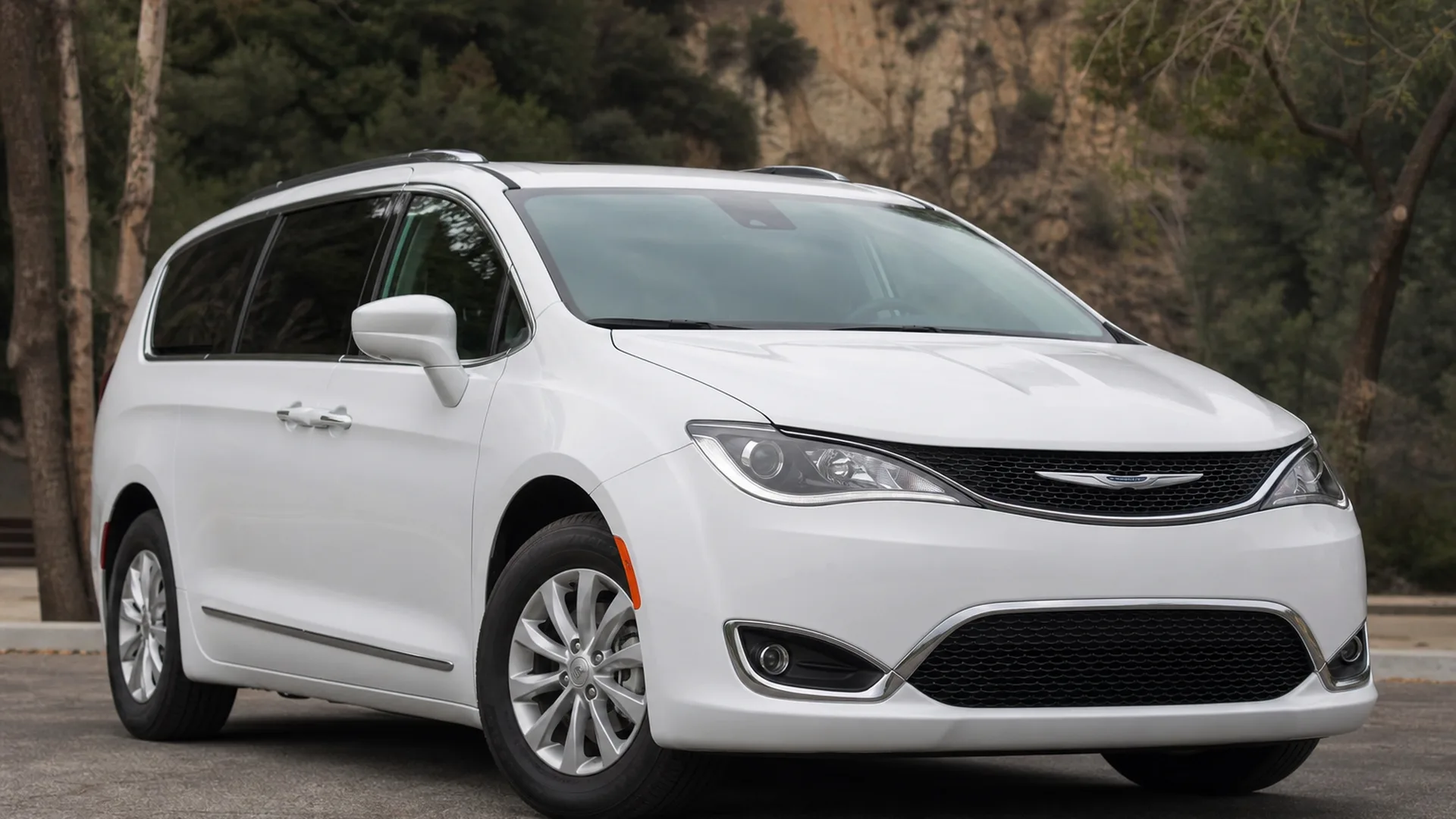
The Chrysler Pacifica is a popular family minivan, but not all model years are created equal. The 2017 and 2018 Pacifica models are among the worst years to avoid, primarily due to issues with the transmission, electrical systems, and engine problems. Many owners reported expensive repairs and unreliable performance. The 2020 and newer models show improvement, offering better reliability and fewer reported issues. If you’re considering a Pacifica, it’s best to steer clear of 2017-2018 models and focus on 2020 or later for a more dependable option.
The worst Chrysler Pacifica years to avoid are 2017 and 2018, which suffer from widespread transmission failures, electrical malfunctions, and engine stalling issues. The best Chrysler Pacifica years to buy are 2020–2023, offering far better reliability, improved build quality, and fewer reported problems.
How we rated the best and worst Chrysler Pacifica years
We didn’t just skim through a few reviews to write this. Our team spent weeks digging through multiple data sources to give you the real story:
Official Records: We analyzed every NHTSA complaint filed against Pacifica models, tracked all 30+ recalls issued since 2017, and reviewed Technical Service Bulletins that reveal common repair patterns. Consumer Reports’ reliability rankings and IIHS safety data helped us understand the bigger picture.
Real Owner Experiences: We combed through Pacifica owner forums, Reddit discussions, and Facebook groups where people share their actual repair bills and frustrations. We also studied long-term test reports from automotive journalists who drove these vans for months, not just a weekend test drive.
Industry Intelligence: Mechanics and dealership service departments provided insights on which years flood their bays for repairs. We examined extended warranty claim patterns and class-action lawsuit filings to spot the most problematic systems.
Money Matters: We compared 5-year ownership costs between Pacifica and its competitors, factoring in depreciation rates, parts availability, and repair frequency to show you the true financial impact of your choice.
Most Common Chrysler Pacifica Problems
When you’re considering a vehicle like the Chrysler Pacifica, it’s crucial to be aware of any common problems that might arise over time. While the Pacifica is generally a well-regarded family minivan, some issues tend to pop up more frequently than others. These problems can not only affect the vehicle’s performance but also lead to costly repairs. Below is a detailed look at some of the most common issues Pacifica owners face, along with the potential repair costs and the model years most affected.
1. Transmission Problems
One of the most significant and recurring issues with the Chrysler Pacifica is related to its transmission. Many owners, especially those with earlier model years like the 2017 and 2018 Pacifica, have reported experiencing rough shifting, delayed acceleration, and in some cases, complete transmission failure. These issues are particularly common in vehicles that have high mileage or are near the 50,000-mile mark.
When the transmission starts to fail, you may notice that the vehicle hesitates when you press the gas pedal or that the engine revs without the car accelerating properly. In more severe cases, the transmission may require a full replacement, which can cost anywhere from $3,000 to $5,000 depending on the extent of the damage and labor costs.
2. Electrical System Failures
Electrical issues are another common problem for Pacifica owners, especially with the infotainment system and various sensors. The Uconnect system, which controls the radio, navigation, and vehicle settings, has been reported to freeze, reboot unexpectedly, or even go completely black, leaving drivers without access to important functions. These problems can be incredibly frustrating, particularly when you rely on the system for navigation or hands-free calls.
Additionally, owners have noted that dashboard warning lights sometimes appear without any underlying issue, and electrical components, such as windows and locks, fail to work properly. These electrical glitches can sometimes be fixed with software updates, but in many cases, the repairs can cost hundreds of dollars, especially if parts need to be replaced.
3. Engine Problems
Although the Pacifica’s engine is typically powerful and efficient, it is not without its issues. A frequent complaint is engine misfires or stalling, especially in models with higher mileage. These issues may be caused by faulty fuel injectors, timing belt problems, or spark plug failures. While these problems are not as widespread as the transmission or electrical issues, they can still result in costly repairs.
The repair cost for engine problems can vary significantly depending on the severity of the issue, but some owners report needing to replace critical engine components like fuel injectors or the timing chain at a cost of $1,000 to $3,000. In extreme cases, a full engine replacement may be required, leading to a bill of $5,000 or more.
4. Suspension Issues
The suspension system in the Pacifica, which includes components like struts, shock absorbers, and control arms, has been reported to wear out prematurely. Many Pacifica owners have noted that the ride quality becomes rough and uncomfortable as these components begin to fail, especially after about 50,000 to 60,000 miles.
When suspension components wear out, the vehicle may exhibit signs like clunking sounds when driving over bumps, uneven tire wear, or difficulty steering. If left unchecked, suspension issues can lead to poor handling and an unsafe driving experience. Repairing or replacing suspension parts typically costs between $1,000 to $2,500, depending on the parts that need to be replaced and labor costs.
5. Sliding Door Problems
One of the most frequently reported issues with the Chrysler Pacifica is with the power sliding doors. The sliding doors on the Pacifica are a convenience feature, but they can also be a source of frustration when they fail to open or close properly. Some owners report that the doors become stuck, difficult to operate, or make strange noises when being opened or closed.
This issue is particularly common in models that have been in service for several years or those that are frequently used in family settings where the doors are opened and closed multiple times a day. While these issues can often be fixed with repairs to the door motor or alignment adjustments, the costs can add up. Door motor replacements or repairs can cost anywhere from $500 to $1,500, depending on the severity of the problem and which components need to be replaced.
Worst Chrysler Pacifica years to avoid
Here’s the honest truth about the Pacifica model years, ranked from “avoid at all costs” to “possibly acceptable with significant caveats.”:
2017 – Don’t Even Think About It: As the launch year, 2017 Pacificas suffered from everything that could go wrong. CarComplaints logged over 2,000 owner complaints for this year alone. Early buyers became unwilling beta testers for Chrysler’s engineering team. These vans needed constant recalls, software updates, and major component replacements.
2018 – The Absolute Worst: This year represents peak Pacifica misery. Complaint volumes hit their highest levels, and owners report that brand-new 2018 models exhibited the same problems as 2017 models. The transmission issues were so severe that class-action lawsuits followed. Resale values tanked because word got out about the problems.
2019-2020 – Proceed Only with Extreme Caution: Chrysler released some software fixes by 2019, but problems persisted. A 2019 owner reported “erratic transmission shifts and unintended deceleration” at just 20,000 miles. Hybrid fire recalls continued, and NHTSA complaints remained elevated. These years show improvement on paper, but real-world experiences tell a different story.
2021-2022 – Better, But Still Risky: The 2021 mid-cycle refresh brought updated infotainment and additional fixes. Some owners report fewer glitches, but transmission and electrical complaints didn’t disappear. Consumer surveys still rate these years below average for reliability. Buy only with extended warranties and expect repair bills.
Year-by-Year Breakdown: What You’re Really Getting Into
2017 Chrysler Pacifica: The Beta Test Van
Imagine buying a van that Chrysler was still figuring out how to build properly. That’s exactly what 2017 Pacifica buyers got. The 9-speed transmission hadn’t learned how to shift smoothly, electrical systems were poorly calibrated, and quality control was basically nonexistent.
One Pacifica owner, whose engine failed at 56,000 miles, shared: “The dealer quoted me $11,500 to replace the engine with a new one, but I’m not sure I trust it. My brother-in-law and I have been looking for rebuilt engines, but all we can find are used ones, and I’m really hesitant to go down that path. It just feels like a gamble—what if the used engine has the same issues? Even the new engine seems like it could have the same flaws. At this point, I’m thinking about not repairing it and just getting a Honda Odyssey. I’m done with Pacificas.”
Avoid 2017 Pacificas completely. Even if you find one cheap, the repair costs will quickly eliminate any savings.
2018 Chrysler Pacifica: Peak Problem Year
If the 2017 Chrysler Pacifica was troublesome, 2018 proved to be even worse. This model year saw the highest number of owner complaints across all categories, with new vans leaving the dealership with the same persistent transmission problems, electrical malfunctions, and build quality issues that plagued the 2017 models.
The situation escalated dramatically, as many owners reported dangerous malfunctions. One owner shared their experience, describing how the stop-start system repeatedly shut off the engine while the vehicle was coming to a stop at traffic lights, leaving the family stranded in busy traffic. On one occasion, the vehicle refused to restart until it was turned on and off multiple times, narrowly avoiding a collision when the car behind swerved to miss them. Over the course of owning the vehicle for less than a year, this issue occurred at least six times.
As these types of problems spread, class-action lawsuits emerged, and resale values plummeted. The widespread reputation for reliability issues further discouraged potential buyers. Given the severe reliability concerns, the 2018 Pacifica is widely regarded as the worst model year for this vehicle. Avoid it at all costs..
2019 Chrysler Pacifica: Some Fixes, Same Problems
Chrysler released updated transmission software for 2019, and some owners noticed smoother shifts. But the improvements were marginal at best. A 2019 owner reported their van “skipped gears” and “locked the shifter in Park” at just 20,000 miles, hardly the reliability improvement Chrysler promised.
Hybrid models continued to face fire risk recalls, and one owner described a terrifying highway stall with children in the van. Consumer Reports still rated 2019 Pacificas below average for reliability.
While marginally better than 2017-2018, 2019 Pacificas still present significant risks. Only consider one if it’s priced well below market value and comes with extensive warranty coverage.
2020-2021 Chrysler Pacifica: Incremental Progress
By 2020, Chrysler had implemented several fixes through Technical Service Bulletins. The 2021 refresh brought an updated Uconnect 5 infotainment system that resolved some screen freezing issues. Owners report fewer catastrophic failures, but problems didn’t disappear entirely.
Transmission hesitation and electrical quirks persist at lower rates. Parts availability improved, but repair costs remained high. These years represent Chrysler’s attempt to fix first-generation problems without completely redesigning the van.
2020-2021 Pacificas are acceptable only with significant discounts and comprehensive warranty coverage. Budget for potential major repairs once warranties expire.
2022-2023 Chrysler Pacifica: The Least Bad Options
If you absolutely must have a Pacifica, 2022 and newer models represent your best bet. Chrysler had addressed many known defects by this point, and the 2023 redesign brought further improvements. Complaint rates dropped significantly, and early reliability reports look more promising.
However, long-term data is still limited for these newer models. KBB notes that Pacifica resale values remain below average in the minivan segment, reflecting ongoing market skepticism about reliability.
2022-2023 Pacificas are the only years worth considering, and only with extended warranties covering the transmission and electrical systems.
What are the best Chrysler Pacifica years to buy?
The Only Acceptable Choice: 2022-2023 Models
If you’re determined to own a Pacifica despite the reliability concerns, stick to the newest models available. These years have benefited from cumulative fixes and improved quality control. Look for certified pre-owned examples or new vans with comprehensive extended warranties.
Critical Requirements:
- Extended warranty covering transmission and electrical systems
- Verification that all recalls and TSBs have been completed
- Budget for higher-than-average maintenance costs
- Find a dealer with Pacifica service expertise
Better Alternatives That’ll Save You Money
Here’s what most automotive experts won’t tell you directly: you’ll probably be happier with a Honda Odyssey or Toyota Sienna. Both have proven reliability records and cost significantly less to own long-term.
Honda Odyssey: Offers similar interior space and features with far better reliability. The main issue is VCM oil consumption, which Honda addresses through warranty extensions. Resale values remain strong, and repair costs are typically 20-25% lower than Pacifica.
Toyota Sienna: The hybrid powertrain delivers excellent fuel economy (36+ mpg) with Toyota’s reputation for reliability. While it lacks some Pacifica features, it makes up for it with predictable ownership costs and strong resale values.
The Real Cost Comparison
A well-maintained Honda Odyssey with 50,000 miles often costs less to own over five years than a newer Pacifica with potential repair issues. Pacifica owners report spending about 40% more on maintenance and repairs compared to Odyssey owners. Factor in Pacifica’s above-average depreciation, and the financial gap widens significantly.
Insurance rates are similar across all minivans, but Pacifica owners spend more time dealing with warranty claims and repair visits. Fuel economy is comparable when Pacifica systems work properly, but the Sienna’s hybrid system delivers substantially better mileage.
Is the Chrysler Pacifica worth buying?
In short, the 2017–2018 Chrysler Pacifica models are the ones to stay far away from. They’re known for serious mechanical and electrical failures that can drain your wallet fast. Even low-priced used options will likely cost more in repairs than they’re worth.
The 2019–2020 models show a bit of progress, but problems still linger. They’re only worth considering if you can find one at a major discount and with a full extended warranty. The 2021–2022 versions are noticeably better, though they still demand careful upkeep and a solid maintenance plan.
Your safest bet is the 2023 and newer Pacificas, which benefit from design improvements and better build quality, though they’re still too new for long-term reliability data. If you value peace of mind over flashy features, the Honda Odyssey or Toyota Sienna remain the smarter, lower-cost choices.
At the end of the day, your family deserves a van that’s reliable, affordable to maintain, and ready for every trip — without the stress of expensive surprises. Choosing wisely now will save you both money and headaches later.