
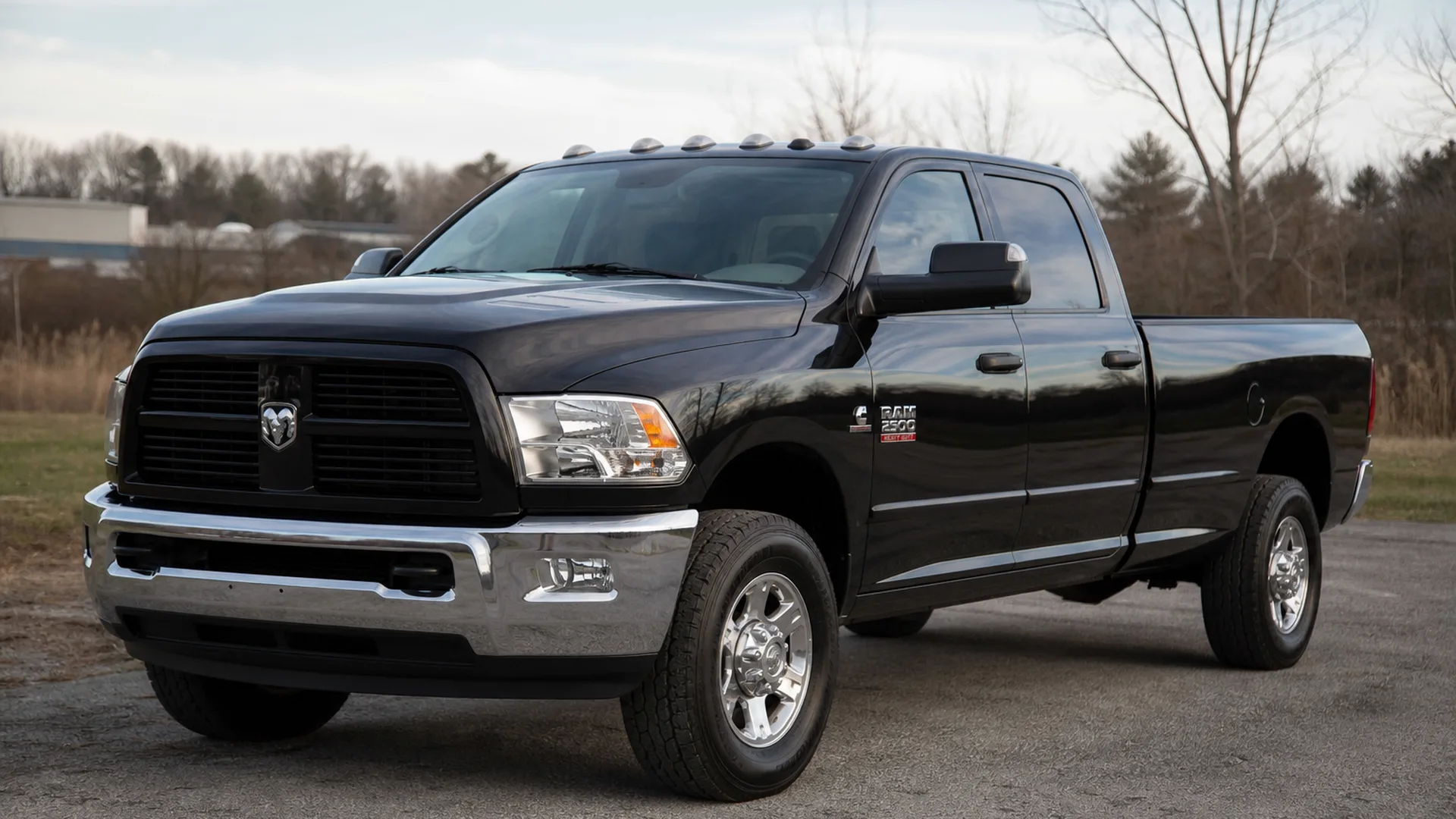
The Ram 2500 has earned its stripes as a workhorse. Cummins torque that’ll tow your house, enough payload to haul a small mountain, and pricing that doesn’t always require a second mortgage. It’s why you see these trucks at construction sites, pulling horse trailers, and hauling fifth-wheels across the country.
But here’s the truth nobody tells you at the dealership: some Ram 2500 model years are absolute nightmares. We’re talking steering that fails at highway speeds, brakes that stop working with 1,000 miles on the odometer, and engine defects that destroy your motor in seconds. Repairs often run $8,000 to $15,000 – sometimes more than the truck’s worth.
How we rated the best and worst Dodge ram 2500 years
We didn’t just read a few forum posts and call it research. Our team spent weeks combing through official data to give you the real picture:
Primary sources we analyzed:
- NHTSA complaint database – tracking complaint volumes, safety defects, and recall campaigns across every model year
- Official recall records – documenting steering failures, brake system defects, airbag malfunctions, and catastrophic engine problems
- CarComplaints and RepairPal – aggregating thousands of real owner experiences and repair cost data
We also cross-referenced:
- Ram owner forums (Cummins Forum, HD truck communities)
- Long-term ownership reviews from Edmunds and Kelley Blue Book
- Mechanic and fleet operator feedback on common failures
What makes our research different? We mapped complaint density against mileage to spot early failures. We analyzed safety-critical defects separately (steering loss, brake activation) because those can kill you. We compared engine-specific problems (Cummins diesel vs Hemi gas) and tracked reliability patterns across all five Ram 2500 generations.
The goal: give you the clearest possible picture of which years will serve you well and which ones will drain your bank account.
What Actually Breaks on Ram 2500s
Before we get into specific years, let’s talk about the problems that show up again and again. Understanding these patterns helps you spot trouble during a test drive or pre-purchase inspection.
1. Engine Troubles That’ll Leave You Stranded
Both the 6.4L Hemi V8 and the 6.7L Cummins diesel have weak points that cost serious money.
Cummins diesels from 2013–2016 are notorious for turbocharger and turbo actuator failures. You’re driving down the highway towing your trailer when suddenly the turbo quits and power drops to nothing. Some owners report the turbo actuator forcing the truck into engine-braking mode, which basically means you have to pull over immediately.
Then there’s the intake plenum bolt nightmare on certain Cummins models (especially 2014). A bolt can work itself loose, get sucked into a cylinder, and destroy your entire engine in seconds. No warning. No second chances. Just instant catastrophic damage.
Exhaust manifold bolts break on both gas and diesel engines, causing exhaust leaks and persistent ticking noises. Diesel Particulate Filters (DPF) clog up and trigger limp mode, killing your power when you need it most. These aren’t cheap fixes – turbo replacements run $2,000–$4,000, and a destroyed engine? You’re looking at $15,000+ for a rebuild or replacement.
2. Transmissions That Give Up Early
The 68RFE 6-speed automatic has a spotty record. Solenoid pack failures are common, sometimes hitting around 70,000 miles. When they fail, you get hard downshifts at highway speeds or the transmission slips into neutral unexpectedly – imagine that happening while merging onto the freeway.
Premature bearing wear and erratic shifting plague these transmissions. Some owners report needing complete rebuilds before 100,000 miles, with repair bills running $4,000–$6,000. In severe cases, failed solenoids shred the clutch packs, requiring a total transmission overhaul.
3. The Infamous “Death Wobble”
Ask any Ram 2500 owner about the death wobble and watch their face change. This is a violent, terrifying front-end shake that hits at highway speeds after you run over a bump. The steering wheel shakes so hard you can barely hold it, and the whole truck feels like it’s coming apart.
The culprits? Track bar brackets that crack or separate, drag link components that fail, tie rod ends that wear out prematurely. Ram issued recalls and fixes, but some trucks still experience steering instability or sudden loss of steering control after the repair. This is especially common in early-2010s models, and it makes the truck genuinely unsafe.
4. Brakes That Stop Working (Or Work When They Shouldn’t)
Here’s a scary one: the Hydraulic Control Unit (HCU) that manages ABS and traction control has a nasty habit of failing completely. This problem exploded in 2018 models (we’ll get to that), but it shows up in other years too.
Owners report random loss of ABS and stability control with warning lights flashing. Sometimes brakes lock up unexpectedly on slick roads. Other times the brakes activate on their own at highway speed – imagine your truck suddenly braking hard while you’re doing 70 mph in traffic.
Some trucks experience complete ABS failure at very low mileage, causing near-collisions. Ram issued recalls (like NHTSA Recall 24V896000), but as of 2025, many owners still report no available fix. You’re literally driving around with compromised brakes.
5. Electrical Gremlins Everywhere
Ram HD trucks are riddled with electrical problems. The TIPM (Totally Integrated Power Module) fails and causes everything from engine stalling to accessories not working at all.
Some 2012–2014 trucks had faulty WIN (wireless ignition) or body control modules that would shut the engine off while driving, as if someone turned the key off. When that happens, you lose power steering and power brakes – both critical safety features.
Backup cameras malfunction. Infotainment screens freeze or start sending random commands. Instrument clusters go dark. Cruise control stops working. 4WD won’t engage. In one documented case, wiring behind the dash shorted out and started a dashboard fire that totaled the truck.
6. Airbag Defects That Could Kill You
Multiple model years had airbag problems. 2013 Ram 2500s had several recalls for airbags that would deploy randomly while driving or fail to deploy properly in a crash. Side curtain airbags might not deploy in rollovers, which is exactly when you need them most.
These safety system failures triggered numerous recalls and point to serious quality control issues. Always verify that recall work was completed before buying any used Ram 2500.
7. A/C That Can’t Keep Up
This one’s less dangerous but still frustrating. Some Ram 2500 owners (especially 2019–2020 models) report the A/C blowing warm air on one side or taking forever to cool the cabin. Ram issued a Technical Service Bulletin for a redesigned HVAC housing to fix poor cooling and uneven vent temperatures.
Earlier models (mid-2000s Rams) also had A/C complaints, often traced to blend door or compressor failures. If you live somewhere hot or plan to use the truck in summer, make sure that A/C works properly during your test drive.
The Worst Ram 2500 Years (Stay Far Away)
Not all Ram 2500s are created equal. Some years are reliability disasters that’ll drain your wallet and leave you stranded. Based on NHTSA data, owner complaints, and recall records, here are the years you should absolutely avoid:
2003–2004: Old Problems, High Costs
These early third-generation trucks have issues that don’t justify their used-truck prices. The 2003 model logged the most overall complaints, many about cracked dashboards that split apart in the sun – a widespread defect that Dodge never properly fixed.
2004 is often called the “worst Dodge Ram 2500” because major problems show up at relatively low mileage and repair costs run high. Both years suffered from weak automatic transmissions and interior durability problems (brittle dash plastics that crack even in moderate climates).
These trucks are mechanically simpler than newer models, which sounds good until you realize the simplicity didn’t translate to reliability. Parts are getting harder to find, and mechanics charge premium rates for old-truck diagnostics.
2012: When Steering Became a Safety Crisis
The 2012 Ram 2500 kicks off a dark period for the fourth generation. The death wobble became a major complaint, traced to cracked front track-bar brackets and failing tie-rod ends. Ram issued a recall, but many owners report the problem came back even after the fix.
There was also a recall for overheating fuel heater connectors that posed a fire risk – not exactly something you want to discover while driving.
Electrical problems started showing up: faulty ignition nodes causing engine stalls, wonky modules killing accessories. The 6.7L Cummins diesels had exhaust manifold issues (warping and broken bolts) that let exhaust leak into the cabin.
Repair costs add up fast on 2012s: steering fixes, electrical diagnostics, engine work. Pass on this year.
2013: Peak Recall Year (16 Recalls!)
If there’s a single worst modern Ram 2500 year, 2013 is a strong contender. This model racked up 16 recalls and hundreds of NHTSA complaints.
Engine failures dominated the complaint list, especially on Cummins diesels. Owners experienced sudden power loss, clogged DPFs, turbocharger failures, and engine knocking even under 30,000 miles. These aren’t minor annoyances – they’re expensive fixes that leave you stranded.
The death wobble returned with a vengeance. Multiple airbag recalls addressed airbags deploying without warning while driving or not deploying in actual crashes. Electrical complaints piled up: door locks, ABS lights, random sensor failures.
With all these systemic issues, 2013 is regarded as one of the worst years of the modern Ram era. Don’t touch it, even if the price seems tempting.
2014: The Intake Bolt That Destroys Engines
The 2014 Ram 2500 continued the reliability nightmare with 16 recalls and hundreds of complaints. But the truly catastrophic problem was an intake plenum bolt defect on Cummins diesels.
Here’s how it works: a bolt in the intake plenum can work loose and get sucked into a cylinder. When that happens, the engine destroys itself instantly. No warning signs. No gradual failure. Just sudden, complete engine destruction.
Many 2014 diesels also suffered overheating that led to failed EGR coolers, thermostat failures, and clogged heater cores. Steering problems persisted despite recall fixes – some owners had the track-bar bracket welds fail again and lost steering on the highway.
Between devastating engine failures and unresolved suspension flaws, 2014 is a year to avoid at all costs.
2015: Transmissions and Turbos Fail in Droves
You’d think Ram would have sorted things out by 2015, but this year brought its own slate of problems. Over 200 NHTSA complaints and 15 recalls document widespread issues.
The steering vibration wasn’t fully solved – many 2015 trucks pull to the right or feel unstable at speed, even after multiple alignment attempts. Engine and transmission failures spiked. Transmissions failing before 80,000 miles (slipping or going into limp mode) became common, often due to solenoid pack failures. Complete rebuilds at $5,000+ weren’t unusual.
Diesel models had turbo actuators that would fail suddenly, dropping the truck into engine-braking mode and forcing the driver to pull over. Some owners reported cruise control that wouldn’t disengage, causing runaway acceleration until they shut the truck off.
The 2015’s combination of persistent steering issues and major powertrain failures makes it a high-risk year.
2016: Same Problems, No Coverage
The 2016 Ram 2500 logged 14 recalls and nearly 240 complaints. Turbocharger and turbo actuator problems carried over from 2015 – drivers report sudden power loss on the highway or while towing, a terrifying scenario in a heavy-duty truck.
What makes 2016 particularly frustrating? Some of these failures were the exact same defects covered under extended warranty for 2015 models, yet 2016 owners were denied coverage. Same problem, different year, no help.
Transmissions remained weak: hard downshifts, unintended downshifting at speed, trucks rolling away when parked due to shifter faults. Braking and electronic stability issues peaked. Many owners had ABS and traction control cut out simultaneously, sometimes also disabling 4WD and cruise control.
A few even experienced random self-braking where the truck would brake on its own at highway speed. Given these problems, 2016 is another year to skip.
2018: The ABS Disaster (Over 2,000 Complaints)
The 2018 Ram 2500 is widely regarded as one of the worst modern Ram trucks. It amassed over 2,000 complaints – an extraordinarily high number – and 9 recalls as of 2025.
Here’s the big problem: over 1,600 complaints relate to failure of the ABS/HCU braking system. Drivers repeatedly report ABS and traction control warning lights with incessant chimes, then brakes lose effectiveness or lock up unexpectedly, especially in slick conditions.
These issues often start almost brand-new – some trucks show symptoms around 1,000 miles. There’s an active recall for the HCU in 2018 models, but Chrysler has struggled to provide a fix, leaving many owners driving with compromised brakes.
Aside from the brake crisis, 2018 trucks show lots of electrical bugs: failing ABS modules, glitchy backup cameras, wonky infotainment units. With its combination of unresolved safety defects and electronic issues, 2018 is absolutely a model year to avoid.
The Best Ram 2500 Years You Can Actually Trust
Now for some good news: not all Ram 2500s are reliability nightmares. Some years prove that when Ram gets it right, they build a genuinely excellent heavy-duty truck. If you’re shopping used, focus on these years:
2019–2020: The Fifth-Generation Turnaround
The 2019 Ram 2500 brought an all-new design and major improvements. These trucks are rated among the best by experts and owners, with relatively few complaints compared to earlier years.
They benefit from a stronger frame, updated suspension, and a refined 6.7L Cummins engine paired to a new 8-speed or improved 6-speed transmission. Towing capacity went up. Ride quality improved dramatically. Interior tech and comfort finally matched what Ford and GM were offering.
There’s one known issue: the factory high-pressure fuel pump (CP4) on the Cummins diesel was prone to failure, prompting a major recall. The good news? Ram authorized a fix, and many owners replaced it with the more reliable CP3 pump (often reimbursed by Ram).
With that fuel pump issue addressed, 2019–2020 Ram 2500s stand out for powerful performance, comfortable and tech-rich interiors, and overall better reliability than earlier years. Regular maintenance is key, but these trucks are built to deliver long service lives.
2021: Refined and Reliable
The 2021 Ram 2500 continued the strong showing of the new generation. It’s considered a safe bet with only a handful of minor issues reported.
The Cummins diesel engine is renowned for durability – many owners consider it “nearly indestructible” if you maintain it properly. 2021 brought incremental updates like an optional digital rearview mirror and improved trailer guidance tech.
The main caveat? The 68RFE automatic transmission remains a known weak point. It’s adequate with proper service (frequent fluid changes help), but it’s not as robust as the Allison transmission you’ll find in GM trucks.
Emissions control components (DPF, DEF system) can occasionally act up if you don’t drive the truck hard enough to keep the system cycling properly. But overall, 2021 models strike a good balance of modern amenities and sorted-out mechanicals.
2022: Low Complaints, High Tech
The 2022 Ram 2500 is one of the most reliable recent years you can buy. It benefits from all the fifth-generation improvements and logged very few complaints in its first couple of years on the road.
2022 brought the new Uconnect 5 infotainment system and made blind-spot monitoring standard, adding to the truck’s appeal. So far, only isolated electrical issues have been noted (a few owners reported random warning lights or module glitches), but no widespread problems.
Its blend of impressive capability, luxury features, and improved reliability makes 2022 models highly recommended if your budget allows a nearly new truck.
2023: Top Reliability Rankings
If you’re considering a new or nearly-new Ram 2500, the 2023 model is a strong pick. Consumer Reports gave it one of the highest reliability rankings in the class.
Being a mid-cycle refresh year, 2023 introduced the Ram 2500 Rebel trim and a fully digital gauge cluster, while ironing out issues from earlier fifth-gen trucks. CarComplaints (an owner-reported database) shows virtually no major complaints for 2019, 2020, or 2023 Rams.
Of course, as a newer model it’s pricier on the used market, but you get the benefit of modern tech and likely some factory warranty remaining.
Pro tip: Even for the “best” years, always verify that recalls have been addressed – especially the fuel pump recall on 2019–2020 diesels and any software updates. Check the maintenance history, since heavy-duty trucks often lead hard lives. But overall, the years above have the most favorable track record.
Better Alternatives to Consider
The heavy-duty truck segment is competitive, and Ram isn’t your only option. Depending on your needs, these alternatives might offer superior reliability:
Ford F-250 Super Duty: The Longevity Champion
Ford’s F-250 has a long-standing reputation for durability, especially with Power Stroke diesel engines.
The 1999–2003 F-250 models with the 7.3L Power Stroke V8 are legendary. These trucks routinely surpass 400,000 miles with basic maintenance. The 7.3 Power Stroke is often called “nearly unkillable” for its robust internals and simple design. If you find a well-maintained 7.3L truck, grab it.
For something newer, the 2011+ F-250 introduced the 6.7L Power Stroke, which became a strong performer after early teething issues. By the mid-2010s, Ford’s 6.7L diesels were refined and the trucks showed solid reliability (avoiding the problematic 6.0L and 6.4L engines of the mid-2000s).
Ford also offers excellent gasoline options: the 6.2L (2011–2016) and later 7.3L “Godzilla” V8 (2020+), which are simpler and very stout for heavy use. Fleet owners often report F-250s require fewer major repairs than Rams.
Chevrolet Silverado / GMC Sierra 2500HD: The Duramax Advantage
General Motors’ 3/4-ton twins are excellent alternatives. The Duramax diesel paired with the Allison automatic transmission is the hallmark of GM HD trucks.
2006–2007 Silverado/Sierra 2500HD models with the 6.6L Duramax LBZ are widely regarded as the most reliable GM diesels. This was the last iteration before stricter emissions controls, and the LBZ engine had strengthened internals and an outstanding reliability record.
The Allison 1000 6-speed transmission in those years is known as one of the toughest automatics in any pickup. Many LBZ trucks easily run 250,000+ miles with minimal issues, making them highly sought after in the used market.
For newer models, the 2017+ Silverado 2500HD (with the L5P Duramax) is another strong choice. GM solved many prior issues and these trucks perform exceptionally well.
If you prefer gas engines, GM’s 6.0L Vortec V8 (2001–2019) is a proven workhorse that avoids diesel complexity. Chevy kept the 6.0 Vortec in production for nearly 20 years, so there’s a huge supply of reliable gas HD trucks at good prices.
Final Verdict: Choose Carefully and You’ll Be Fine
The Ram 2500 can be an outstanding truck in the right year and configuration. But some years have well-documented problems you shouldn’t ignore.
Avoid these years completely: 2003–2004, 2012–2016, and especially 2018. The combination of steering failures, brake system defects, transmission problems, and catastrophic engine issues makes these trucks high-risk purchases.
Buy these years with confidence: 2019–2023 models represent a dramatic turnaround in Ram 2500 reliability. The fifth-generation redesign addressed many long-standing problems, and owner satisfaction is significantly higher.
Consider alternatives: If you’re looking at a problematic Ram year, you might save yourself headaches by choosing a Ford F-250 (especially 7.3L diesel or newer 6.7L) or a Chevy/GMC 2500HD (LBZ Duramax era or gas 6.0L Vortec).
Do your homework on specific years no matter which heavy-duty truck you choose. Competitors have their own “best and worst” years too. By selecting a reliable model year and verifying recall completion and maintenance history, you’ll get a tough truck that serves you well with fewer unwelcome surprises down the road.
A poorly chosen Ram 2500 can cost more to fix than it’s worth. Choosing the right year can save you thousands – and keep you safe while towing or working.