
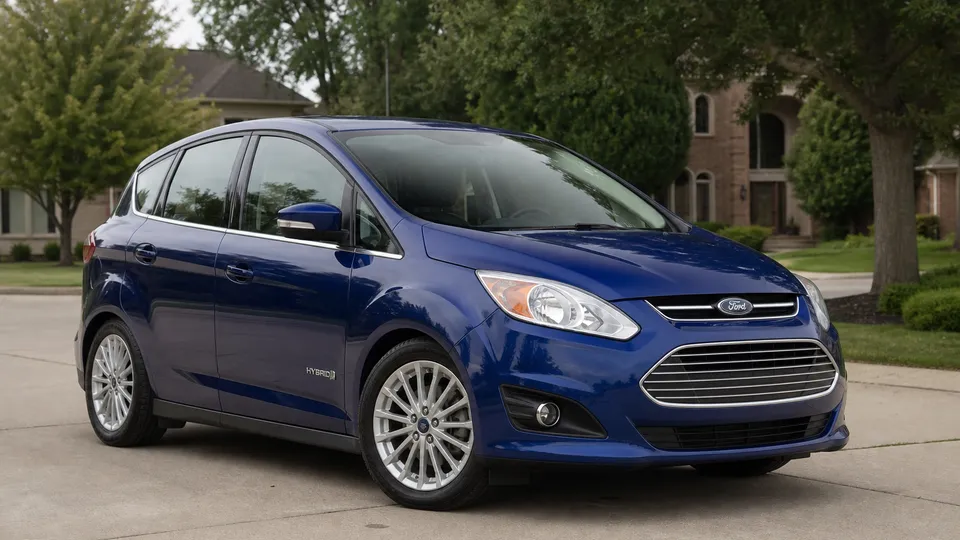
The Ford C-Max is a capable, fuel-efficient compact hybrid that earns a 4.0 out of 5.0 reliability rating from RepairPal, ranking it 10th out of 36 compact cars, with an average annual repair cost of $557 - lower than average ownership costs. That said, a few specific model years carry enough complaints, recalls, and documented failures to warrant serious caution before you hand over your money. This guide uses NHTSA complaint data, CarComplaints PainRank scores, RepairPal figures, and owner forum reports to give you a data-backed ranking of every C-Max year sold in the US.
At a glance
- Worst years
- 2013
- 2014
- Best years
- 2017
- 2018
- Top failure
- 12-volt battery drain / electrical system failure (2013-2014, CarComplaints)
- Always do before buying
- run the VIN through NHTSA's recall checker to confirm every open recall is closed, and on 2013-2014 cars check for the dead-battery TSB history (TSB 14-0155)
How we rated the best and worst Ford C-Max years
The 2014 Ford C-Max Hybrid ranks as the worse of the two worst years by CarComplaints’ PainRank methodology - which factors in repair cost and mileage at failure - even though the 2013 model has the most total complaints, with electrical problems the most common category overall. That distinction matters: CarComplaints ranks the worst year by repair cost and mileage at failure (PainRank), while NHTSA shows raw complaint volume - they often point to different years.
The years to avoid methodology used here weighs complaint severity and mileage at failure alongside raw volume, which is why 2014 ranks worse than 2013 despite having fewer total complaints. We drew on NHTSA complaint and recall data, CarComplaints PainRank scores, RepairPal reliability ratings, and real owner accounts from the C-Max Owners Club forum to build this guide.
| Ford C-Max Generation | Best Ford C-Max Years | Worst Ford C-Max Years |
|---|---|---|
| 1st Gen (2013-2018) | 2017, 2018 | 2013, 2014 |
Every Ford C-Max model year ranked
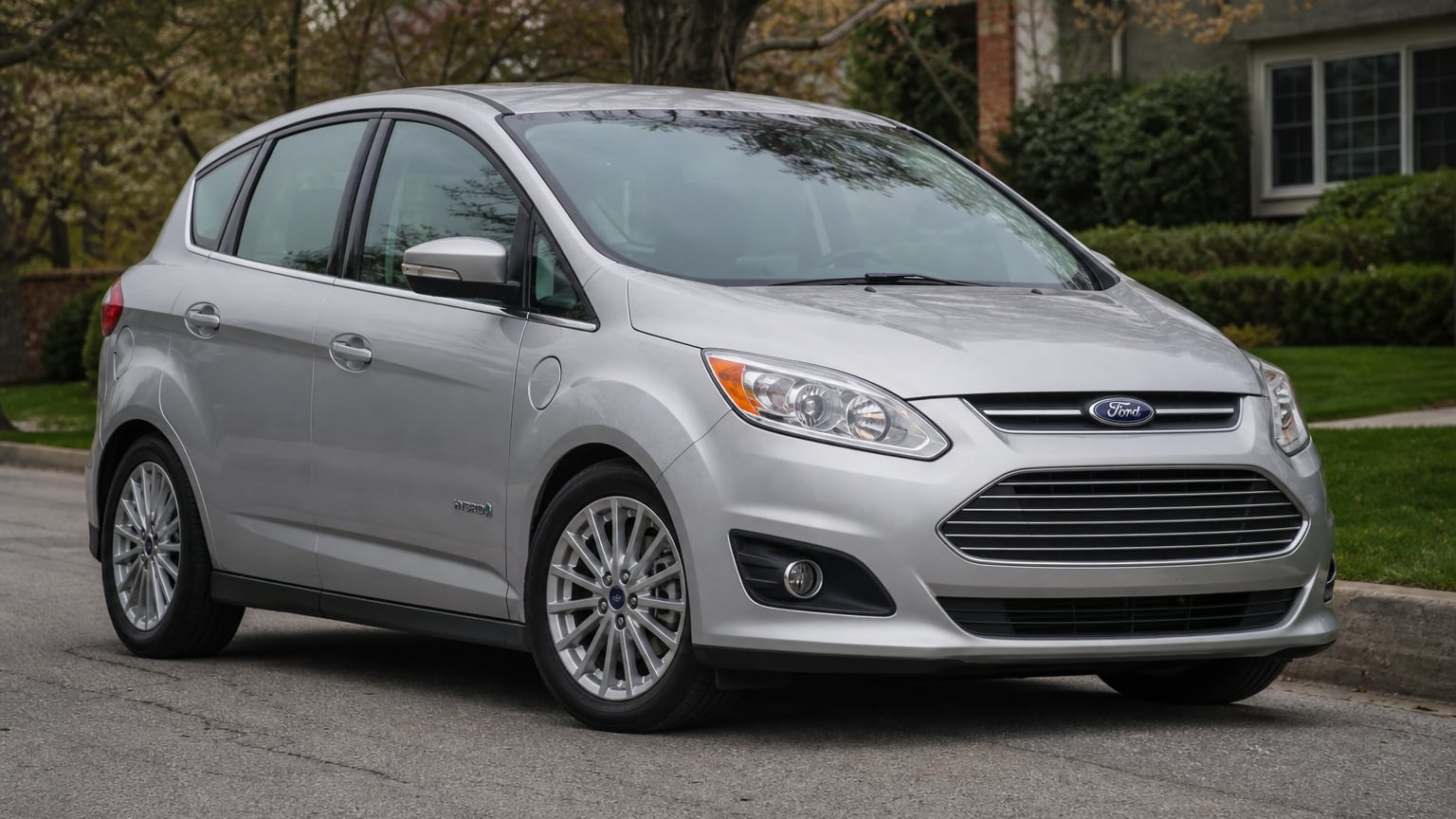
The US-market Ford C-Max ran for a single generation from 2013 through 2018, giving you six model years to evaluate. Here is how each stacks up based on complaint volume, recall counts, and PainRank data.
| Model Year | Generation | Verdict | Notes |
|---|---|---|---|
| 2013 | 1st Gen | Avoid | Highest NHTSA complaint volume (222); 7 recalls; dead battery, electrical, steering |
| 2014 | 1st Gen | Avoid | CarComplaints PainRank worst; 8 recalls; higher repair cost at lower mileage |
| 2015 | 1st Gen | OK/Mixed | Complaint volume drops to 57 (NHTSA); door latch recall; engine-off software issue |
| 2016 | 1st Gen | OK/Mixed | Lower complaint count; improperly welded apron joint recall on some units |
| 2017 | 1st Gen | Best | Among the lowest NHTSA complaint counts; RepairPal 4.0/5.0 rating |
| 2018 | 1st Gen | Best | Final production year; lowest documented problem score in NHTSA data |
Most common Ford C-Max problems
The single biggest documented failure across all C-Max years is the 12-volt battery drain, which generated more owner complaints than any other category on CarComplaints. Below are the five recurring problem categories found in NHTSA and CarComplaints data, ordered most serious first.
12-volt battery drain and electrical system failure
The 2013 Ford C-Max Hybrid has 47 complaints logged specifically for a dead battery, with an average repair cost of $220 at around 29,250 miles. The symptom is straightforward: you return to your parked C-Max and it is completely dead, with no warning. In a hybrid that runs efficiently on the electric motor, the 12-volt accessory battery charges only when the gas engine runs - so the more efficient your driving, the higher the probability the 12-volt battery will drain.
Ford issued three documents addressing this: TSB 14-0155 (Hybrid and Energi - Discharged 12 Volt Battery), program 15B04 (12 Volt Battery Test and Module Software Update for 2013-2014 C-Max), and TSB 16-0157 (C-MAX Energi - Discharged 12 Volt Battery). The root causes are noted to be either a faulty TCU or chafing on the wire harness around the rear liftgate. If you are shopping a 2013 or 2014 C-Max, ask your dealer to pull service records and confirm whether TSB 14-0155 and program 15B04 have already been performed on that specific vehicle.
A car that hesitates to start or won’t crank at all on a C-Max is most likely the 12-volt battery, not the high-voltage hybrid pack - an important distinction because replacing the 12-volt unit runs around $220 while the high-voltage traction battery is a much larger expense. On the 2014, 8 complaints were recorded for the battery going completely dead with an average repair cost jumping to $1,200 at around 20,950 miles - suggesting the issue matured faster on the 2014 and cost more to fix.
Buyer takeaway: Before buying any 2013-2014 C-Max, confirm TSB 14-0155 was performed, and budget for a possible 12-volt battery replacement even if it was.
Door latch failure
NHTSA recall campaign 16V643000 covered 2013-2015 Ford C-Max vehicles; a component within the door latches could break, preventing the doors from latching and potentially leading a passenger to believe a door was securely closed when it was not - a door that is not latched can open while the vehicle is in motion, raising the risk of injury.
The 2014 model year alone carried 8 recall campaigns, the most of any single C-Max year, and the door latch was among the most consequential. Ford extended the campaign after initial repairs were found to be inadequate. A subsequent recall covered 2013-2015 C-Max vehicles that had been previously recalled and repaired under campaigns 15V-246, 16V-643, or 17V-210, because the repair may not have been completed properly - a door latch component could still break, making doors difficult to latch.
Buyer takeaway: Run the VIN through NHTSA’s recall tool to confirm the door latch recall was properly completed - not just performed once and re-opened.
Electronic Power Assisted Steering (EPAS) failure
The EPAS system can fail on startup, triggering a “Service Power Steering soon” warning; owners report being able to steer, but with great effort - significantly heavier than any other vehicle they had experienced losing power steering. NHTSA received 15 steering complaints from 2013 C-Max owners alone.
The EPAS system is subject to electrical failures and premature breakdowns causing a sudden loss of power steering while driving, and Ford has faced multiple class-action lawsuits over it. Repair typically involves replacing the steering gear assembly, which is expensive once the vehicle is out of warranty. Owners on the C-Max Owners Club forum describe having difficulty getting dealers to reproduce the intermittent fault before it becomes a full failure. A steering wheel that suddenly feels hard to turn is the clearest pre-failure warning sign on affected C-Max vehicles.
Buyer takeaway: On any 2013-2014 C-Max test drive, make several low-speed parking-lot turns and note whether steering effort feels consistent.
MyFord Touch / infotainment failures
The worst overall problem category for the C-Max Hybrid on CarComplaints is electrical problems, and a large portion of those trace back to the MyFord Touch infotainment system. Ford’s customer satisfaction was in steady decline from 2010 onward, and MyFord Touch was also released that year - Ford’s attempt at an all-in-one in-dash communication and entertainment system. On the 2013 C-Max, owners report the screen going black mid-drive, GPS locking up, radio going silent, and Ford Sync refusing to pair with phones.
Around 75 owners complained of electrical faults in the 2013 C-Max, with many of those complaints covering radio, indicator lights, GPS, Ford Sync, and audio systems malfunctioning. The system can also draw enough parasitic current to contribute to the 12-volt battery drain problem described above. Fortunately, software updates addressed many Sync glitches on later model years, making the 2016-2018 cars noticeably more stable in this area.
Buyer takeaway: On the test drive, verify that the touchscreen responds quickly, that Sync pairs without error, and that the backup camera displays correctly.
Overstated fuel economy (2013-2014)
Ford reached a $19.2 million multistate settlement over claims that the company falsely advertised the real-world fuel economy of 2013-2014 C-Max hybrids. Real-world testing returned around 34 mpg in the C-Max, alarmingly low for a vehicle EPA-rated at 47 mpg city/47 highway. Ford later downgraded the official EPA ratings on affected models. This does not make the cars unreliable, but it does mean your actual running costs on a 2013-2014 will be higher than you might expect from the window sticker.
Buyer takeaway: When calculating ownership cost on a 2013-2014 C-Max, budget on 35-38 mpg in real-world mixed driving rather than the original EPA label figures.
Which Ford C-Max years should you avoid?
The Ford C-Max years to avoid are 2013 and 2014. CarComplaints rates the 2014 as the worse of the two by PainRank because of higher repair cost and problems occurring at lower mileage, while NHTSA complaint volume is highest on the 2013, which logged 222 complaints - more than double the 2014’s 100 - and the 2014 carried the most recall campaigns of any single year, with 8 separate NHTSA campaigns.
| Ford C-Max Generation | Model Years | Verdict | Main Issues |
|---|---|---|---|
| 1st Gen | 2013, 2014 | Avoid | Dead battery, door latches, EPAS failure, MyFord Touch, inflated MPG claims |
| 1st Gen | 2015, 2016 | OK/Mixed | Fewer complaints; door latch re-recall, engine software recall on 2015 |
| 1st Gen | 2017, 2018 | Best | Lowest complaint volume, 4.0/5.0 RepairPal rating |
Worst Ford C-Max years: 2013, 2014
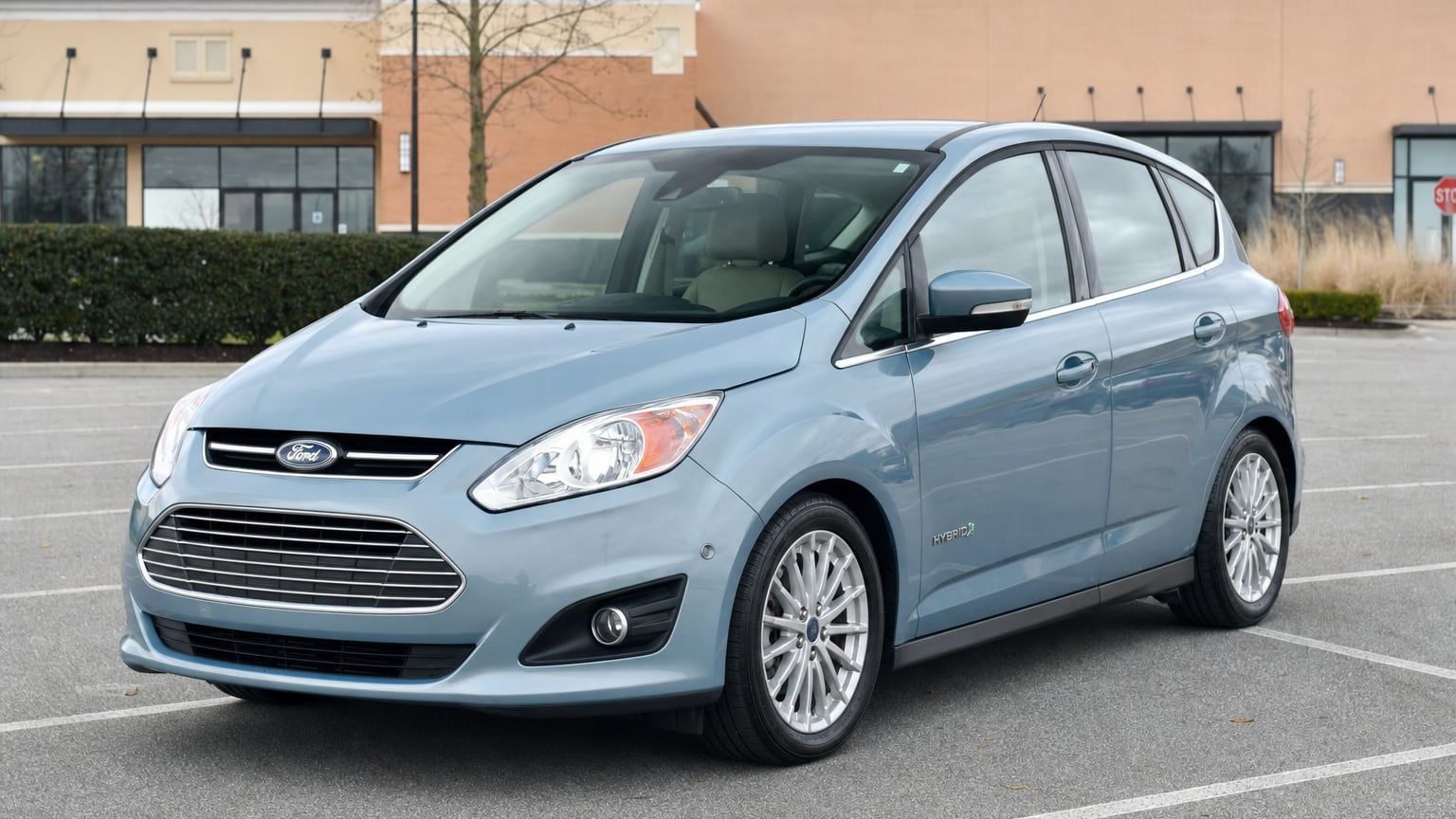
1st-generation Ford C-Max (2013-2014)
NHTSA data covers model years 2013-2018 with 26 total recall campaigns, and the years with the most recall activity were 2014 (8 campaigns), 2013 (7 campaigns), and 2015 (6 campaigns). The 2013 is the volume leader for complaints while the 2014 is the PainRank leader - between them they account for the majority of every documented C-Max problem category. Consumer Reports notes the 2013 C-Max is less reliable than other cars from the same model year and has been recalled 7 times by NHTSA.
The 2013 was the first US-market model year, which means it carried immature software, first-year production quirks, and less dealer familiarity with hybrid-specific repairs. The 2014 carried most of those same hardware issues but saw repairs fail early enough to inflate its per-mile cost figures well above the 2013.
What are the best Ford C-Max years to buy?
The best Ford C-Max years to buy are 2017 and 2018. NHTSA data shows the 2017-2018 models had significantly fewer reported issues than earlier years. The Ford C-Max carries a 4.0 out of 5.0 RepairPal reliability rating, ranks 10th out of 36 compact cars, averages $557 annually in repair costs, and has both lower severity and lower frequency of repairs than most vehicles - making it one of the more reliable cars on the road when you choose the right year.
| Best Ford C-Max Year | Why It's a Strong Buy |
|---|---|
| 2017 | Among the lowest NHTSA complaint counts; TSB fixes already applied; 4.0/5.0 RepairPal rating |
| 2018 | Final production year; fewest documented problems; lowest problem score in NHTSA data |
Most reliable Ford C-Max years: 2017, 2018
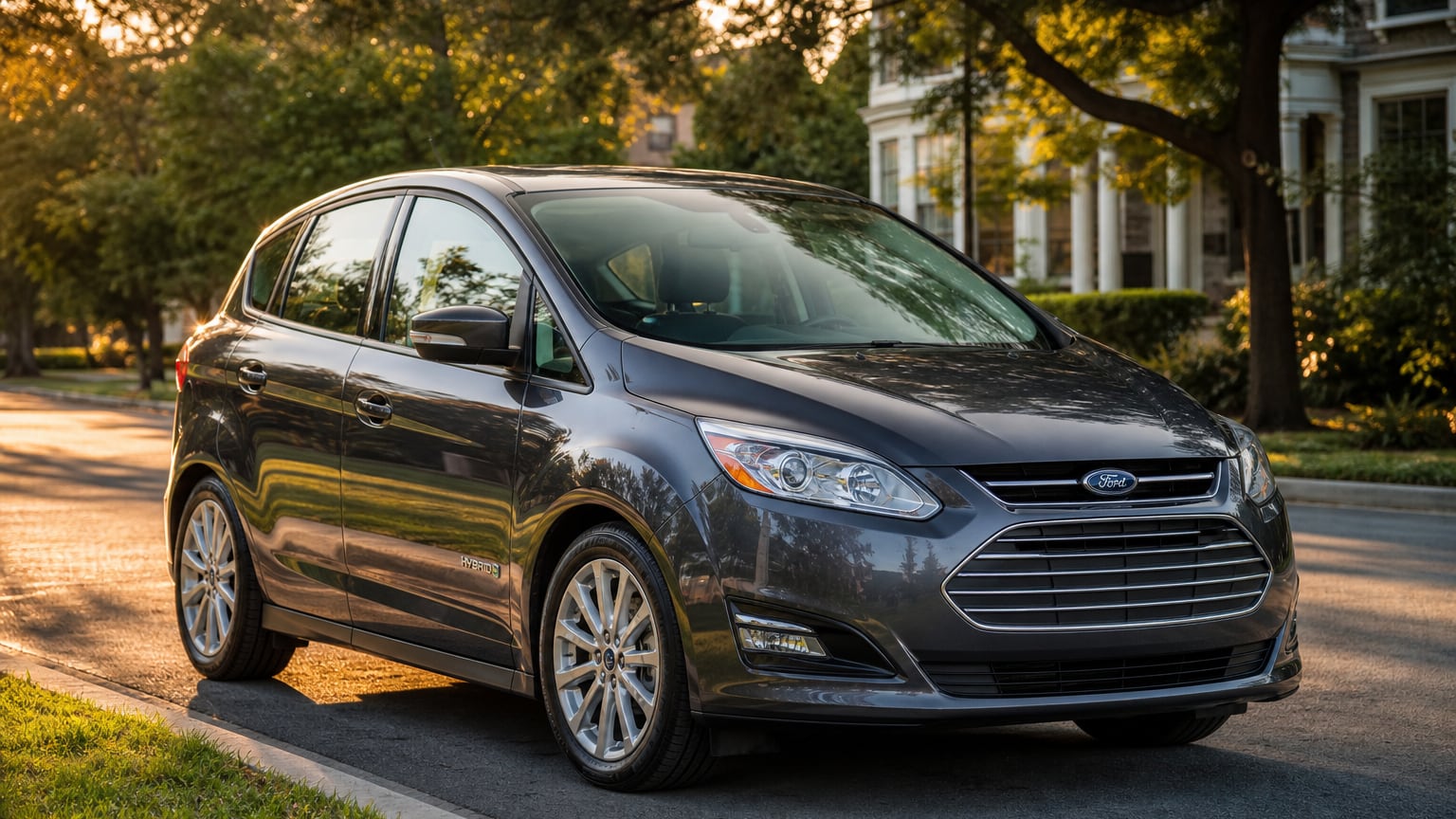
2018 Ford C-Max
The 2018 Ford C-Max is the lowest-risk year in NHTSA analysis, with only 1 recall and 4 complaints on record. As the final production year, it benefits from five model years of software updates, TSB fixes already implemented on the production line, and dealerships with the most experience servicing the platform. The severity and frequency of repairs are both much lower than other vehicles, and the 2018 represents that at its best.
2017 Ford C-Max
The 2017 and 2018 model years have the fewest documented problems of any C-Max years, and the 2017 sits in the sweet spot - old enough to have depreciated meaningfully from its original price, but young enough that the major TSB fixes (including TSB 14-0155 and program 15B04) were part of its production baseline. You get a car that avoids the first-generation growing pains without paying near-new prices. The pros and cons of hybrid cars as a class are well illustrated by the C-Max: the 2017 and 2018 show what the platform looks like when the early software issues are resolved.
Ford C-Max pre-purchase checklist
Before buying any used Ford C-Max, run through these model-specific checks to protect yourself from the platform’s known weak spots.
- Run the VIN through NHTSA’s recall checker. Confirm every open recall - particularly door latch campaigns 16V643000 and the subsequent re-recall - is fully closed on that specific VIN, not just opened and partially repaired.
- On 2013-2014 cars, ask for the dealer service history on TSB 14-0155 and program 15B04. These address the 12-volt battery drain; if neither has been performed, budget for a battery replacement and a possible TCU or wiring harness repair.
- Check the 12-volt battery voltage before test-driving. The dead-battery complaint on the 2013 averages around 29,250 miles - even a recently replaced battery on a 2013 or 2014 can fail again if the underlying TCU or harness issue was never addressed.
- Test the EPAS on the test drive. Make several tight, low-speed turns and a parking-lot U-turn. A “Service Power Steering soon” warning or unexpectedly heavy steering effort signals EPAS trouble - and steering gear replacement is expensive out of warranty.
- Cycle through the infotainment system completely. Test Sync, GPS, AM/FM, backup camera, and Bluetooth pairing. On 2013-2014 cars, a screen that is sluggish or drops connections points to unresolved MyFord Touch issues.
- Verify door latches on all four doors. Open and firmly close each door; a door that does not latch with normal force or that pops slightly ajar may still be affected by the latch recall even if the paperwork says it was repaired.
- Ask for full service records and check that hybrid battery health has been monitored. The hybrid traction battery is warranted for 8 years or 100,000 miles (10 years in California) - confirm whether that coverage has expired on the car you are considering.
- Budget realistically for fuel costs on 2013-2014 cars. Real-world economy runs around 34-38 mpg, not the original 47 mpg EPA label - factor that into your total cost of ownership comparison.
Better alternatives to consider
If the C-Max years in your budget land on the avoid list, consider these alternatives instead:
- Toyota Prius - the hybrid benchmark with a longer production run, a wider dealer network, and a well-documented year-by-year reliability record.
- Ford Fusion Hybrid - shares the C-Max platform but has a longer data record; check the best and worst Fusion years before buying a used example.
- Ford Focus - the non-hybrid sibling with similar cargo space and a broader used-car supply, with its own year-by-year reliability patterns worth reviewing before you commit.
- Honda Insight (2019-2022) - Honda’s more recently redesigned compact hybrid with a cleaner reliability record and lower complaint volume than the early C-Max.
Is the Ford C-Max worth buying?
Yes, as long as you avoid 2013 and 2014. The C-Max earns a 4.0 out of 5.0 from RepairPal, ranks 10th out of 36 compact cars, averages $557 in annual repair costs, and has lower severity and frequency of repairs than most vehicles. The 2018 model year in particular stands out as the lowest-risk option, with just 1 recall and 4 NHTSA complaints on record. A 2017 or 2018 C-Max in good condition with documented service history represents a solid used-car buy in the compact hybrid segment. Run the VIN through NHTSA’s recall checker, verify maintenance records, and confirm the door latch and battery TSB history before signing anything.