
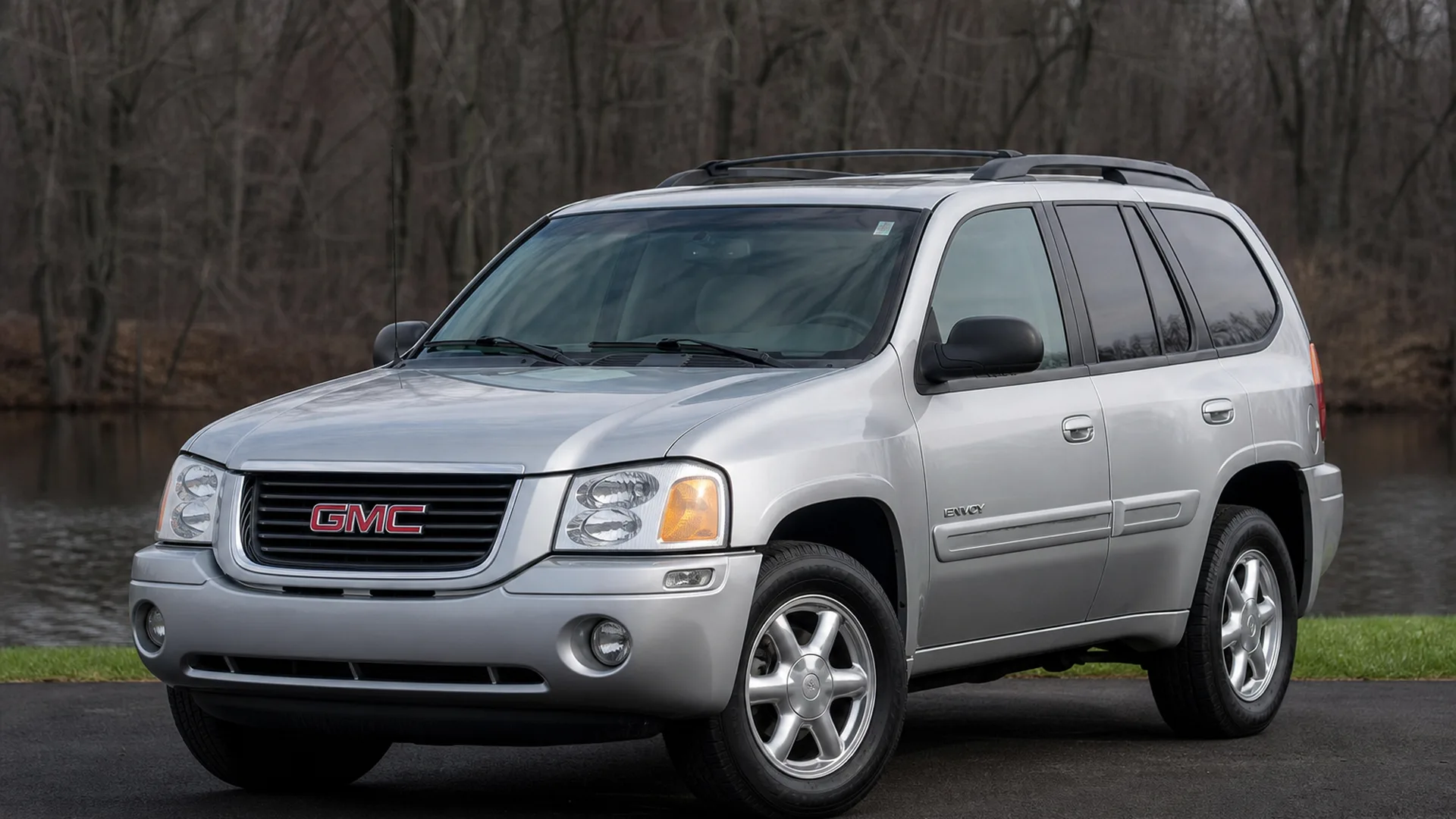
Shopping for a used GMC Envoy? Smart move checking reliability first. From 2002 to 2009, this midsize SUV offered real towing muscle—your pick of a 4.2L inline-six or a gutsy 5.3L V8, plus room for seven in the XL version. The upscale Denali trim even brought leather and tech you’d normally find in pricier rides. But here’s the catch: certain years became money pits for owners, racking up transmission replacements, dead gauge clusters, and fuel leaks that drained bank accounts faster than gas tanks. Below, you’ll see exactly which Envoys to skip and which late models actually hold up well.
How we rated the best and worst GMC Envoy years
Our team pulled hard numbers from the NHTSA recall database, tracking years that saw 9–14 separate recall campaigns. We combed through owner complaint volumes on CarComplaints—some years logged over 700 individual gripes—and cross-checked reliability scores from RepairPal and TrueDelta. Then we dug into real owner stories on forums like TrailVoy, repair shop anecdotes, and long-term test notes from Edmunds to see what actually breaks.
What made this research different? We sorted complaints by system—fuel, electrical, transmission—so you can spot patterns. A single model year might have scattered problems, but when hundreds of people report the same dead speedometer or slipping gears, that’s a design flaw, not bad luck. We also compared the Envoy’s repair costs and failure rates against competing SUVs from the same era, giving you context on whether you’re better off looking elsewhere.
Most Common GMC Envoy Problems
1. Engine Troubles That Cost Big
The Envoy’s engine problems go way beyond routine maintenance. Owners frequently report excessive oil consumption—some 2006 models guzzle a quart every 500 miles—and by 70,000 to 80,000 miles, you might see lost compression from worn piston rings or blown head gaskets. Cracked exhaust manifolds are another headache, letting fumes leak and creating that loud ticking sound on cold starts. Head gasket repairs alone can run $2,000–$3,000 because the job means pulling the entire top end of the motor.
2. Fuel System Failures You Can Smell
If you catch a whiff of gasoline around an older Envoy, there’s a good chance the fuel filler neck has cracked—a shockingly common fault on 2002–2005 models. The metal tube that connects your gas cap to the tank corrodes and splits, letting raw fuel drip onto the pavement. Beyond the leak, many owners find their fuel gauge stuck on empty or bouncing randomly because the level sensor inside the tank has failed. Replacing the filler neck costs a few hundred dollars; ignoring it is a fire risk.
3. Transmissions That Quit Without Warning
The 2005 Envoy earned a reputation for catastrophic transmission failure—we’re talking total loss of forward gears, often without any warning slip or shudder. One day you’re driving fine; the next, the truck won’t move. Rebuilds or replacements typically cost $3,000–$4,000, and because so many units failed around the same mileage, mechanics suspect weak clutch packs or faulty valve bodies from the factory. Later years improved, but 2004–2006 models remain high-risk.
4. Electrical Gremlins in the Dash
Ask any Envoy owner from the mid-2000s about their instrument cluster, and you’ll hear groans. Speedometers freeze at zero, tachometers stop reading, and odometers go blank—all because the stepper motors behind the gauges burn out. GM issued a service bulletin, but the fix was expensive and often temporary. You’ll also find reports of headlights cutting out mid-drive, power windows that only work some days, and door locks cycling on their own. Electrical faults are scattered across systems, making them tough to diagnose.
5. HVAC and AC Issues
Blower motor resistor failures are par for the course—your fan speeds might work on high only, or the blower might hum without pushing air. Some owners discover their evaporator core has developed a leak, which means pulling the entire dashboard to replace it. A/C repairs can spiral past $1,000 if refrigerant lines or the compressor are also shot. These aren’t safety-critical, but they make summer driving miserable.
6. Brakes and Suspension Wear
Compared to the engine and electrical nightmares, brake and suspension problems are relatively minor. Warped rotors cause steering-wheel shake during stops—a common complaint on the 2005 model—and ball joints or control-arm bushings wear out on high-mileage examples. Most of these are typical wear items, costing a few hundred dollars to fix, but they add up if you’re already paying for a transmission or head gasket.
The Model Years You Should Absolutely Skip
2002: A Rocky Start
The second-generation Envoy debuted in 2002, and GM’s rush to market shows. This year logged 654 complaints and 14 separate recalls covering everything from faulty airbag sensors to fuel-line cracks. Four-wheel-drive systems malfunctioned, leaving drivers stuck in 2WD or unable to disengage 4WD. Early adopters also reported frequent stalling and rough idle, symptoms traced back to dirty throttle bodies and weak fuel pumps. If you see a 2002 listed cheap, understand why.
2004: Electrical Chaos
With 608 complaints, the 2004 Envoy holds the record for dashboard disasters. Instrument clusters failed in droves—your gauges would flicker, die, then maybe come back to life after a restart. The cracked fuel filler neck problem reached peak volume this year, and owners dealt with gas smells, Check Engine lights for EVAP leaks, and actual puddles of fuel. Headlight and taillight circuits also acted up, sometimes leaving you with no running lights at night. Parts suppliers still stock cluster replacements because so many failed.
2005: Transmission Graveyard
This year takes the crown for sheer complaint volume: 758 reports. The number-one issue? Complete transmission failure, often striking between 80,000 and 120,000 miles. Owners describe losing all gears, hearing grinding noises, or watching their SUV refuse to shift out of second. Repair shops quoted $3,500 or more for a rebuild, and many owners just traded the truck in. Fuel-level senders also failed at alarming rates, so your gauge might read full when you’re nearly empty. Combine those problems, and 2005 becomes the year to avoid above all others.
2006: Oil-Burning Engines
If the transmission didn’t get you, the engine might. The 2006 Envoy saw 506 complaints and 9 recalls, with excessive oil consumption topping the list. Owners report adding multiple quarts between oil changes, blue smoke from the tailpipe, and eventually lost compression requiring a full engine rebuild or replacement. Some traced the issue to worn valve seals; others found scored cylinder walls. Either way, you’re looking at multi-thousand-dollar repairs. Fuel injector and pump recalls added to the headaches.
2003: The Overlooked Problem Child
Sitting between 2002 and 2004, the 2003 model gets less attention, but it shares many of the same faults: instrument cluster failures, cracked filler necks, and headlight malfunctions. Complaint numbers are lower mainly because fewer were sold. If you’re considering a 2003, budget for the same repairs you’d expect on a 2004.
Special Note: The XUV Oddball
GM’s 2004–2005 Envoy XUV featured a power-retractable roof over the cargo bay and a midgate that opened the cabin to the bed. Cool in theory, nightmarish in practice. The roof mechanism jammed, leaked, or drained the battery. Parts availability is spotty, and most mechanics won’t touch the unique systems. Unless you love quirky projects, steer clear.
The Surprisingly Solid Late Models
2008–2009: Best of the Bunch
By the time GM reached the Envoy’s final years, engineers had ironed out the worst bugs. The 2008 model logged just 129 complaints—a fraction of the 2005 disaster—and 2009 saw only 27. No major recall waves hit these years, and the top issue was an occasional cracked exhaust manifold, a wear item rather than a design flaw. If you’re set on an Envoy, hunting down a clean 2008 or 2009 with maintenance records will save you serious money and stress.
2007: A Decent Middle Ground
The 2007 Envoy recorded 323 complaints, mostly centered on fuel gauge glitches and minor lighting quirks. That’s a big improvement over the 700+ complaints from 2005. No systemic transmission or engine defects plagued this year, making it a safer bet than anything from 2002–2006. Just confirm the seller has addressed any fuel-sender problems and check that the instrument cluster functions properly during your test drive.
2000–2001: First-Gen Simplicity
The original Envoy (built on the older GMT platform) had fewer bells and whistles, which translated to fewer things that could break. Complaint data for 1999–2000 models is sparse because production numbers were low and the trucks were mechanically straightforward. If you can find one in good shape, it might outlast the redesigned 2002–2006 models. Just expect dated interiors and less power.
What to Inspect Before You Buy
Even a “good” year can turn sour if the previous owner skipped oil changes or ignored warning lights. For any late-model Envoy, test every gauge in the cluster—speedometer, tachometer, fuel, temperature—and make sure none freeze or flicker. Check the ground under the truck for fuel stains near the rear filler neck. Run the A/C and heater through all fan speeds. Pop the hood and look for oil residue around valve covers or exhaust manifolds. Pull the dipstick; if the oil level is low and the truck has under 3,000 miles since the last change, you might have an oil-consumption problem brewing.
Better Options That Won’t Break Down
Toyota 4Runner (2003–2009)
If you want body-on-frame toughness without the Envoy’s reliability roulette, the 4Runner is your answer. TrueDelta rates the 2003–2009 generation as “good” for reliability, compared to the Envoy’s “neutral” score. The 4.0L V6 is nearly bulletproof, and Toyota’s resale values stay strong because owners know these trucks can hit 300,000 miles with routine care. You’ll pay more up front, but you’ll spend far less on repairs over the years.
Toyota Highlander (2004–2007)
Prefer a car-like ride with three rows? The second-generation Highlander delivers excellent reliability ratings and avoids the electrical quirks that plague GM products from this era. Owners report fewer than half the complaint rates of comparable Envoys, and parts are cheaper because Toyota sold so many. The V6 offers decent power, and the hybrid version adds impressive fuel economy if you can find one.
Jeep Grand Cherokee (2011–2018)
Sticking with domestic brands, the newer Grand Cherokee earns “good” marks from TrueDelta and brings modern safety tech the Envoy never had. The 3.6L Pentastar V6 is strong and reliable, while the available Hemi V8 satisfies towing needs. Later model years (2014+) have fewer issues than early ones, so aim for a post-refresh example. You’ll get better interior quality and more confident highway manners than any Envoy.
Honda Pilot (2009–2011)
If you need three rows and want near-bulletproof reliability, the second-generation Pilot is a safe pick. Early Pilots had minor transmission recalls, but the 2009–2011 refresh fixed those gremlins. The V6 is smooth, the handling is more sedan than truck, and resale values hold up well. Maintenance costs run lower than the Envoy because Honda parts are widely available and the design is simpler.
Why These Beat the Envoy
All four alternatives show lower average repair costs, fewer recall campaigns, and stronger owner satisfaction scores. The Toyotas especially shine in long-term durability tests—owners routinely report 200,000+ miles with only routine maintenance. Honda’s reputation for reliability speaks for itself. The newer Grand Cherokee brings you into a more modern era of safety and infotainment without sacrificing the tough-SUV vibe. Unless you need a V8 or plan to tow over 7,000 pounds regularly, any of these will cost you less over a decade of ownership than a mid-2000s Envoy.
Making the Smart Call
If you’ve had your heart set on a GMC Envoy, the numbers tell a clear story. The 2002–2006 models are packed with expensive problems—transmission failures, engine oil consumption, fuel leaks, and electrical faults that can each cost thousands to fix. Complaint volumes during those years dwarf the later models, and recall counts confirm GM was scrambling to patch serious defects. The 2008–2009 Envoys, on the other hand, show remarkably low complaint rates and only minor age-related issues. A well-maintained late model can serve you reliably, especially if you confirm the instrument cluster and A/C work properly.
But here’s the reality: even the best Envoy years don’t match the proven durability of a Toyota 4Runner, Highlander, Honda Pilot, or newer Jeep Grand Cherokee. Those alternatives come with lower repair bills, better resale values, and far fewer headaches. If you’re shopping on a tight budget and find a clean 2008 Envoy with complete service records, it could be a decent buy. Just skip anything from the mid-2000s unless you enjoy surprise repair bills and have a trusted mechanic on speed dial.
Before you sign any paperwork, run the VIN through NHTSA’s recall database to confirm all campaigns have been completed. Take the truck to an independent shop for a pre-purchase inspection, focusing on the transmission, fuel system, and electrical components. Ask to see oil-change receipts—if the previous owner kept up with maintenance, you’re less likely to inherit deferred problems. And if the seller can’t produce records or the truck shows signs of neglect, walk away. A few hundred dollars saved up front can turn into thousands lost down the road.
Money-Saving Reality Check: Repairing a neglected 2005 Envoy—new transmission, head gasket, instrument cluster—can easily cost more than buying a clean 2008 Highlander and driving it worry-free for five years. Choose reliability over nostalgia, and your wallet will thank you.