
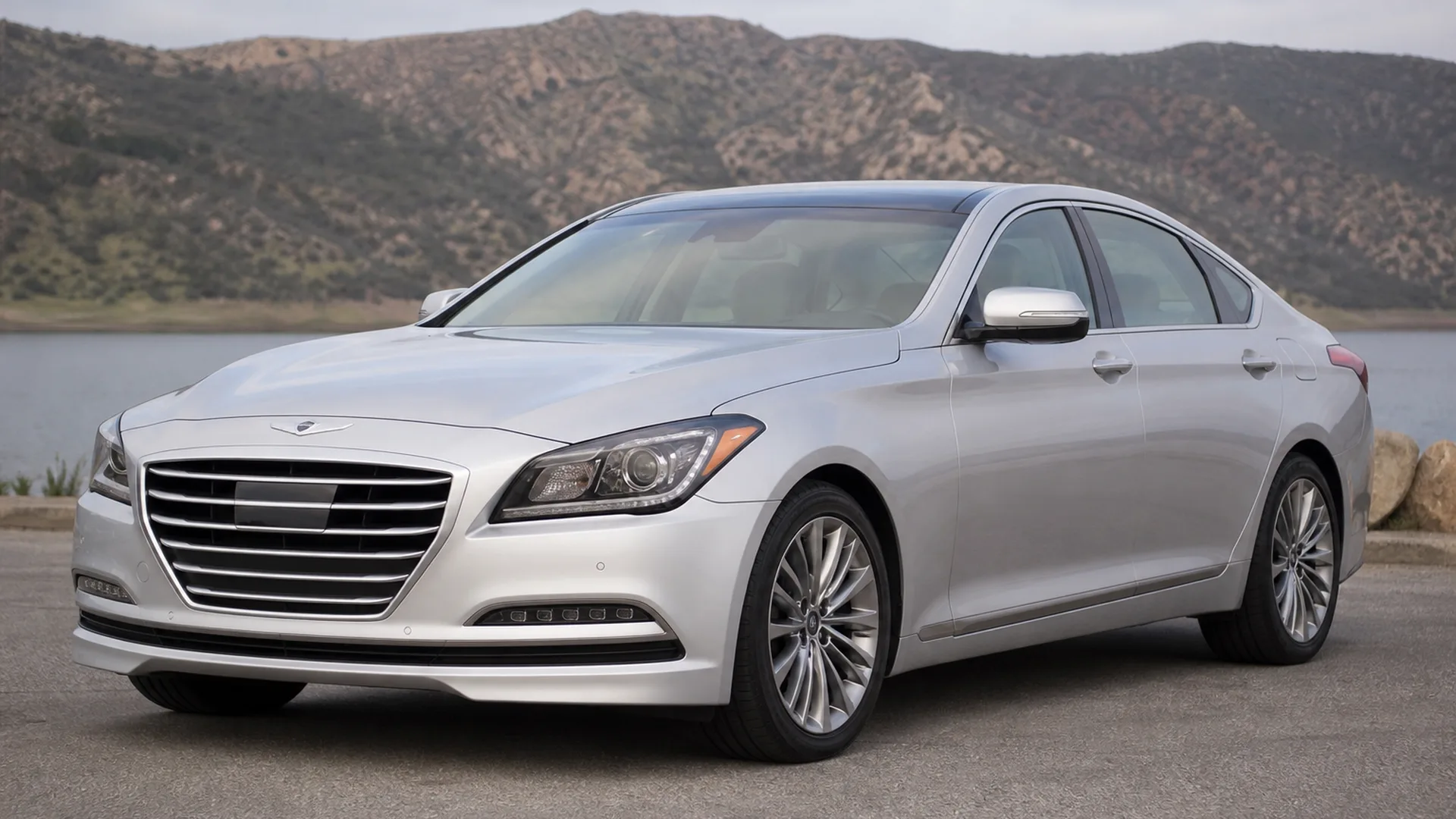
When Hyundai launched the Genesis sedan in 2009, it felt like a genuine game-changer. Here was a rear-wheel-drive luxury car with a smooth V6 or powerful V8, loaded with premium features, and priced thousands below the German competition. Reviews praised its quiet cabin, comfortable ride, and impressive build quality. For anyone wanting a taste of luxury without the BMW price tag, the Genesis looked like the perfect deal.
But here’s the reality check: not all Genesis years deliver on that promise. Some model years are plagued by engine stalling, transmission failures, electrical gremlins, and expensive tech breakdowns that can turn your bargain luxury sedan into a money pit. If you’re shopping for a used Hyundai Genesis (2009–2016), knowing which years to skip could save you thousands in repair bills—and keep you safe on the road.
How We Researched This Guide
We didn’t just pull these recommendations out of thin air. Our team spent weeks analyzing data from multiple sources to identify the best and worst Genesis years:
Primary data sources: NHTSA complaint records and recall databases, CarComplaints.com problem frequency rankings, TrueDelta reliability trends, RepairPal cost estimates, and Hyundai Technical Service Bulletins.
Real-world feedback: We reviewed thousands of owner reports from Genesis forums, long-term ownership discussions, Edmunds reviews, and independent mechanic insights on common Genesis repairs.
Comparative analysis: We tracked complaint density by model year, compared first-year redesign reliability against end-of-generation stability, and analyzed how powertrain failures stack up against electronics issues in terms of repair costs.
The result? A clear picture of which Genesis years will treat you right—and which ones you need to steer clear of.
What Goes Wrong with the Hyundai Genesis
The Genesis has a reputation for being a solid luxury sedan, but certain years suffer from recurring problems that can leave you stranded or facing four-figure repair bills. Here’s what owners report most often:
1. Engine Problems That Can Leave You Stranded
The most serious issue with certain Genesis years is engine stalling while driving. The 2012 model is notorious for this—owners report the engine suddenly shutting off in traffic, at highway speeds, or while making turns. This isn’t just inconvenient; it’s genuinely dangerous. When your engine cuts out, you lose power steering and braking assistance, making it hard to control a 4,000-pound sedan.
The 3.8L V6 models from 2012 onward also deal with carbon buildup on intake valves, a common issue with gasoline direct injection (GDI) engines. Over time, this buildup causes rough idling, hesitation, and reduced power. Cleaning the valves is a labor-intensive job that can cost $500 to $1,000.
Early 5.0L V8 models (2009–2011) have their own headaches, including excessive oil consumption caused by faulty piston rings. If you ignore this, you risk oil starvation and catastrophic engine damage. Some owners report burning through a quart of oil every 500–1,000 miles.
2. Transmission Failures in Early 8-Speed Models
In 2012, Hyundai introduced its first in-house 8-speed automatic transmission. Great in theory—smooth shifts, better fuel economy. In practice? The early versions were rough around the edges. Owners of 2012 Genesis sedans frequently complain about harsh shifting, hesitation during acceleration, and complete transmission failure in some cases.
A full transmission replacement on a Genesis can cost $3,000 to $5,000, and that’s if you can find a shop willing to tackle it. Many mechanics prefer not to work on Hyundai’s 8-speed because parts and technical information can be hard to source. The good news is that Hyundai worked out most of the bugs by 2013, making later models much more reliable.
3. Electrical and Tech Nightmares
The Genesis came loaded with technology—navigation, touchscreen infotainment, adaptive cruise control, parking sensors, and more. That’s great when it works. When it doesn’t, you’re looking at expensive repairs and a lot of frustration.
The 2015 Genesis (the first year of the second-generation redesign) is particularly bad for infotainment system failures. Screens freeze, reboot randomly, or go completely black. Navigation stops working. Audio systems cut out. These aren’t just annoyances—they often require replacing entire modules at dealership prices.
Dash warning lights also love to pop up for no clear reason. Owners report false ABS, traction control, and airbag warnings that require multiple dealer visits to diagnose. Sometimes it’s a faulty sensor (a few hundred dollars), but other times it’s a deeper wiring or module issue (over $1,000).
One particularly scary recall involved the ABS module shorting out and potentially catching fire. The 2015 Genesis was hit hardest by this recall, though earlier years were also affected. If you’re looking at any Genesis from 2009–2015, make sure this recall was completed.
4. Brake and Suspension Issues
Speaking of brakes, the 2009–2012 Genesis had a brake fluid recall because moisture could corrode the ABS module over time. Left unaddressed, this could lead to reduced braking effectiveness or even a brake system failure.
Early Genesis models (2009–2011) also came with a stiffer suspension setup that many owners found too harsh. Hyundai softened the ride quality starting in 2012, but if you buy an early car, expect a firmer, less comfortable experience—and potentially higher costs for replacing worn suspension components due to the extra stress.
5. Air Conditioning and Comfort System Failures
As Genesis sedans age past 80,000 to 100,000 miles, AC compressor failures become more common. The refrigerant system can develop leaks, and the climate control module occasionally glitches out. These aren’t unique to the Genesis—most luxury cars have similar issues—but repairs are pricey because the parts are luxury-grade.
The Worst Hyundai Genesis Years You Should Never Buy
If you take away nothing else from this guide, remember these two years: avoid the 2012 and 2015 Hyundai Genesis at all costs. Here’s why.
2012 Hyundai Genesis—The Absolute Worst Year
The 2012 Genesis is hands-down the most problematic model year in the entire lineup. It holds the highest volume of owner complaints and the most severe reported issues.
Engine stalling while driving is the biggest red flag. Dozens of owners reported their Genesis suddenly losing power on the highway or in the middle of intersections. Hyundai issued a recall for some 2012 models, but even after the fix, many owners continued to experience stalling issues.
The brand-new 8-speed automatic transmission was also still in its teething phase. Rough shifts, delayed engagement, and outright transmission failures were common. Some owners needed full transmission replacements under warranty—but if you’re buying a used 2012 today, that warranty is long gone, and you’ll be paying out of pocket.
The 5.0L V8 in 2012 also suffered from early oil consumption problems, and the 3.8L V6 started showing signs of GDI carbon buildup. Combine all these issues, and the 2012 Genesis is a car you should walk away from, no matter how tempting the price.
2015 Hyundai Genesis—First Year of the Redesign
If 2012 was bad for the first-generation Genesis, the 2015 is its second-generation equivalent. As the debut year of the redesigned Genesis, the 2015 introduced new styling, updated technology, and more features. It also introduced a boatload of new problems.
Electrical and tech failures dominate the complaint list for 2015. Infotainment systems crash or freeze regularly. Navigation stops working. Sensors throw false warnings. The touchscreen becomes unresponsive. Many of these issues require replacing entire modules, which can cost $1,500 or more at the dealer.
The 2015 also falls under the ABS fire-risk recall, where a shorted ABS module could potentially catch fire. This recall affected thousands of vehicles, and while it’s fixable, it’s a serious safety concern you don’t want to mess around with.
Transmission and engine reliability were better in 2015 than in 2012, but the electrical gremlins alone make this a year to skip. Hyundai sorted out most of these problems by 2016, so if you want a second-generation Genesis, hold out for that model year instead.
Other High-Risk Years
2009 Genesis (Especially V8 Models): As the very first model year, the 2009 Genesis dealt with typical first-year production issues. Build quality was inconsistent, and early V8 engines had reliability concerns. The V6 models were generally better, but even those had some electrical quirks. If you’re looking at a 2009, have a mechanic inspect it carefully—and think twice if it’s a V8.
Year-by-Year Breakdown: Which Genesis Models Are Safe?
Not every Genesis year is a disaster. In fact, some model years are quite reliable. Here’s how each year stacks up:
2009 Genesis—Proceed with Caution
First-year cars almost always have issues, and the 2009 Genesis is no exception. The 3.8L V6 with the 6-speed automatic was the safer choice, but even those had some electrical bugs. The 5.0L V8 models experienced more problems, including early engine reliability concerns.
If you find a well-maintained 2009 with full service records, it could be okay—but there are better years to choose from.
2010–2011 Genesis—Decent, But Dated
By 2010, Hyundai had worked out most of the first-year bugs. The 3.8L V6 and 6-speed automatic combo proved to be reliable, and owners report fewer engine or transmission issues compared to 2012.
The downside? These early models have a stiffer suspension (less comfortable ride) and older technology (no touchscreen infotainment, outdated navigation). They’re acceptable used-car options, but not ideal if you want a more refined experience.
2012 Genesis—Avoid Completely
We’ve covered this already, but it bears repeating: the 2012 Genesis is the worst year. Engine stalling, transmission failures, and early GDI/V8 defects make this a car you should never buy, no matter how cheap it is.
2013 Genesis—Major Improvements
The 2013 model year brought significant updates that fixed most of the 2012 problems. The 8-speed transmission was refined and became much more reliable. Engine stalling issues were addressed. The ride quality stayed smooth (Hyundai had softened the suspension in 2012, so 2013 kept that improvement).
Owner complaints dropped sharply compared to 2012, and reliability ratings improved across the board. A 2013 Genesis with the 3.8L V6 is a solid used-car choice.
2014 Genesis—The Best First-Generation Year
If you want a first-generation Genesis, the 2014 model is your best bet. It’s the final year of the original design, which means Hyundai had eight years to refine the car and fix any lingering issues.
Here’s why 2014 stands out:
- Zero recall campaigns on the 2014 Genesis—a rarity in the automotive world
- Extremely low owner complaint volume on CarComplaints.com
- Proven 3.8L V6 or updated 5.0L V8 with most early bugs resolved
- Updated infotainment and tech features without the complexity of the 2015 redesign
A 2014 Genesis 3.8 is the sweet spot for reliability and value. Even the 2014 5.0 R-Spec is worth considering if you want V8 power, as long as the brake fluid recall (if applicable) was completed.
2015 Genesis—Problematic Redesign
As we discussed earlier, the 2015 is the first year of the second-generation Genesis, and it suffers from widespread electrical and tech failures. Infotainment glitches, sensor malfunctions, and the ABS fire recall all make this a year to avoid.
Engine and transmission reliability were fine in 2015, but the electronics issues are too common to ignore.
2016 Genesis—The Best Overall Year
The 2016 Hyundai Genesis is the most reliable model year across both generations. It’s the final year before the Genesis brand split off from Hyundai, and it benefits from all the refinements Hyundai made to address the 2015 problems.
Here’s what makes the 2016 stand out:
- Stable electronics and infotainment—owners report far fewer glitches than 2015
- Proven second-generation platform with refined suspension and improved NVH (noise, vibration, harshness)
- No major powertrain issues with the 3.8L V6 or 5.0L V8
- Still relatively affordable on the used market
If your budget allows, a certified used 2016 Genesis is the best choice. You get modern styling, updated technology, and the peace of mind that comes with buying the most reliable year in the lineup.
The Best Hyundai Genesis Years to Buy
So, which Genesis should you actually buy? Here are our top picks:
2014 Hyundai Genesis (First-Generation)
The 2014 is the most reliable year of the original Genesis. It had no major recalls, minimal owner complaints, and a proven V6 powertrain. It’s also usually a bit cheaper than a 2016, making it a great value pick.
Who it’s best for: Buyers who want first-generation styling at a lower price, with strong reliability.
2016 Hyundai Genesis (Second-Generation)
The 2016 is the safest overall choice. It’s the most refined Genesis, with improved electronics and a more polished driving experience. It’s also the last “Hyundai Genesis” before the brand relaunch, so it doesn’t carry the premium pricing of the Genesis G80.
Who it’s best for: Buyers who want the best possible Genesis experience with the lowest risk of problems.
What to Check Before You Buy
No matter which year you choose, always get a pre-purchase inspection from an independent mechanic. Here’s what they should check:
- Full service records: Look for regular oil changes, transmission services, and any recall work
- Tech system functionality: Test the infotainment, navigation, sensors, and all electronics
- Signs of engine or transmission issues: Listen for rough idling, check for oil consumption, test the transmission for smooth shifts
- Brake fluid recall completion (2009–2012 models)
- ABS module recall completion (2015 models)
Budget for luxury-car maintenance costs. Genesis parts and labor aren’t quite as expensive as BMW or Mercedes, but they’re pricier than mainstream brands like Toyota or Honda.
Better Alternatives to Consider
If you’re still not sold on the Genesis—or if you want to compare it against other used luxury sedans—here are a few alternatives that offer better long-term reliability:
Lexus GS (2013–2017)
The Lexus GS is the gold standard for reliability in this class. It’s rear-wheel drive (like the Genesis), comes with a bulletproof 3.5L V6, and regularly runs past 200,000 miles with minimal issues. Lexus owners joke that a GS will hit 250,000 to 500,000 miles without breaking a sweat—something you can’t say about a Genesis.
Maintenance costs are lower than the Genesis, resale values are higher, and you won’t deal with the kind of electrical headaches that plague certain Genesis years. If reliability is your top priority, the 2013–2015 Lexus GS 350 is the best alternative.
Acura TL (2012–2014)
The Acura TL combines Honda engineering with upscale features. The 2012–2014 TL, especially in SH-AWD trim, offers a reliable 3.5L or 3.7L V6 and a well-built 6-speed automatic. Owners report these cars aging gracefully—one 2012 TL SH-AWD owner passed 200,000 miles with nothing but routine maintenance.
The TL’s design is polarizing (that front grille isn’t for everyone), and it doesn’t feel quite as plush as a Genesis or Lexus. But if you want proven durability at a lower price point, the TL is a smart pick.
Infiniti M37/Q70 (2011–2015)
The Infiniti M37 (renamed Q70 in 2014) is a sporty rear-wheel-drive sedan with Nissan’s reliable 3.7L VQ V6. RepairPal ranks the M37 above average for reliability, and owners report few major issues. The 2011 M37 earned a 4.8 out of 5.0 reliability score from consumers.
Infiniti’s tech is more mature than the Genesis, so you won’t deal with as many electronic glitches. Resale values are low (good for buyers), but keep in mind some parts—like adaptive suspensions—can be expensive if they fail. The M37 V6 is the smartest choice for reliability; avoid the 5.6L V8, which had oil consumption issues.
Toyota Avalon (2013–2018)
If you don’t need a luxury badge but want a spacious, comfortable sedan with rock-solid reliability, the Toyota Avalon is tough to beat. The 2013 redesign (4th generation) uses Toyota’s proven 3.5L V6 and 6-speed automatic—a combo that regularly runs past 200,000 miles.
RepairPal rates the Avalon 4.0–4.5 out of 5 for reliability, often ranking it #1 in its class. You won’t get rear-wheel drive or the same sporty handling as a Genesis, but you will get lower maintenance costs, better long-term durability, and the peace of mind that comes with Toyota ownership.
The only downside? The Avalon isn’t as sporty or prestigious as the Genesis. But as a comfortable, worry-free cruiser, it’s one of the best choices in the full-size sedan segment.
Final Verdict: Is the Hyundai Genesis Worth Buying?
The Hyundai Genesis can be a fantastic used luxury sedan—if you buy the right year. The 2014 and 2016 models offer everything the Genesis is known for: smooth ride, strong engines, loaded features, and genuine value. Just steer clear of the problematic years (especially 2012 and 2015), and you’ll avoid the worst headaches.
Here’s the bottom line: the money you save buying a cheap 2012 Genesis can disappear instantly with a single engine or transmission failure. Paying a bit more for a 2014 or 2016 will save you thousands in repairs and give you a much better ownership experience.
If long-term reliability is your top concern, alternatives like the Lexus GS or Toyota Avalon are safer bets. But if you want luxury at a discount and you’re willing to be selective about the model year, a well-maintained Genesis can still be a smart choice.
With this guide in hand, you’re ready to find a Genesis (or a similar luxury sedan) that delivers the comfort and performance you’re looking for—without the costly surprises.