
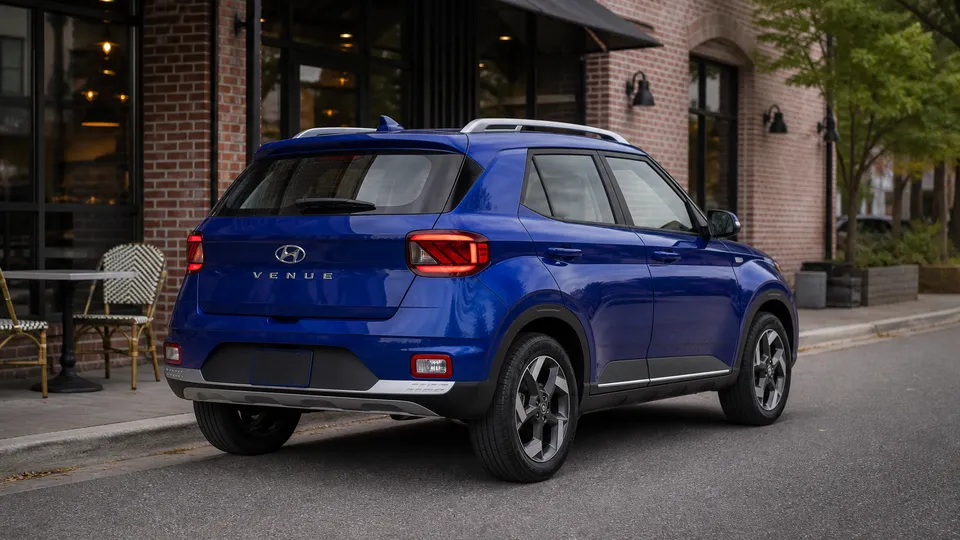
The Hyundai Venue is one of the most affordable subcompact crossovers on the market and a solid used-car buy for most shoppers - but its debut model year brought stalling problems, infotainment glitches, and a seat belt safety recall that make the 2020 a car you'll want to skip. Knowing which year you're shopping matters here, because the Venue's complaint load drops sharply as the model matures. This guide uses data from NHTSA, CarComplaints, and RepairPal to rank every model year so you can buy with confidence.
For tire sizes, IVT notes, and buying advice in one place, see the Hyundai Venue hub.
At a glance
- Worst years
- 2020
- Best years
- 2023
- 2024
- 2025
- Top failure
- 2020-2022 CVT/IVT stalling and engine shut-off (CarComplaints PainRank), compounded by seat belt pretensioner recall 22V-458 across all three years
- Always do before buying
- run the VIN through NHTSA's recall checker to confirm all open campaigns are closed, plus verify the seat belt pretensioner recall (22V-458) was completed on any 2020-2022 Venue
How we rated the best and worst Hyundai Venue years
The 2020 Hyundai Venue has the most overall complaints, and CarComplaints also rates 2020 as the worst model year ranked on factors such as repair cost and average mileage when problems occur. That makes the 2020 the clear year to avoid, while 2023-2025 models carry the smallest complaint footprints.
To build this guide, we pulled complaint counts and PainRank scores from CarComplaints (which ranks years by repair cost and mileage-at-failure), raw complaint volume from NHTSA (which counts owner-filed complaints - a different dataset from CarComplaints), recall data from RepairPal, and owner perspectives from forums and Reddit. CarComplaints ranks the worst year by cost and early failure, while NHTSA reflects raw complaint volume - and in the Venue’s case both measures point to 2020 as the most problematic. Our years to avoid methodology and NHTSA data draw on the same complaint and recall sources applied consistently across all vehicles in this series.
The Hyundai Venue has only one generation sold in the US market.
| Hyundai Venue Generation | Best Hyundai Venue Years | Worst Hyundai Venue Years |
|---|---|---|
| 1st Gen (2020-present) | 2023, 2024, 2025 | 2020 |
Every Hyundai Venue model year ranked
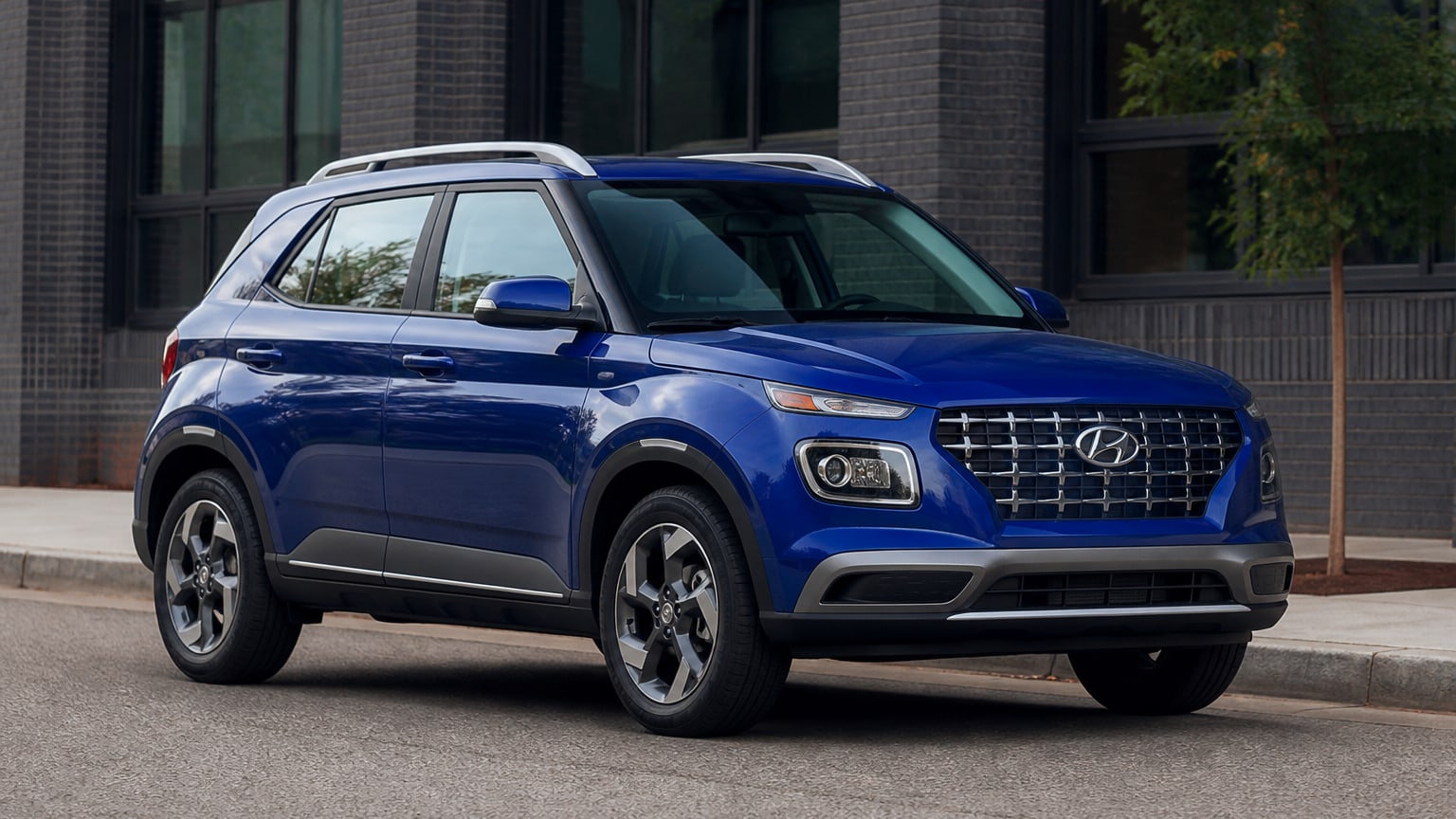
The 2020 Venue stands apart as the only year you should actively avoid; every subsequent year shows meaningful improvement in complaint volume.
| Model Year | Generation | Verdict | Notes |
|---|---|---|---|
| 2020 | 1st Gen | Avoid | Highest complaints (53 on CarComplaints), stalling, seat belt recall 22V-458 |
| 2021 | 1st Gen | OK/Mixed | 42 CarComplaints reports; recall 22V-458 applies; anti-theft vulnerability |
| 2022 | 1st Gen | OK/Mixed | 28 CarComplaints reports; recall 22V-458 applies; EPS and windshield complaints |
| 2023 | 1st Gen | Best | Sharply lower complaint count; no active major recall |
| 2024 | 1st Gen | Best | 19 CarComplaints reports; EGR recall 24V-308 (confirm completed) |
| 2025 | 1st Gen | Best | 4 NHTSA complaints; 4-star NHTSA safety rating; lowest complaint footprint |
Most common Hyundai Venue problems
The single biggest recurring failure across the Venue’s model run is CVT/IVT stalling and sudden engine shut-off, concentrated in the 2020-2022 model years. Below are the four documented problem categories ranked by severity.
1. CVT/IVT stalling and engine shut-off
The Venue’s continuously variable transmission (called an IVT by Hyundai) can slip, hesitate, or fail to transfer power - and in its worst reported form, the engine shuts off entirely while the car is slowing to a stop or sitting at idle. The most significant problems reported by 2020 Venue owners include the car stalling out randomly and complete failure, with average mileage at occurrence around 3,000 miles.
A primary concern involves the CVT: drivers have noted symptoms such as jerky acceleration, hesitation or delay when shifting, and in some cases, complete transmission failure, issues that significantly affect the driving experience. Another commonly reported problem is the engine shutting off unexpectedly, especially during braking or while coming to a stop, which may stem from a faulty wiring harness connector, contaminated fuel, or unresolved software glitches.
This issue affects certain 2020-2022 Venue models equipped with IVT and produced from September 17, 2019 through October 20, 2021. A NHTSA service campaign TSB was filed for those vehicles directing dealers to inspect and address the condition. If you’re looking at a 2020-2022 Venue, ask the dealer to confirm any open IVT-related campaigns in WEBDCS before you buy. Repair costs for transmission-related work on a subcompact can range from a few hundred dollars for software reflashing to several thousand for a full IVT replacement. The Hyundai Kona CVT and recall issues mirror many of these same IVT concerns, since the two models share closely related drivetrains and production lines.
2. Seat belt pretensioner recall (22V-458)
On 2020-2022 Venue models, the front driver and/or passenger seat belt pretensioner can over-pressurize and explode when it deploys in a crash, projecting metal fragments into the cabin that can injure occupants; the root cause is excessive internal pressure in the pretensioner pipe during certain crashes.
NHTSA’s ID number for this campaign is 22V-458. NHTSA recall 22V-458 covers roughly 72,470 Venue units and expands and replaces the earlier recall 21V-796. Your Hyundai dealer will install front seat belt pretensioner anti-separation protection caps, and the procedure is performed at no charge. Vehicles previously repaired under 21V-796 must return for the updated remedy.
This is the most safety-critical issue in the Venue’s history. Before buying any 2020-2022 Venue, check the VIN at nhtsa.gov/recalls to confirm that recall 22V-458 (Hyundai Campaign 231) has been completed - not just initiated.
3. Infotainment freezing and Bluetooth drops
The most commonly reported issue across all Venue model years is infotainment screen freezing and Bluetooth drops, with 140 owner reports. The touchscreen can lock up mid-drive or reboot in a loop, and Bluetooth audio and phone connections drop without warning. A recurring problem involves the infotainment system, which for some drivers gets stuck in a constant reboot loop, rendering it completely unusable.
CarComplaints documents Apple CarPlay disconnecting as the top issue for the 2021 Hyundai Venue; it is annoying but a relatively minor complaint compared to the stalling concerns on the 2020. The freeze and reboot problem is most concentrated on 2020-2021 models but appears across the generation. A software update from the dealer often resolves it; ask whether the latest firmware has been applied before buying. Across all Venue issues, repair costs range from $150 to $350, and the infotainment fix typically falls at the lower end.
4. Theft vulnerability on 2020-2021 models (no engine immobilizer)
The 2020-2021 Hyundai Venue models with turn-key (non-push-button) ignition were built without a standard engine immobilizer, making them easy to steal with a USB cable using a method that went viral on social media. The vulnerability drove a nationwide spike in theft claims, and Hyundai responded with a free anti-theft service campaign rather than a formal recall.
If you’re buying a 2020 or 2021 Venue with a traditional key ignition, confirm that the free anti-theft software update has been applied at a Hyundai dealership. Buyers of pre-2022 models should verify that the anti-theft software update has been applied and confirm all seat belt pretensioner recall work is complete through a NHTSA VIN lookup. The 2022 and later models with push-button start do not share this vulnerability.
5. EGR valve electrical fault on 2024 models (recall 24V-308)
On 2024 Venue models, an EGR valve sensor contaminated with solder flux during supplier manufacturing can develop an internal electrical short, causing a sudden loss of drive power while driving and increasing crash risk; NHTSA recall 24V-308 covers 13,511 units across the Venue, Elantra, and Kona. The Hyundai Elantra EGR recall 24V-308 stems from the same supplier defect and affects the same production window, so owners of either model should confirm remedy completion before driving at highway speeds.
Hyundai is recalling certain 2024 Elantra, Venue, and Kona vehicles because an electrical short circuit may occur in the exhaust gas recirculation (EGR) valve assembly, which can result in a loss of drive power. The 2024 Venue is otherwise one of the lower-complaint years in the lineup, so if you confirm recall 24V-308 has been repaired, the year remains a reasonable used-car pick. Check VIN status at nhtsa.gov/recalls before purchase.
Which Hyundai Venue years should you avoid?
The Hyundai Venue year to avoid is 2020. CarComplaints rates the 2020 as the worst model year based on repair cost and average mileage when problems occur, and NHTSA documented 26 complaints and one recall for the 2020 Hyundai Venue - the highest NHTSA complaint total for any single Venue model year. Those two measures independently land on the same year, making 2020 the one to skip.
| Hyundai Venue Generation | Model Years | Verdict | Main Issues |
|---|---|---|---|
| 1st Gen (early) | 2020 | Worst (Avoid) | CVT stalling, seat belt pretensioner recall 22V-458, theft vulnerability |
| 1st Gen (middle) | 2021, 2022 | OK/Mixed | CVT stalling, seat belt pretensioner recall 22V-458, theft vulnerability (2021 only) |
| 1st Gen (later) | 2023, 2024, 2025 | Best | Low complaint counts, EGR recall on 2024 only, 4-star NHTSA safety rating |
Worst Hyundai Venue years: 2020
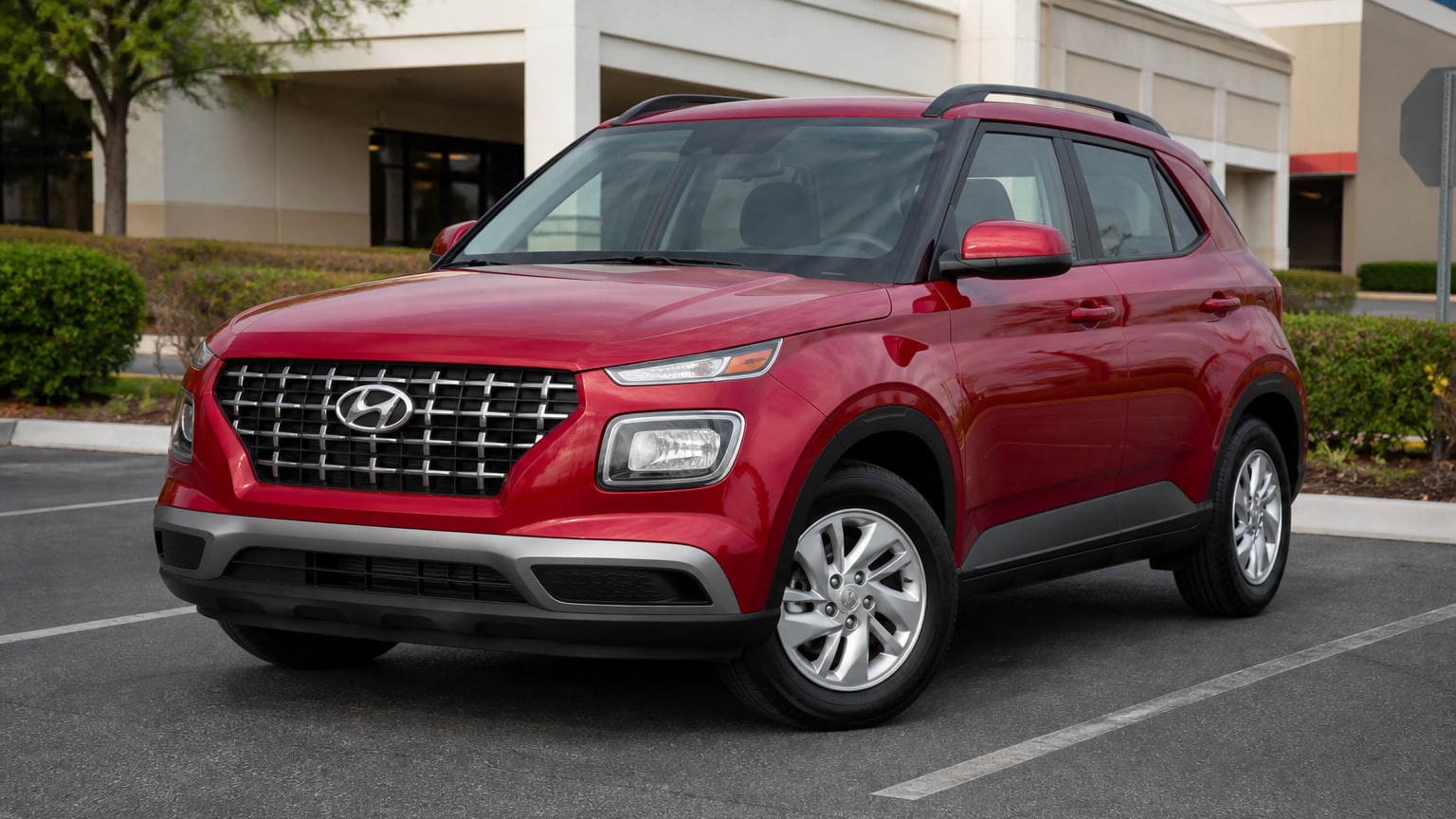
1st-generation Hyundai Venue, 2020
The 2020 Hyundai Venue has 53 problems and defects reported by Venue owners on CarComplaints, with the worst complaints in accessories/interior, cooling system, and electrical. The most significant problems include the car stalling out randomly and complete failures, with average mileage around 3,000 miles - meaning some owners experienced serious issues before their first oil change interval. The 2020 is also subject to recall 22V-458 for seat belt pretensioners and carries the theft vulnerability on turn-key ignition trims.
The 2020 model originally offered a six-speed manual transmission with the base SE trim alongside the CVT; the manual was dropped for 2021, making the CVT the only option. If you do encounter a manual-equipped 2020 SE, owners of manual-equipped 2020 SE models report fewer transmission complaints than CVT-equipped models, as the manual avoids the CVT’s documented failure modes entirely. That said, the recall and theft vulnerability still apply regardless of transmission choice.
What are the best Hyundai Venue years to buy?
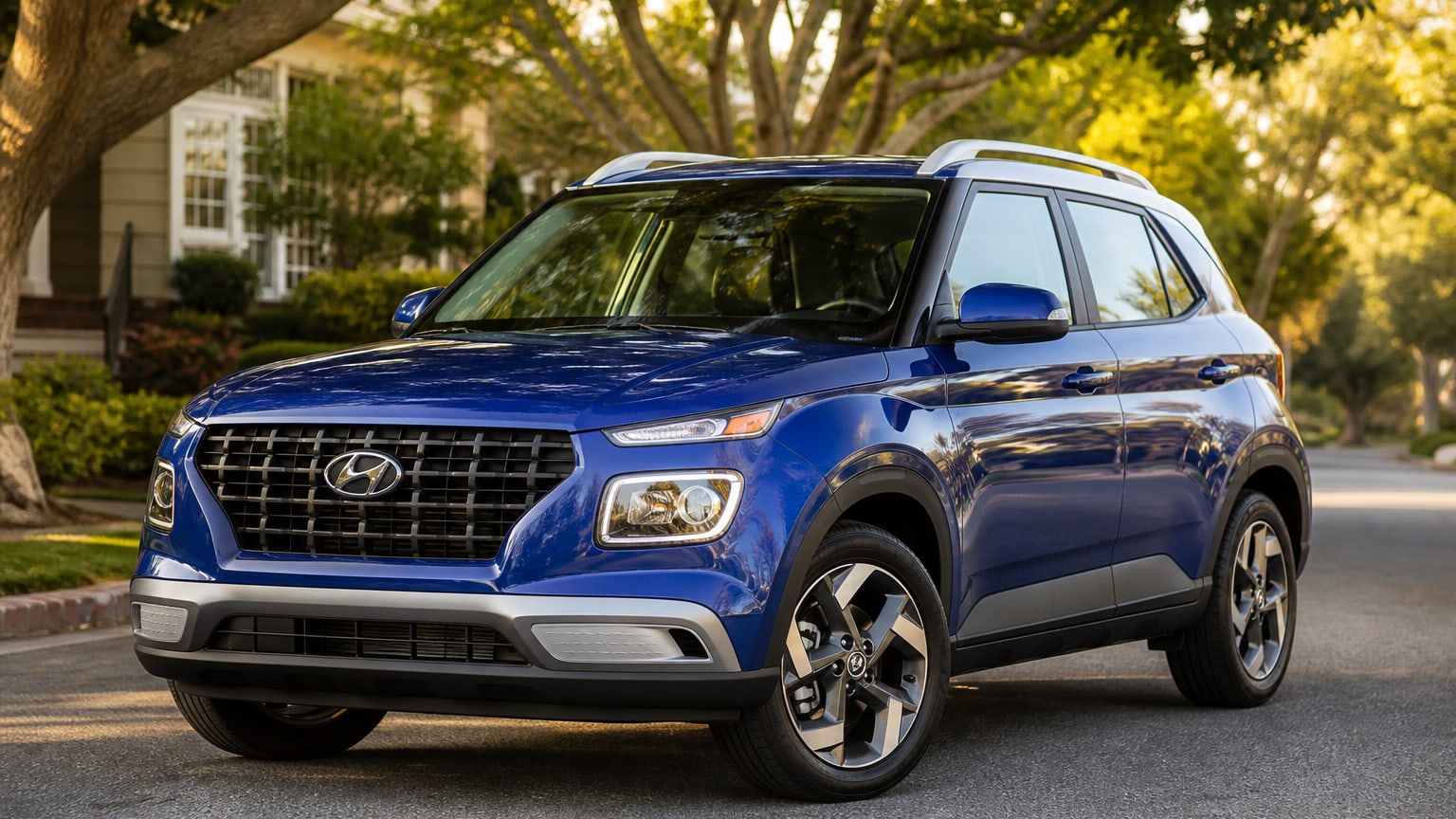
The best Hyundai Venue years to buy are 2023, 2024, and 2025, all of which show sharply reduced complaint counts and have benefited from manufacturing refinements made after the early-year issues were identified.
| Best Hyundai Venue Year | Why It's a Strong Buy |
|---|---|
| 2023 | Lowest complaint count in the early post-recall era; seat belt recall does not apply |
| 2024 | 19 CarComplaints reports; confirm EGR recall 24V-308 completed; strong value |
| 2025 | 4 NHTSA complaints; 4-star NHTSA overall safety rating; J.D. Power 86/100 quality score |
Most reliable Hyundai Venue years: 2023, 2024, 2025
2023 Hyundai Venue
The 2023 is the cleanest early entry into the “safe years” window. It falls outside the seat belt pretensioner recall’s 2020-2022 scope, the theft vulnerability is not a factor, and no major powertrain recall applies to this year. Owner feedback from the Edmunds community notes the Venue’s city-focused character and fuel economy as genuine strengths. CarComplaints data shows the Hyundai Venue generates fewer complaints with each model year, and the 2023 reflects that trend clearly. Shoppers cross-shopping the Venue against other Hyundai siblings will find that Hyundai Tucson reliability and safety records follow a similar pattern of early-year growing pains giving way to stronger mid-cycle performance.
2025 Hyundai Venue
The 2025 Hyundai Venue received an overall 4-star safety rating from NHTSA. J.D. Power awarded the Hyundai Venue a Quality and Reliability score of 86/100 for the 2026 model year, which the site categorizes as “Great.” The 2025 carries over those quality gains, and the 2026 Hyundai Venue has yet to generate a single complaint with NHTSA, nor is it affected by any ongoing recalls or investigations - a trend that the late-model 2025 is already tracking toward. For shoppers wanting maximum peace of mind in a used Venue, the 2025 is the pick.
Hyundai Venue pre-purchase checklist
Before you buy any used Hyundai Venue, work through these model-specific checks:
- Run the VIN through NHTSA’s recall checker at nhtsa.gov/recalls and confirm every open campaign shows “remedy available” and “completed” - not “parts unavailable.”
- On 2020-2022 models, verify recall 22V-458 (Hyundai Campaign 231) is closed. NHTSA Campaign 22V-458 covers 2020-2022 Venue vehicles where the front driver-side and/or passenger-side seat belt pretensioners may explode upon deployment - dealers install a protective cap at no charge.
- On 2020-2021 turn-key ignition models, confirm the free anti-theft software update is on record. The 2020-2021 Venue with turn-key ignition was built without a standard engine immobilizer, making it easy to steal with a USB cable; Hyundai responded with a free anti-theft service campaign.
- On 2024 models, confirm NHTSA recall 24V-308 (EGR valve short) has been completed before driving on the highway; an EGR valve electrical short can cause a sudden loss of drive power while driving.
- Test-drive a 2020-2022 Venue on the highway. The CVT stalling concern tends to show up under load, especially during merging. Some owners report frequent stalling and sudden shutdowns below 5,000 miles, with the CVT compounding issues by creating sluggish acceleration. Any hesitation, shudder, or unexpected engine cut-out during the drive is a reason to walk away.
- Request full service records, including any dealer campaign claim history that shows whether TSBs and the recall remedies have been completed.
- Check the infotainment for freeze or reboot behavior during the test drive. Connect a phone via Bluetooth and Apple CarPlay or Android Auto, then verify the screen stays stable over 10-15 minutes of driving.
Better alternatives to consider
If the Hyundai Venue years in your budget land on the avoid list, consider these alternatives in the same subcompact crossover class:
- Kia Soul - shares Hyundai’s platform quality and has a longer production run with a broader used inventory at similar price points
- Ford Escape - a larger crossover with more cargo room and a well-documented year-by-year reliability record for shoppers who need more space
- Nissan Kicks - a front-wheel-drive subcompact crossover with a simpler CVT setup and a lower starting price than the Venue in many used markets
- GMC Acadia - for shoppers who decide they want more interior room and three rows; a strong alternative if a compact SUV no longer feels like enough
Is the Hyundai Venue worth buying?
Yes - as long as you avoid the 2020 model year and verify the seat belt recall on any 2021-2022 you consider. The Hyundai Reliability Rating on RepairPal is 4.0 out of 5.0, which ranks it 4th out of 32 car brands. A Hyundai Venue will cost about $8,303 for maintenance and repairs during its first 10 years of service, which beats the industry average for SUV models by $209. The 2023, 2024, and 2025 Venue years represent a genuinely low-risk used purchase in the subcompact crossover segment. The 2025 model carries a 4-star overall NHTSA safety rating, and with consistent maintenance, most Hyundai Venue owners report 150,000 to 200,000-plus miles of service life. Run the VIN through NHTSA’s recall database and verify the maintenance history before any purchase.