
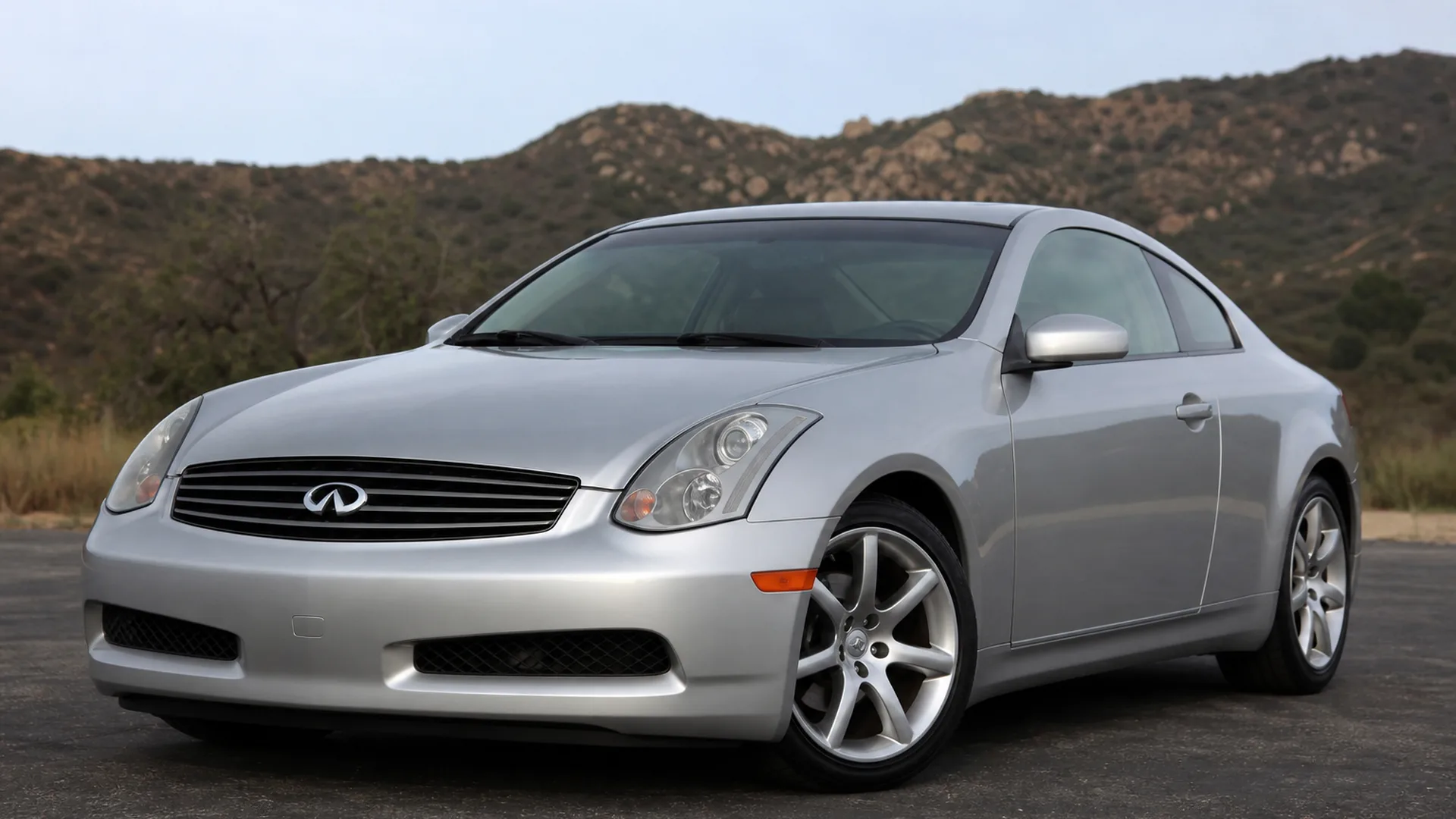
The Infiniti G35 built a reputation as a performance bargain when it launched in 2003. With rear-wheel drive, a punchy 3.5L V6 pumping out 280–298 horsepower (depending on trim), and a price tag thousands below comparable BMW 3 Series models, it attracted drivers who wanted sporty luxury without the German maintenance bills. Available as a sedan or coupe—and with an AWD option (G35x) for snow-belt buyers—the G35 ran from 2003 through 2008 before morphing into the G37.
But here’s the catch: not every G35 year delivers equal reliability. Some model years suffer from chronic oil consumption, early transmission failures, and electrical headaches that can drain your wallet fast. This guide identifies the riskiest G35 years, explains the specific problems that plague them, and highlights which models deserve your attention—plus a few smart alternatives if you decide the G35 isn’t quite right.
How we rated the best and worst Infiniti G35 years
We pulled together information from multiple angles to give you the full picture. NHTSA complaint logs showed us which years generated the most owner frustration, while official recall bulletins revealed systemic flaws Infiniti had to fix (cam/crank sensors, airbag wiring, brake light switches). Long-term owner reviews on CarComplaints and Edmunds added real-world context—what breaks at 80k miles versus 150k, what repairs cost, and which issues owners learned to live with versus the ones that forced them to sell.
We also combed through G35Driver and MyG37 forums, where enthusiasts document everything from timing chain tensioner replacement costs to which aftermarket bushings actually last. YouTube mechanic channels provided visual walkthroughs of common failures (Rev-Up engine teardowns, for instance). J.D. Power reliability scores and RepairPal cost data rounded out the research, giving us benchmarks to compare the G35 against rivals like the Acura TL and Lexus IS.
One pattern emerged clearly: oil consumption in manual “Rev-Up” engines and first-year build quality problems (especially on the 2003 model) dominate the complaint landscape. We cross-referenced transmission failure rates between coupe and sedan, automatic and manual, to see if certain configurations were safer bets. The answer? Yes—automatic G35s from the middle and late years tend to dodge the worst issues.
Most Common Infiniti G35 Problems
1. Engine Troubles You Should Know About
The VQ35DE engine is a workhorse that can easily crack 200,000 miles if you stay on top of oil changes and cooling system maintenance. But three recurring issues pop up often enough that you’ll want to inspect any used G35 carefully.
Cam and crank position sensor failures hit 2003–2006 models hard enough that Nissan issued a recall. When these sensors go bad, the car might stall at idle or refuse to start altogether. If you’re looking at an older G35, confirm the recall repair was done—it’s a straightforward sensor swap, but skipping it leaves you stranded.
Timing chain rattle shows up on 2003–2007 G35s, though not every car develops it. You’ll hear a tapping or rattling noise from the front of the engine, usually on cold starts. The culprit is premature wear of the chain guides and tensioners. If the chain gets too loose, it can jump a tooth or snap a guide, leading to expensive internal engine damage. Replacing the chain, guides, and tensioners before catastrophic failure costs $1,200–$1,800 in parts and labor—annoying, but far cheaper than a new engine.
Oil consumption in Rev-Up engines is the big one. Infiniti boosted power in 2005–2006 manual-transmission G35s (and the 2007 coupe) by revising the VQ35 internals and raising the redline. Great for performance, terrible for oil control. Many Rev-Up owners report burning a quart every 1,000–3,000 miles. The root problem lies in piston ring design; short of an engine rebuild or ring replacement, there’s no true fix. Some owners install oil catch cans or upgrade valve covers to reduce (but not eliminate) consumption. If you’re considering a 2005–06 manual or a 2007 coupe, bring a flashlight and check the oil level at your test drive—if it’s low and the seller seems surprised, walk away.
2. Transmission and Drivetrain Quirks
The 5-speed automatic and 6-speed manual transmissions are generally solid, but exceptions exist. Some 2007 sedans (the first year of the redesigned V36 chassis) experienced automatic transmission failures at surprisingly low mileage—one documented case involved a transmission dying around 35,000 miles. Harsh shifting or slipping gears usually point to valve body or solenoid problems; regular fluid changes help, but if an automatic G35 already has shifting issues, budget for a rebuild or replacement.
Manual transmissions face a different challenge: synchro wear, especially in third gear. High-mileage or hard-driven manual G35s often develop a grind when shifting into third. Double-clutching or switching to high-quality fluid (like Redline MT-90) can mask mild synchro wear, but once the grind is pronounced, you’re looking at a transmission rebuild. The AWD G35x adds another layer—monitor the transfer case fluid condition, because neglect there leads to costly repairs.
3. Electrical Gremlins That Frustrate Owners
Early G35s, particularly 2003 models, earned a reputation for electrical headaches. The Bose radio/head unit would fail, taking the climate control system with it (both functions share the same unit). Owners suddenly found themselves unable to adjust cabin temperature or fan speed because the entire center console stack had died. Replacement units aren’t cheap, and you’ll need one from a G35 or 350Z (they’re interchangeable) to restore full functionality.
Dashboard gauges can flicker or display incorrect fuel readings due to bad solder joints on the circuit board. The clock spring in the steering column wears out around 120,000 miles, disabling steering wheel controls for audio and cruise. Infiniti also recalled 2003, 2004, and 2006 G35s for a brake light switch that wouldn’t illuminate the brake lamps when you pressed the pedal—a serious safety issue that also triggers VDC/Slip warning lights.
Power window regulators fail often enough that it’s almost expected on older G35s. Windows get stuck halfway down or move sluggishly. Door lock actuators malfunction with similar frequency. Some 2007–08 owners traced door lock problems back to a defective sunroof assembly; water leaking from clogged sunroof drains apparently seeped into lock circuits. Clearing those drains and sealing the sunroof properly prevented repeat failures.
4. Brakes and Suspension Complaints
Premature brake wear topped the complaint list for 2003 G35s. Original pads and rotors wore or warped so quickly that some owners needed full replacements around 10,000 miles. Infiniti upgraded brake components in later years, and the optional Brembo 4-piston calipers (standard on 2003–04 coupes) offered stronger stopping power—though Brembo pads still dust heavily and wear fast under aggressive driving. Budget for more frequent brake service if your G35 has Brembos; parts are pricier than standard brakes.
Front lower control arm bushings leak or crack surprisingly early—sometimes by 40,000–60,000 miles. Worn bushings cause clunking noises and throw off alignment. Many owners upgrade to polyurethane bushings, which last longer and improve handling feel.
Alignment-related tire wear plagued 2003–04 coupes. Inner tires would develop “feathering” (uneven tread wear) that created a roaring road noise. Nissan issued updated alignment specs and revised suspension parts mid-2004 to fix the issue. If you’re looking at an early coupe, confirm the alignment has been checked and consider adding an aftermarket camber kit if inner tire wear persists.
Steering rack leaks were common on 2003 models. If you see power steering fluid pooling under the car, inspect the rack or high-pressure hose. Replacement isn’t catastrophic, but it’s an added expense on an already aging car.
5. Interior and A/C Annoyances
Dashboard cracks appear on 2007–08 second-gen sedans, usually around the front passenger air vent. Heat and UV exposure accelerate the problem; using a sunshade helps, but once the dash cracks, it’s cosmetic damage you’ll live with (replacement dashes are expensive).
Some owners report a musty odor from the A/C vents. Water can pool in the evaporator housing if the drain tube clogs, leading to mildew growth and a foul smell. Clearing the drain tube and treating the HVAC system with an anti-mold cleaner usually solves it, but the smell can return if you don’t keep up with maintenance.
The DVD-based navigation system in 2003–07 models is outdated now—slow to boot, maps years out of date. No widespread failures are reported; it’s just old tech. The Bose audio system sounds good, but CD changers and speaker amps can fail on high-mileage cars. Burned-out bulbs in the radio/climate display and loose trim pieces are minor fixes you’ll encounter on any 15-year-old car.
Which G35 Years Should You Skip?
2003: The Debut-Year Headache
The 2003 G35 logs the highest number of owner complaints and earns the title of worst year for the model. First-year cars often carry teething problems, and the G35 was no exception. Leaking steering racks, rapidly wearing brakes and rotors, and failing interior electronics (especially the Bose/HVAC unit) plagued early adopters. Many 2003s are still on the road and running fine, but you’re rolling the dice buying one. If a deal on a 2003 looks too good to be true, it probably is—factor in immediate repair costs and proceed with caution.
2005–2006: The Rev-Up Oil Burners
Avoid 2005–06 G35s with the manual transmission unless you have rock-solid documentation that the oil consumption issue has been addressed. Nissan’s Rev-Up VQ35 engine (found in 6MT models) delivers 298 hp and a 7,000 rpm redline, but many burn oil at alarming rates. Adding a quart every 1,500 miles gets old fast, and engine rebuilds aren’t cheap.
These years also fall under the airbag sensor recall—wiring under the passenger seat could wear and trigger airbag warning lights. Nissan fixed this for free, but confirm the recall service was completed. Unless you’re getting a screaming deal or the previous owner has meticulous service records proving the engine doesn’t burn oil, skip the 2005–06 manual G35s.
Automatic 2005–06 models don’t have the Rev-Up engine, so they dodge the oil consumption problem. If you like the first-gen body style and want a reliable G35, a 2005–06 automatic is actually a solid choice—just double-check that all recalls are done.
2007: First-Year New-Generation Wobbles
The 2007 G35 sedan introduced the V36 chassis with updated styling, more tech, and a nicer interior. J.D. Power gave it a 3 out of 5 reliability score—a noticeable drop from the 4.5/5 the 2008 received. Some 2007s experienced automatic transmission failures at low mileage, and various electronic bugs surfaced as Infiniti worked through first-year kinks.
The 2007 isn’t a disaster, and many owners never see a problem. But if you have the option between a 2007 and a 2008, the 2008 is the safer bet. Late-2007 builds (production dates toward the end of the model year) tend to be more reliable than early ones, so if you find a 2007 you like, check the door jamb sticker for the build date.
What About 2004?
The 2004 G35 doesn’t land on most “avoid” lists. Infiniti fixed several 2003 issues by then, and build quality improved. The 2004 still falls under the cam sensor and brake light switch recalls, so verify those were done. Some enthusiasts actually prefer 2004 because it offers factory Brembo brakes and the simpler first-gen design without the worst of the early bugs. It’s older now, but a well-maintained 2004 can be a reliable car—just inspect it carefully for typical age-related wear.