
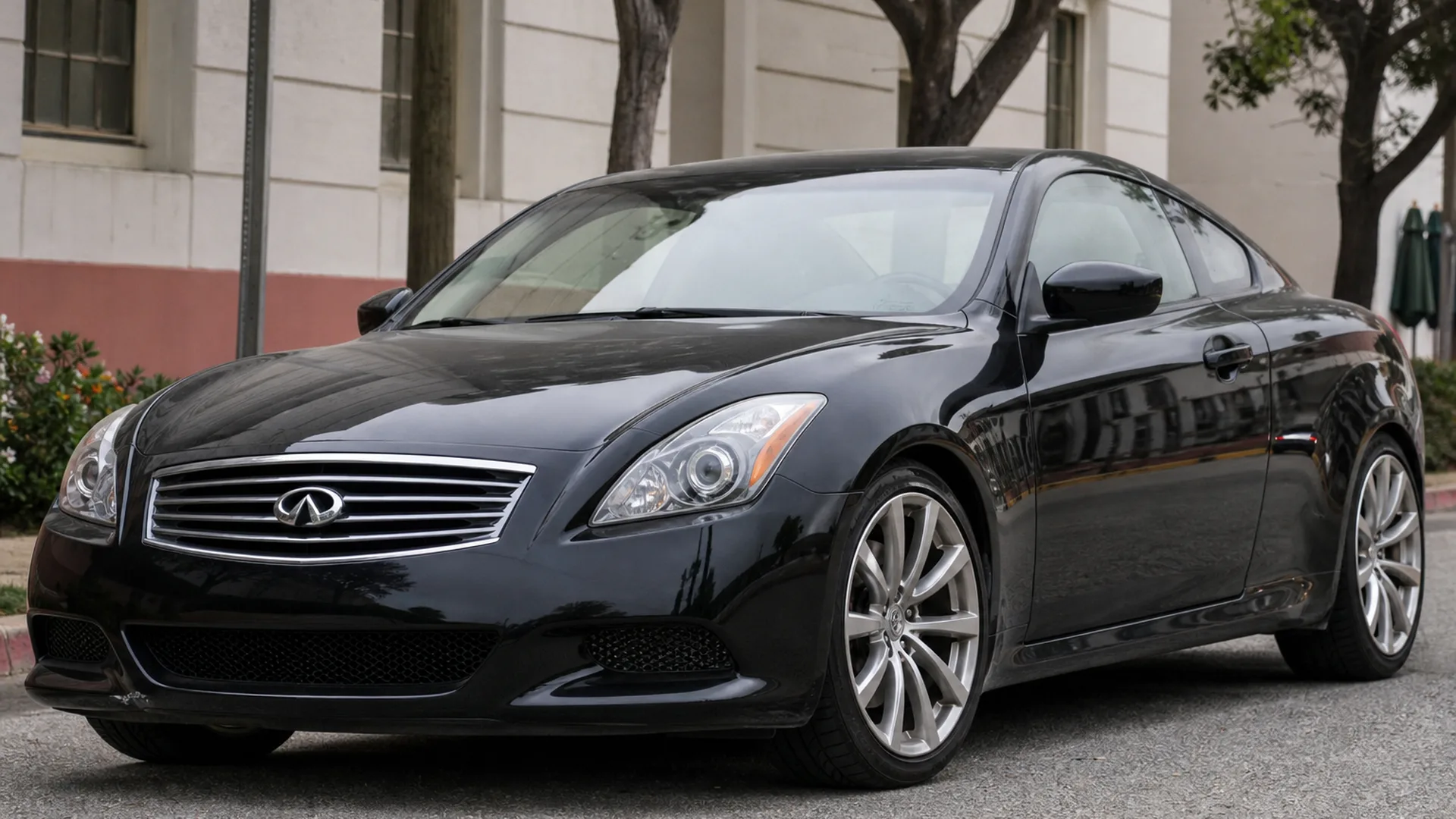
The Infiniti G37 built a loyal following between 2008 and 2013 as a performance-focused luxury alternative. Buyers loved the 330-hp 3.7L V6, sharp handling, and Nissan’s reputation for durability—all at a price lower than BMW or Lexus. Even today, the G37 scores a solid 4.0 out of 5.0 on RepairPal and costs around $540 per year to maintain, which is less than many competitors.
But not every model year aged equally well. Some G37s are plagued by steering lock failures that strand you mid-drive, airbag sensors that cost $6,000 to replace, and dashboards that literally melt in the sun. This guide walks you through which Infiniti G37 years to avoid, which are reliable picks, and what alternatives might save you money and stress down the road.
How We Built This Guide
We pulled data from several trusted sources to make sure you get accurate, actionable advice:
- NHTSA Complaint Database: We analyzed owner reports across all G37 model years (2008–2013) to identify patterns in steering lock failures, airbag issues, and dashboard cracking.
- RepairPal & Consumer Reports: Reliability scores, repair frequency, and average ownership costs.
- Infiniti/Nissan TSBs: Technical service bulletins reveal fixes Infiniti issued for recurring problems—often before a formal recall.
- Owner Forums: Real-world feedback from MyG37 and G35Driver communities helped us confirm which issues are common versus one-off flukes.
- Recall Verification: We cross-checked IIHS and NHTSA records for Takata airbag recalls and other safety campaigns.
Every claim you see here is backed by data, not guesswork.
Common Problems Infiniti G37 Owners Report
The G37 is mostly reliable, but a few recurring issues can hit your wallet hard. Here’s what to watch for:
1. Melting Dashboard (2008–2009)
Early G37s suffer from a dashboard defect where the material cracks, bubbles, and peels—especially in hot climates. Owners report this happening around 50,000–70,000 miles. Replacement costs about $2,000, and Infiniti never issued a recall. If you’re shopping for a 2008 or 2009, assume the dash has already cracked or will soon.
2. Airbag Sensor Failure (2010–2011)
The passenger seat occupancy sensor can fail on 2010–2011 models, disabling the airbag and triggering a warning light. Fixing it requires replacing the entire seat cushion and sensor assembly—$5,000 to $7,000 out of pocket. This is the single costliest G37 problem, and it hits 2011 models hardest. There’s no recall, so you’re on your own if it fails.
3. Steering Lock Failure (2009–2010)
The electronic steering column lock (ESCL) can jam on 2009 models, cutting all electrical power and leaving the car completely immobilized. Repair costs run around $1,200. Infiniti fixed the design in later revisions, but if you’re buying a 2009, confirm the ESCL has been replaced or bypassed.
4. Battery Drain & Electrical Shutdowns
Related to the steering lock issue, some 2009 G37s experience complete power loss while driving. This is rare but dangerous. If the steering lock malfunctions, it can drain the battery overnight. Make sure any 2009–2010 model you consider has had the updated ESCL installed.
5. Transmission Quirks (2009–2011)
The 7-speed automatic (introduced in 2009) occasionally shows delayed shifts or rough downshifts. A software update (TCM reflash) or transmission fluid change usually fixes it. Major transmission failures are rare, but check service records to confirm the fluid was changed around 60,000 miles.
6. Brake Rotor Warping
The G37’s weight can lead to uneven rotor wear. If you feel pulsing or shaking under braking, budget for new rotors. This isn’t a widespread defect, but it’s common enough to test during a pre-purchase inspection.
7. A/C Compressor Seizure (2013)
One 2013 owner reported a seized A/C compressor at 113,000 miles, costing $2,800 to fix. This appears to be a one-off case, but test the A/C on any test drive to make sure it blows cold.
8. Takata Airbag Recall (2009–2013)
Most G37s are subject to the Takata airbag inflator recall. The passenger-side inflator can explode in a crash, causing serious injury. Check the VIN on Infiniti’s website or NHTSA.gov to confirm the recall repair was completed. If not, dealers will replace it for free.
Infiniti G37 Years to Avoid
If you want to skip the headaches, steer clear of these model years:
2009 – The Worst Year Overall
The 2009 G37 has more complaints than any other year. The steering lock failure is especially common, and owners report complete electrical shutdowns while driving. Add in dashboard cracking and early transmission software bugs, and you’ve got a model year best left on the lot. Repairs for the steering lock alone cost $1,200, and if the dash needs replacing, you’re looking at another $2,000.
2011 – The Airbag Sensor Nightmare
CarComplaints rates 2011 as the worst G37 year when you factor in repair costs. The passenger airbag sensor failure is a ticking time bomb—$5,000 to $7,000 to fix if it goes out. Some owners drive with the airbag light on indefinitely, which is risky. Unless the car has proof the sensor was already replaced under warranty, avoid 2011 models.
2008 – First-Year Growing Pains
As the debut year (Coupe only), the 2008 G37 came with early build quality issues: dashboard cracking, minor electrical bugs, and battery drain. A late-build 2008 might be okay if the steering lock and dash have been addressed, but you’re rolling the dice on a 15-year-old car at this point.
2010 – Buyer Beware
The 2010 model is a step up from 2009, but it still carries some early-batch risk. The worst reported problem is a power seat motor failure (around $2,000 to fix), though that’s rare. If you find a clean 2010 with service records, it’s not a terrible buy—but if you can afford a 2012, go for that instead.
Bottom Line: Avoid 2008–2009 for early defects and 2011 for the airbag sensor. These years combine age with the highest risk of expensive repairs.
Best Infiniti G37 Years to Buy
If you want a G37 that’s been sorted out, focus on the final two model years:
2013 – The Best Year
The 2013 G37 is the most refined version you can buy. Infiniti fixed the steering lock, upgraded the dashboard material, and fine-tuned the infotainment software. Only 8 complaints appear on CarComplaints for 2013—the lowest of any year. The one reported issue (an A/C compressor failure) was an isolated case.
What really sets 2013 apart is resale value. It depreciated just 14% over five years, which is remarkable for a luxury car. That tells you buyers trust this model year. If you can find a 2013 Coupe, Convertible, or Sedan (sold as the Q40 in 2014–2015), it’s your safest bet.
2012 – Nearly as Good, Often Cheaper
The 2012 G37 shares most parts with the 2013 and has only six recorded complaints. The airbag sensor issue from 2011 is gone, and the dashboard material is improved. Many 2012s include backup cameras and navigation that still feel modern today. Because it’s a year older, you’ll often pay less for a 2012 than a 2013 while getting nearly identical reliability.
2010 – A Budget Option
If a 2012 or 2013 is out of budget, a well-maintained 2010 can work. Many late-2010 models have the revised steering lock, and the transmission software was refined mid-year. Just confirm any TSB updates were completed and test all electronics before buying.
Tip: Regardless of year, look for G37s serviced at Infiniti or Nissan dealerships. Convertibles (2009–2013) share the same mechanical reliability as Coupes but have a complex retractable hardtop. Make sure the roof operates smoothly and budget for occasional seal replacements.
Reliable Alternatives Worth Considering
The G37 is a strong pick, but these alternatives might fit your needs better:
Lexus IS 350 (2011–2013)
The IS 350 offers 306 hp, rear-wheel drive, and Lexus’s legendary reliability. It’s slower than the G37 but far less likely to need repairs. Aim for 2011–2013 models—Lexus fixed minor carbon buildup issues from earlier years by then. The backseat is tighter than the G37’s, but you’ll spend less time at the mechanic.
Acura TL SH-AWD (2012–2014)
The 3.7L V6 in the TL matches the G37’s power (305 hp) and comes with Honda/Acura reliability. The Super-Handling AWD is a bonus if you live where it snows. A 2012–2014 TL offers similar performance to a G37 with lower long-term costs. The TL Special Edition and SH-AWD 6-speed manual are highly regarded among enthusiasts.
BMW 335i (2011–2013)
If driving dynamics matter most, the 335i delivers turbocharged performance and world-class handling. But BMWs need more maintenance. High-pressure fuel pumps, turbo wastegates, and electronics can fail as these cars age. Target 2011 (last of the E90 generation) or 2013 (second year of the F30) for the fewest bugs. Just know you’ll pay more to keep it running.
Infiniti Q50 (2016+)
The Q50 replaced the G37 in 2014 and shares the same 3.7L engine in early years. If you want a newer Infiniti, skip the 2014–2015 Q50—the InTouch infotainment was laggy and the steer-by-wire system felt disconnected. A 2016 or later Q50 gets software updates that fix most complaints. You’ll pay more than for a G37, but you get modern styling and tech.
Other Options
- Nissan 370Z (2009–2014): Shares the G37’s engine but more of a pure sports car. Watch for steering lock issues (Nissan recalled the 370Z for this) and manual transmission synchro wear.
- Audi A5 (2013–2016): Stylish coupe with a great interior. Avoid 2009–2012 for oil consumption and timing chain problems on the 2.0T engine.
- Cadillac CTS 3.6L (2011–2013): Strong power and decent reliability in later years. The ATS (2015–2018) is also worth a look if you want sharp handling.
Final Thoughts
The Infiniti G37 is a reliable used luxury car—especially the 2012 and 2013 models. You get strong performance, decent fuel economy, and lower maintenance costs than most German rivals. Just avoid the problematic years (2008–2009 and 2011), confirm recall repairs are complete, and verify the service history before buying.
If a 2013 G37 checks all those boxes, it can outlast many competitors while costing half as much to maintain. Choose reliability over badge prestige, and you’ll get a sports sedan that still feels quick and fun more than a decade later.
Before you sign, make sure the Takata recall was completed, the steering lock has been updated (on 2009–2010 models), and the dash shows no signs of cracking. A pre-purchase inspection by a mechanic familiar with Nissan/Infiniti models is always worth the $100–$150. If you’re still unsure, cross-shop a Lexus IS 350 or Acura TL—both are rock-solid alternatives with similar performance.
Happy car hunting.