
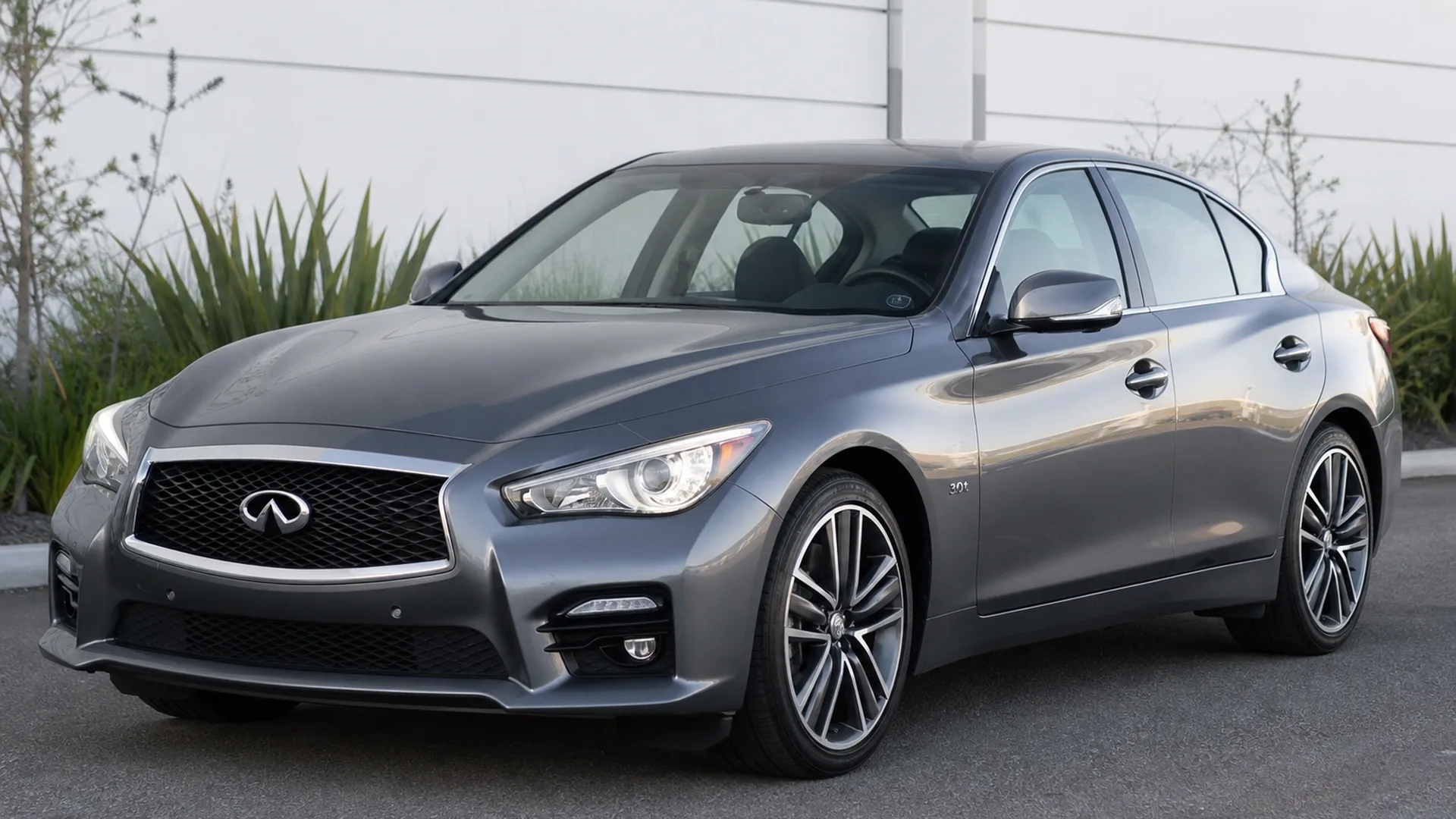
If you’re shopping for a luxury sports sedan, understanding the Infiniti Q50 years to avoid can save you from costly repairs and frustrating ownership experiences. The Q50 replaced the beloved G37 in 2014, offering sleek styling, twin-turbo power, and advanced features like steer-by-wire handling and dual touchscreens. On paper, it looked like a performance bargain.
But not every Q50 model lives up to Infiniti’s reputation for reliability. Some years are notorious for engine failures, steering malfunctions, and expensive drivetrain recalls that can drain your wallet fast.
The worst Infiniti Q50 years to avoid are 2014, 2015, and 2017, which suffer from major reliability issues including steering malfunctions, drivetrain recalls, and costly engine failures. The best Infiniti Q50 years to buy are 2019–2022, offering refined performance, improved electronics, and strong reliability scores from J.D. Power and owners alike. If you’re shopping used, focus on these newer models for a smoother, more dependable driving experience, and steer clear of the early production years that caused most of the brand’s reliability complaints.
How we rated the best and Infiniti Q50 Kona years
Our team analyzed thousands of data points to give you the straight story on Q50 reliability. We pulled recall records and complaint data from NHTSA, cross-referenced reliability scores from J.D. Power and RepairPal, and dug through owner feedback on forums like InfinitiScene and Reddit. We also reviewed Technical Service Bulletins from Infiniti dealers and tracked resale trends through KBB and iSeeCars. The result? A clear picture of which years work and which ones will drain your wallet.
Worst Infiniti Q50 years to avoid
2014 Q50 – The Worst Year by Far
The launch year Q50 is a perfect example of why you shouldn’t buy the first model year of anything. With 7 NHTSA recalls and 165 complaints, the 2014 Q50 holds the record for problems. Owners dealt with warped front brake rotors that caused loud groaning and vibration, plus steering electronics that would randomly fail. The Direct Adaptive Steering system – Infiniti’s fancy steer-by-wire setup – was so buggy that some owners compared driving to playing a video game with lag.
CarComplaints.com lists 2014 as the absolute worst Q50 year, and for good reason. The driveshaft recall, adaptive steering errors, and airbag sensor issues created a perfect storm of reliability problems. Even if you find a 2014 Q50 with every recall completed, you’re still looking at a car that was fundamentally flawed from day one.
2015 Q50 – Still Plagued with Problems
Hoping Infiniti fixed everything for year two? Think again. The 2015 Q50 inherited most of 2014’s bugs and added a few new ones. With 118 NHTSA complaints, it’s barely better than the launch year. Owners reported the same premature brake pad wear and warped rotors, plus transmission shifting problems that made the car jerk and hesitate.
The 2015 model still needed multiple safety recalls for the propeller shaft, steering software, and airbag sensor programming. If you’re considering a 2015, remember that it’s basically a 2014 with minor tweaks – and those tweaks didn’t fix the fundamental issues.
2017 Q50 – The Engine Failure Year
Here’s where things get expensive. While 2017 Q50s had fewer recalls than the early years, they introduced a new problem that could cost you thousands: head gasket failures. This hit the Red Sport 400 and other variants hard, with some owners facing repair bills around $7,500 for blown head gaskets and main bearing failures.
CarComplaints.com ranks head gasket failure as the #2 worst issue for 2017 Q50s. The VR30 twin-turbo engine, which should have been the car’s strongest selling point, became its biggest liability. Even if a 2017 Q50 looks tempting with its improved electronics, that engine time bomb makes it too risky for most buyers.
The “Proceed with Caution” Years
2016 Q50 – Better But Still Risky
By 2016, Infiniti had addressed some of the early recalls, and complaint numbers dropped to just 5 NHTSA reports. The steering system was more stable, and the worst brake problems were behind them. But 2016 Q50s still fall under the propeller shaft recall that affects 2014–2018 models, where the driveshaft can fatigue and break under load.
If you’re considering a 2016, make sure the crucial recalls (driveshaft, steering, airbag software) are completed. It’s not our first choice, but it can work if you find one with perfect maintenance records and recall compliance.
2018 Q50 – Software Issues Linger
The 2018 refresh brought better ride quality and improved interior materials, but the InTouch infotainment system still struggled with lag and occasional freezes. Some owners reported turbocharger oil leaks, though these weren’t as catastrophic as the 2017 head gasket issues.
The 2018 model year had a recall (15V-670) to fix infotainment reboot problems that could disable the backup camera and audio. If you’re looking at a 2018, check that this recall was completed and test the infotainment system carefully during your inspection.
Best Infiniti Q50 years to Buy
2019–2022 Q50 – Finally Getting It Right
This is where the Q50 story gets much better. J.D. Power gave the 2019 Q50 an 82/100 reliability score and 2022 models scored 83/100, both rated “Great.” KBB owners of 2019–2021 Q50s rated reliability at 4.5/5, showing real-world satisfaction matches the official ratings.
The numbers tell the story: 2022 Q50s had zero recalls for that model year and only 1 NHTSA complaint through mid-2024. Compare that to the 165 complaints from 2014, and you can see how much the platform improved. Maintenance costs stayed reasonable at around $650 per year, making these years both reliable and affordable to own.
The 2020 model often gets called the “sweet spot” – it earned high owner satisfaction scores and benefited from all the earlier recall fixes without introducing new problems. Even the Red Sport 400 became trustworthy again, with the VR30 engine finally living up to its performance potential.
Why These Years Work
Later Q50s succeeded because Infiniti finally got the software right. The Direct Adaptive Steering system that caused so many headaches in 2014–2016 was either fixed or made optional. The infotainment system, while still not class-leading, stopped freezing and rebooting randomly. Most importantly, the engine and transmission combinations proved themselves durable with proper maintenance.
Most Common Infiniti Q50 Problems
Before looking at specific problem areas, it’s important to understand the broader reliability trends that have shaped the Q50’s reputation. While the Infiniti Q50 delivers strong performance and luxury features, it also carries a history of mechanical and electronic issues that vary significantly by model year. The most common complaints involve steering malfunctions, brake system wear, drivetrain recalls, and infotainment glitches—especially in early production models. Below is a breakdown of the major problem categories that have caused frustration for many Q50 owners.
1. Steering System Failures
The Q50 introduced Infiniti’s ambitious Direct Adaptive Steering system—an entirely electronic, steer-by-wire setup with no direct mechanical connection between the steering wheel and the front wheels. While innovative, this system quickly became one of the Q50’s biggest sources of reliability complaints.
Drivers of 2014–2016 models often reported inconsistent steering response, loss of feedback, or sudden stiffness while driving. In some cases, the steering would temporarily lock or fail to respond until the car was restarted. Multiple recalls (NHTSA 16V-244 and 16V-207) were issued to update steering software and address ECU malfunctions. Any early Q50 under consideration should have documentation showing these recall repairs were completed.
2. Brake System Problems
Premature brake wear and rotor warping have been ongoing issues for early Q50s. Many owners noticed vibrations, groaning noises, or pulsating brake pedals as early as 30,000–40,000 miles. The cause was traced to overly aggressive brake-by-wire calibration that placed excessive stress on front brake components.
Although Infiniti released service updates and replacement parts, the problem persisted through several model years. Later Q50s saw improvements in brake material quality, but buyers should still inspect for uneven wear or recently replaced rotors during a pre-purchase inspection.
3. Driveshaft and Drivetrain Recalls
One of the most serious safety-related problems involved defective driveshafts. A major recall (NHTSA 24V-470) affected 2014–2018 Q50s, warning that propeller shafts could fatigue and break while driving. A broken driveshaft can disable the vehicle or cause secondary damage to the undercarriage and transmission.
Infiniti issued updated parts and inspection protocols to correct the problem, but any used Q50 from this range should be verified through its VIN to confirm recall completion. Ignoring this issue can lead to costly repairs and potential safety risks.
4. Infotainment and Electrical Malfunctions
The Q50’s dual-screen InTouch infotainment system looked advanced when new, but early versions were plagued by reliability issues. Common complaints include lagging touchscreens, random reboots, frozen displays, and disabled backup cameras. These software bugs affected both convenience and safety, particularly when parking or reversing.
Infiniti addressed the issue through software updates and system replacements under warranty, but results were inconsistent. If you’re test-driving a 2014–2018 Q50, spend extra time verifying that the screens, Bluetooth, and backup camera operate normally—repairing these components out of warranty can cost well over $1,000.
5. Engine and Cooling Problems (2017 Models)
The 2017 Q50 introduced the VR30 twin-turbocharged V6 engine, which brought strong performance but new reliability challenges. Some owners reported blown head gaskets and main bearing failures, particularly in the Red Sport 400 variant. Repair costs for these engine failures can exceed $7,000–$8,000.
In addition to mechanical issues, minor coolant leaks from turbocharger lines were also reported. These problems were largely resolved in later model years (2019 and newer), but any 2017 Q50 should undergo a detailed engine inspection before purchase.
Smart Shopping Tips for Used Infiniti Q50
For Reliability Above All: Stick to 2020–2022 models. Yes, they cost more, but you’ll save money long-term by avoiding repair bills and recalls.
For Budget-Conscious Buyers: A well-maintained 2016–2018 can work if all recalls are completed and maintenance is documented. Just budget extra for potential repairs.
VIN Check Everything: Use the NHTSA recall lookup tool to verify that driveshaft, steering, and other major recalls were completed. Don’t trust seller promises – get documentation.
Test the Electronics: Spend extra time checking the infotainment system, adaptive steering (if equipped), and all electronic features. Early Q50s had software bugs that could resurface.
Better Alternatives to Consider
If Q50 reliability concerns have you spooked, these luxury sedans offer similar performance with better track records:
Lexus IS 350 (2017–2024): Rock-solid reliability, naturally aspirated V6 engine, and minimal recalls. The IS consistently earns top reliability ratings and holds value better than the Q50.
BMW 330i/340i (2016–2018) or 330i/M340i (2019+): Superior driving dynamics and the turbocharged engines from 2016+ are much more reliable than earlier BMW motors. The G20 generation (2019+) is especially good.
Acura TLX (2021+): The second-generation TLX offers strong performance and Acura’s reputation for reliability. Avoid the first-generation TLX V6 models due to a recent engine recall.
Is the Infiniti Q50 worth buying?
The Infiniti Q50’s story is one of eventual redemption, but the road getting there was bumpy. Skip 2014, 2015, and 2017 entirely – they’re just too problematic to recommend. The 2016 and 2018 models can work for budget-conscious buyers who do their homework on recalls and maintenance. But for the best ownership experience, stick to 2019 and newer Q50s that finally deliver on the car’s original promise.
Remember: fixing a blown head gasket in a 2017 Red Sport can cost more than upgrading to a reliable 2020 Q50. Choose proven dependability over horsepower bragging rights, and you’ll enjoy your luxury sedan instead of cursing it in the repair shop.