
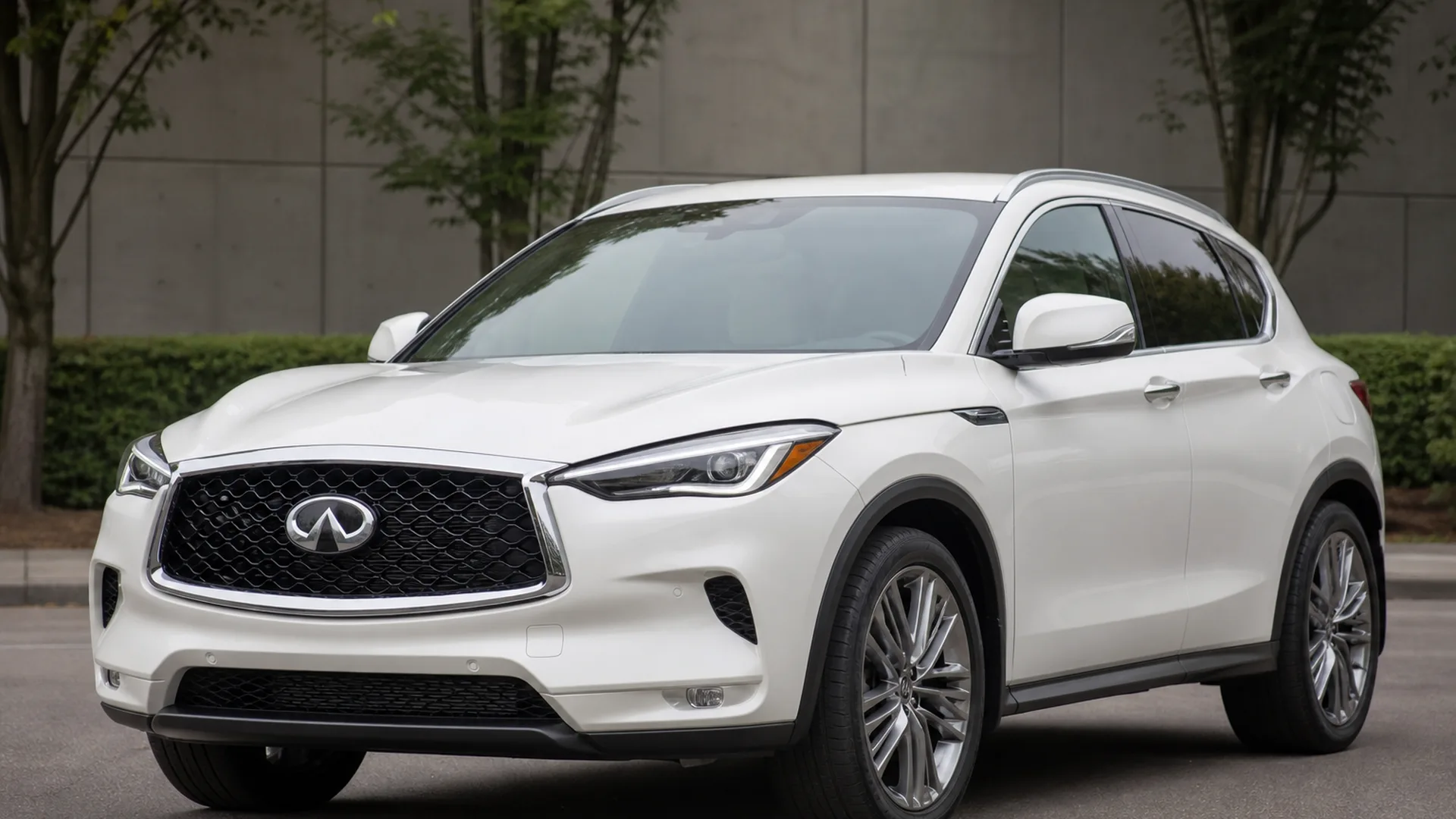
The Infiniti QX50 entered the luxury crossover scene with bold promises. When the redesigned 2019 model launched, it brought the world’s first production VC-Turbo engine—a groundbreaking technology capable of adjusting compression ratios between 8:1 and 14:1 on the fly. The specs looked impressive: 268 horsepower, refined interior, and engineering that seemed years ahead of competitors like the BMW X3 and Lexus NX.
Then reality hit. In June 2025, Nissan recalled 443,899 vehicles for catastrophic VC-Turbo engine bearing failures. Of those, 84,536 were Infiniti QX50s built between 2019 and 2022. Owners started reporting engine seizures, metal shavings in oil, and repair bills reaching $10,000 to $30,000. This guide breaks down which QX50 years have documented problems and which models you can actually trust.
How we rated the best and worst Infiniti QX50 years
We didn’t rely on guesswork or marketing claims. Our team analyzed NHTSA’s Office of Defects Investigation report PE23-023, opened in December 2023 specifically for VC-Turbo failures. We reviewed recall 25V-437 filed June 26, 2025, which documents bearing manufacturing defects across four model years.
We cross-checked owner reports from Infiniti forums, where members detailed engine failures at mileages ranging from 44,000 to 97,000 miles. Consumer Reports reliability ratings confirmed what owners experienced: below-average scores for VC-Turbo models. We studied long-term ownership reviews from Car and Driver and MotorTrend, tracked class-action lawsuit developments, and compared first-generation QX50s (2014-2017) with their VQ37VHR V6 engines against second-generation models (2019-2024) with VC-Turbos.
What makes this guide different? We tracked the actual costs owners faced—not just repair estimates, but real invoices showing $13,000 engine replacements in the U.S. and $30,000 CAD bills in Canada. We documented Infiniti warranty denials even when owners followed every maintenance requirement. This research protects you from the financial disaster thousands of QX50 buyers never saw coming.
Most Common Infiniti QX50 Problems
1. VC-Turbo Engine Failures (2019-2022): The Crisis Issue
The VC-Turbo engine wasn’t just problematic—it became catastrophic for thousands of owners. Manufacturing defects in main bearings and A-, C-, and L-link bearings led to complete engine destruction. Owners discovered metal shavings in their oil during routine changes, signaling internal components grinding themselves apart.
These weren’t gradual failures you could catch early. Engines seized while owners drove on highways, with complete loss of power and no warning signs. One QX50 failed at just 44,600 kilometers (27,700 miles), leaving the owner with a $30,000 CAD repair quote. Another owner reported their engine dying at 79,000 miles, metal debris throughout the oil system, and a $13,000 replacement bill.
The human cost goes beyond money. Twelve owners reported engine compartment fires, with three confirmed as directly related to engine failure. People got stranded in dangerous situations—one owner wrote, “The car stops without warning. It happened on the freeway.” When you’re merging into traffic and your engine quits, repair costs become the least of your worries.
Here’s what makes this even worse: Infiniti denied warranty claims despite proper maintenance. Owners who followed every service requirement, kept receipts from authorized dealers, and did nothing wrong found themselves stuck with five-figure repair bills. Some dealers went out of business during the recall process, leaving owners waiting six weeks or more for repairs on vehicles they couldn’t afford to fix.
The June 2025 recall finally acknowledged what owners had been screaming about for years. But by then, thousands had already paid for engine replacements out of pocket or traded in vehicles worth far less than they owed.
2. CVT Transmission: The Other Major Weakness
While the VC-Turbo grabbed headlines, the CVT transmission created its own nightmare. Owners described power delivery as “surging, lumpy” with “drawn-out interruptions.” One Car and Driver tester wrote that the accelerator “felt as though it were attached to a TheraBand looped through a bungee cord”—you press the pedal and nothing happens, then the car lurches forward unpredictably.
The transmission hunts for the right ratio during moderate acceleration, pushing RPMs past 5,000 when you’re just trying to merge onto a highway. Shuddering and jerking plague city driving. One owner needed a CVT replacement at just 45,000 miles, facing a repair bill between $4,500 and $7,000.
Experts predict these CVTs won’t survive past 100,000 miles. That’s not speculation—it’s based on failure patterns across Nissan’s entire CVT lineup. If you’re shopping for a used QX50 with 80,000 miles, budget another $5,000-$7,000 for transmission work within your first year of ownership.
3. Electrical Gremlins That Never Get Fixed
The QX50’s electrical system throws random faults that dealers can’t diagnose. Navigation starts unwanted routes, the touch screen freezes, and backup cameras display nothing but static at critical moments. One owner reported their liftgate closing on its own, actually hitting them while unloading groceries.
Safety systems trigger false alerts constantly—forward collision warnings when nothing’s there, blind spot monitors malfunctioning, settings changing without input. Owners described “tons of electrical issues” that required multiple dealer visits without permanent solutions. The radio cuts out. Android Auto and Apple CarPlay disconnect randomly. These aren’t minor annoyances when you’re relying on safety features to protect your family.
4. Fuel System Defects (2019 Models)
Infiniti issued Service Bulletin ITB19-026 for EVAP canister filter vent hose problems in 2019 models. Owners noticed strong fuel odors in the cabin—a potential fire hazard. Some experienced fuel leaks from defective components. Fuel pumps failed unexpectedly, leaving drivers stranded.
When you smell gasoline inside your vehicle, you’ve got a serious safety problem. The fact that Infiniti needed a service bulletin for first-year VC-Turbo models shows how rushed this redesign was.
Worst Infiniti QX50 Years to Avoid Completely
2019: The Worst QX50 Year Ever Built ⛔
If you’re shopping for a used QX50, skip every 2019 model you see. This year combined untested VC-Turbo technology with first-year production quality issues, creating a perfect storm of problems.
NHTSA complaint data shows 2019 had the highest failure rates of any QX50 year. Forum threads overflow with catastrophic engine failures: “2019 QX50 engine is dead. Metal shavings found in the oil.” Owners at 27,700 miles faced $30,000 engine replacements. One owner at 79,000 miles watched their engine seize on the highway, with metal debris destroying the entire powerplant.
But engine failures weren’t the only issue. The CVT transmission delivered power unpredictably. Fuel system defects required a service bulletin. Electrical problems affected navigation, cameras, and safety systems. Owners reported dangerous stalling: “The car stops without warning. It happened on the freeway.”
When Infiniti denied warranty coverage despite proper maintenance, owners were left with impossible choices: pay more than the car’s worth to fix it, trade it in for pennies, or pursue lemon law claims that take years to resolve. One owner summed it up: “I whole heartedly DO NOT RECOMMEND THIS VEHICLE.”
2020-2021: High-Risk Years ⚠️
These model years continued the VC-Turbo nightmare without meaningful fixes. NHTSA’s investigation for engine stalling and loss of power specifically included 2020-2021 QX50s. Owners reported recurring electrical failures—crash sensors malfunctioning, navigation glitching, Android Auto failing repeatedly.
Some owners made it to 29,000 miles without problems, but that doesn’t mean you will. The fundamental VC-Turbo bearing defects existed across all early production years. Multiple automotive reliability sources recommend avoiding these years entirely due to “frequent breakdowns.”
Software updates addressed some symptoms but couldn’t fix the underlying engine design issues. You’re gambling that your specific vehicle won’t be the one with defective bearings—except 84,536 of them were defective enough to trigger a massive recall.
2022: Included in the Recall ⚠️
Some sources list 2022 as a “safe year,” but that’s dangerously misleading. The June 2025 recall affecting 84,536 QX50s includes 2022 models for the exact same bearing manufacturing defects that destroyed 2019-2021 engines.
Nissan extended powertrain warranties to 10 years or 120,000 miles on recalled vehicles, and dealers will replace engines if metal debris is found during inspection. That sounds reassuring until you realize you’re buying a vehicle with known defective engine components.
2022 models show improvements over earlier years—software refinements, better build quality, fewer electrical complaints. But the core VC-Turbo and CVT combination remains unchanged. You’re betting that Nissan’s recall inspection catches problems before catastrophic failure. Do you really want your family’s safety riding on that gamble?
The Infiniti QX50 Years You Can Actually Trust
2016-2017: The Only QX50s Worth Buying ✅
These final first-generation models represent everything the QX50 should have remained. Built on Nissan’s proven FM platform (shared with the 370Z and G37), they featured the VQ37VHR 3.7-liter V6 producing 325 horsepower in 2016 and 328 horsepower in 2017.
What makes them reliable? Start with a naturally aspirated engine—no turbocharger complexity, no variable compression system, no bearing manufacturing defects. The traditional seven-speed automatic transmission shifts predictably without CVT surging or shuddering. The rear-wheel-drive-based platform delivers better driving dynamics than the cost-cutting front-wheel-drive architecture that replaced it.
Assembly location matters. These models were built in Tochigi, Japan, with quality control that shows in long-term reliability. Owners report 45,000 trouble-free miles as common. The only notable maintenance item? A liquid-filled differential bushing that may eventually need replacement—a minor issue compared to $30,000 engine failures.
For 2016-2017, Infiniti added four inches of interior length and stretched the wheelbase by 3.2 inches, improving rear-seat space and ride quality. You get 270 lb-ft of torque, segment-leading performance, and a vehicle one owner called “basically a G37 crossover.”
Parts availability is excellent since components are shared across Nissan’s performance lineup. Maintenance costs run about 60% lower than VC-Turbo models. Depreciation has already occurred, so values remain stable. Most importantly, you won’t spend your ownership experience worried about when—not if—your engine will self-destruct.
2014-2015: Acceptable Alternatives
Originally sold as the Infiniti EX37 before being rebadged as QX50, these models share the same VQ37VHR V6 and seven-speed automatic as 2016-2017. They’re based on the proven FM platform with rear-wheel drive.
Technology feels dated compared to modern crossovers. Some owners report minor transmission complaints and interior quality issues like dashboard cracking. But these problems pale compared to VC-Turbo catastrophic failures.
If you find a well-maintained 2014-2015 QX50 at a great price, it’s an acceptable buy. Just recognize you’re getting older technology and higher mileage. The 2016-2017 models are worth waiting for if possible.
2023-2024: Only With Extended Warranty
The newest QX50s represent the most refined version of VC-Turbo technology, with four years of updates addressing earlier problems. Recommended oil change intervals dropped from 12,000 to 7,500 miles, suggesting Infiniti recognizes the engine needs more frequent service.
MotorTrend testing showed “slower acceleration and disappointing fuel mileage”—the VC-Turbo never delivered the performance and efficiency it promised. Some owners report trouble-free experiences, but long-term durability beyond 100,000 miles remains unproven.
Production ends in December 2025, making the QX50 an orphan model. Parts availability and dealer support may decline over time. Resale values will drop faster than competitors that remain in production.
If you’re considering a new or nearly-new QX50, extended warranty coverage to at least 100,000 miles is mandatory. Budget $10,000-$15,000 for potential engine or CVT repairs. Plan to trade out before warranty expires. Accept steep depreciation—60-65% value loss in five years compared to 45-50% for a Lexus NX.
Why You Should Buy Something Else Instead
Lexus NX: The Reliable Alternative
The 2022 and newer Lexus NX competes directly with the QX50 in size and luxury, but the similarities end there. You get proven turbocharged or hybrid powertrains backed by Toyota’s reliability reputation. No variable compression complexity, no CVT transmission, no bearing manufacturing defects.
Owner satisfaction ratings consistently rank the NX above the QX50. Long-term ownership costs run $4,000-$6,000 lower over five years despite a higher initial price. Resale values hold at 45-50% after five years compared to the QX50’s 35-40%.
Real-world longevity tells the story. Lexus owners regularly drive past 200,000 miles with routine maintenance. QX50 owners worry about engine failure before 100,000 miles. One catastrophic VC-Turbo repair wipes out any savings from buying the cheaper vehicle.
Acura RDX: Proven Performance
The 2019 and newer Acura RDX offers turbocharged power without variable compression engineering experiments. You get a traditional automatic transmission, Honda/Acura reliability, and an active owner community.
The RDX costs slightly more than a QX50 but maintains value better and requires fewer repairs. Dealer networks remain strong, and parts availability won’t be an issue if Honda keeps the RDX in production.
The Math That Matters
Let’s say you buy a 2022 QX50 for $45,000. Within two years, you face a $13,000 engine replacement. Your CVT starts failing at 90,000 miles—another $6,000. Depreciation hits 60% over five years, losing $27,000 in value. Total cost: at least $46,000 in repairs and depreciation.
Compare that to a 2022 Lexus NX purchased for $48,000. You might spend $3,000 in routine maintenance over five years. Depreciation at 45% costs $21,600. Total cost: $24,600 in depreciation and maintenance.
The Lexus costs less to own despite a higher sticker price. That’s before considering peace of mind—no wondering if today’s the day your engine dies on the freeway.
The Bottom Line
The Infiniti QX50’s story shows why revolutionary technology needs thorough testing before production. Infiniti rushed the VC-Turbo to market, and thousands of owners paid the price—literally.
Skip 2019-2021 models entirely. These years produced the highest failure rates, most expensive repairs, and worst owner experiences. Even discounted heavily, they’re financial traps waiting to spring.
Exercise extreme caution with 2022 models included in the recall. Verify recall completion and warranty extension before buying.
If you want a QX50, buy 2016-2017 models with the proven V6, rear-drive platform, and Japan assembly. These are the only years with documented reliability.
For new purchases, choose competitors like the Lexus NX or Acura RDX. Proven reliability beats innovative engineering that doesn’t work.
A single VC-Turbo failure costs more than the price difference between a QX50 and a Lexus NX. One catastrophic repair eliminates any savings. Choose the vehicle that won’t