
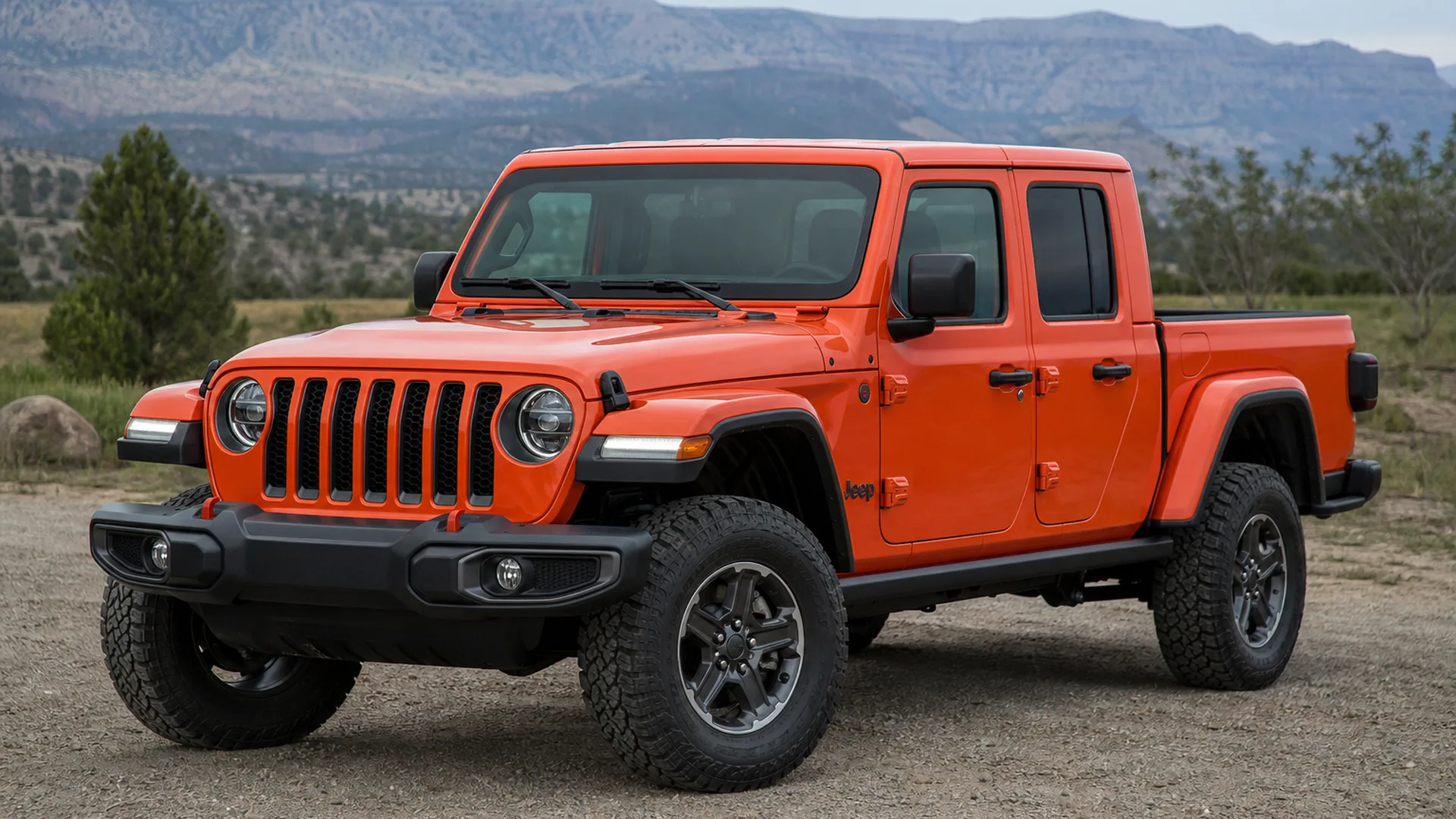
The Jeep Gladiator showed up in 2020 as the truck everyone had been waiting for—Wrangler off-road DNA meets pickup bed practicality. Removable doors, fold-down windshield, 7,650 pounds of towing capacity. On paper, it looked perfect. In practice? The first couple of years had some serious growing pains. Steering that wandered all over the highway, instrument clusters that went completely dark, and clutches that literally exploded under pressure. If you’re shopping for a used Gladiator, knowing which years had the biggest issues can save you thousands in repairs and a whole lot of frustration. This guide breaks down which Jeep Gladiator years to avoid, what problems plagued them, and which model years are actually worth your money.
How We Researched This Guide
Our team pulled data from multiple sources to give you the full picture. We started with NHTSA complaint databases—those official reports drivers file when something goes seriously wrong. The 2020 and 2021 Gladiators? They dominated those complaint lists. We also dug through Jeep’s own recall documents, tracking everything from fire investigations to transmission fixes.
Consumer Reports and Edmunds provided reliability ratings, while real-world owners on Jeep Gladiator Forum and Wrangler Forum shared what actually breaks and how much it costs to fix. Long-term test reviews from KBB and VehicleHistory added professional perspectives, and we cross-checked everything against Jeep dealership Technical Service Bulletins. The goal was simple: figure out which years had persistent problems versus which ones Jeep actually got right.
Common Problems Across Gladiator Models
1. Steering That Fights Back
The steering issue became infamous fast. Owners described a loose, vague feel at highway speeds—like the truck couldn’t decide which lane it wanted to be in. Some called it “death wobble,” that terrifying shimmy over bumps that makes you white-knuckle the steering wheel. The 2020 model got hit hardest, racking up over 174 NHTSA complaints about steering instability alone. Wind gusts or uneven pavement could trigger the wobble, and drivers reported constantly correcting just to stay centered in their lane.
Jeep issued a Technical Service Bulletin in late 2020, swapping the original aluminum steering gearbox for a beefier unit with new bolts. Sounds great, except it wasn’t a formal recall—meaning not every affected owner got the fix. Some dealers wanted you to replicate the problem on their test drive, which isn’t exactly safe at 70 mph. Even owners who got the new gearbox sometimes found it didn’t completely solve the wandering. The solid front axle and recirculating-ball steering setup that gives Gladiators their off-road prowess also creates this on-road headache.
2. Suspension and Drivetrain Quirks
That front-end wobble tied directly into suspension wear. The solid axle design demands regular attention to bushings, track bars, and ball joints. Skip that maintenance, and vibrations creep in fast. Some 2021 owners found rear axle seals leaking at low mileage, throwing gear oil everywhere and threatening differential damage.
Then there’s the driveshaft recall. About 3,500 early 2020 Jeep Jeep Gladiators left the factory with rear driveshafts that had zero grease—none. An ungreased universal joint can seize up and fracture, potentially leaving you stranded or worse, with a driveshaft detaching mid-drive. If you’re looking at a 2020 model, confirm NHTSA recall #19V-636 was completed.
3. Engine and Transmission Troubles
The 3.6L Pentastar V6 is generally reliable, but 2020 models had their share of early misfires and check-engine lights around 20,000 miles. Cylinder misfires often meant replacing ignition coils or cam followers, averaging $600 in repairs. More concerning were reports of camshaft and lifter failures—you’d hear ticking noises before performance dropped off.
The manual transmission clutch became a legitimate safety hazard. Under heavy towing or aggressive off-roading, the clutch pressure plate could overheat and literally explode, sending metal shrapnel through the bellhousing. Jeep issued a major recall covering 2020–2023 manual Jeep Gladiators (and Wranglers), but here’s the kicker: they had to redo the recall in 2023 because the first fix didn’t work. As of early 2023, Jeep was still finalizing a permanent solution. If you’re considering a manual Gladiator, verify those recall repairs were done—and maybe take it easy on the towing until you’re confident in the fix.
The 8-speed automatic, by contrast, has been mostly drama-free. Some 2020 automatics had a sensor glitch causing reverse light malfunctions, but a software update fixed that.
4. Electrical Gremlins You Can’t Ignore
The instrument cluster failure stands out as the most frustrating electrical issue. You’d be driving along and suddenly your central LCD display—the one showing speed, fuel level, all your warnings—goes completely dark. Gauge needles freeze or drop to zero. No speed, no fuel gauge, nothing. This happened often enough that Jeep recalled 11,554 Jeep Gladiators (2020–2024 models) in September 2024 to replace the faulty circuit board. The defect traced back to a bad printed circuit board in the 3.5-inch Marelli-supplied display that shorts out.
Not every VIN made the initial recall list, leaving some owners stuck with dead clusters and no official fix. NHTSA started investigating an expansion in 2025.
The dual-battery Start/Stop system added another layer of complexity. The small auxiliary battery that powers auto stop-start can fail, leaving you unable to restart the engine. Owners either replaced the aux battery (a few hundred bucks) or installed aftermarket bypass kits to disable the system entirely. Early models also had backup camera glitches and Bluetooth connectivity issues that later software updates resolved.
5. The Fire Risk Nobody Expected
This one’s rare but scary. At least nine Jeep Gladiators and Wranglers caught fire between 2021–2023, some while parked and turned off. One 2022 Gladiator owner parked their truck, walked away, and came back minutes later to find it in flames—an incident that caused burn injuries. NHTSA opened an investigation covering roughly 781,000 vehicles, focusing on the electrical connector for the electric power steering pump. If that connector overheats or shorts, it can spark a fire.
As of late 2024, no recall had been issued yet (the investigation is ongoing), but a class-action lawsuit is pushing for answers and compensation. If you own a 2021–2023 Gladiator, watch for any service campaigns about EPS wiring. Fire incidents are extremely uncommon—we’re talking a handful of cases out of hundreds of thousands of trucks—but the severity means you can’t ignore it.
6. Minor Issues That Add Up
Air conditioning problems cropped up in 2020–2021 models, with systems blowing warm air or struggling in hot climates. Common culprits included low refrigerant from small leaks, bad AC pressure sensors, or compressor clutch issues. A TSB addressed certain VINs with faulty sensors that prevented the compressor from engaging.
Early 2020 Jeep Gladiators also lacked Apple CarPlay and Android Auto on base trims, and the Uconnect system had occasional software bugs. By 2022, those tech kinks were mostly resolved. Small batches of 2020s were recalled for things like seat belt retractor issues and misaligned headlights—nothing widespread, but worth checking your VIN against NHTSA’s database.
Years to Avoid Completely
2020 – The Problematic Launch Year
The 2020 Jeep Gladiator is the clear answer to “which year should I avoid?” It logged more complaints, more recalls, and more owner frustration than any other year. That wandering steering often showed up with under 1,000 miles on the odometer—brand new trucks that didn’t track straight. First-year electrical glitches, build quality issues (paint defects, trim problems), and the ungreased driveshaft recall all hit 2020 models hardest.
Repair costs ran high because parts availability was limited and mechanics were still learning the platform. Resale values reflect that poor reputation. Unless you find a 2020 priced dirt-cheap with documentation proving every recall and TSB was completed, walk away. The risk isn’t worth it.
2021 – Still Too Many Red Flags
The 2021 Jeep Gladiator improved slightly, but “slightly better than terrible” isn’t a ringing endorsement. Steering wander persisted (Jeep hadn’t fully sorted the fix yet), and this was the year that introduced the EcoDiesel option—adding diesel-specific emissions headaches, DEF system problems, and more complexity.
2021 models fell under the clutch explosion recall and the ongoing fire investigation. Owner feedback for 2020 and 2021 consistently ranks them as the worst years to own. These trucks spent more time at dealers for fixes and accumulated more TSBs than later models. Forum regulars advise avoiding both years due to parts shortages and quality control struggles during the COVID production period.
If someone offers you a 2020 or 2021 Jeep Gladiator at a bargain price, remember: you might save money upfront, but repairs can turn it into a money pit fast.
The Years Worth Considering
2022 – Significant Improvements Begin
By 2022, Jeep had implemented running changes that addressed many early bugs. Steering complaints dropped dramatically, and the truck felt more sorted overall. You got improved infotainment with Apple CarPlay and Android Auto standard on more trims, plus additional safety tech.
Consumer feedback on 2022 models is noticeably more positive. Owners report far fewer dealer visits and a more confident ownership experience. If you’re shopping used, 2022 is where the Gladiator becomes a safer bet.
2023 – Peak Refinement for This Generation
The 2023 Jeep Gladiator benefitted from all mid-cycle tweaks. It was also the final year for the EcoDiesel V6, which by then had received factory improvements for reliability. Owner satisfaction ratings climbed, and complaint volumes stayed low compared to launch years.
If you want a used Gladiator with modern features and fewer known issues, 2023 hits the sweet spot—especially if you find one with the automatic transmission and gas V6 (simpler configurations typically mean fewer things break).
2024 – The Refreshed Model
The 2024 Gladiator got a mild refresh: standard 12.3-inch touchscreen in most trims, more airbags, available side-curtain airbags (earlier models lacked these), and reportedly improved seals, bearings, and hardware based on lessons from early years.
Long-term reliability data on 2024s is still coming in, but early signs are promising. Buying new or nearly-new means you get the factory warranty and the latest fixes. Just keep in mind the EPS fire investigation covers some of these models, so stay alert for any new service campaigns.
Configuration Matters
If you want a Gladiator but worry about reliability, stick with simpler setups. A base Sport or Willys trim with the 3.6L gas V6 and 8-speed automatic has fewer complex systems to malfunction. Loaded Rubicon models with every gadget—especially manual transmissions or diesel engines—add complexity and potential repair costs.
Many owners report solid reliability from base models used for moderate duty. Push a fully-loaded Rubicon hard off-road, and you’ll naturally see more wear and tear. If hardcore off-roading is your goal, the Rubicon or Mojave are unmatched—just aim for 2022 or newer production.
Better Alternatives to Consider
The Gladiator is unique, but it comes with above-average maintenance costs and below-average dependability compared to competitors. Over 10 years, expect to spend around $11,800 on maintenance—about $1,000 more than the segment average. The truck also has a 35% chance of a major repair within that time, versus 21% for typical vehicles.
If you love the removable roof and hardcore off-road capability, those trade-offs might be acceptable. But if you just need a reliable midsize pickup for work and weekend adventures, here are alternatives with better track records:
Toyota Tacoma (2016–2023): The Tacoma is the gold standard for midsize truck reliability. Problems are rare and usually minor. By 2018–2019, early bugs were gone, and 2020–2023 models added Apple CarPlay. You lose the open-top experience, but you gain a smoother ride, better fuel economy, and legendary resale value. A well-maintained Tacoma will almost always outlast a Gladiator.
Ford Ranger (2019–2023): The Ranger returned to North America in 2019 with a proven 2.3L EcoBoost turbo and 10-speed automatic. By 2021, minor updates kept it solid. Towing and payload match or beat the Gladiator, and reliability has been generally good. The 2024 Ranger is a full redesign that looks promising, but if you want proven reliability, stick with 2020–2021 models.
Nissan Frontier (2012–2019 or 2022+): The previous-generation Frontier went unchanged for over a decade, meaning by the 2010s, Nissan had worked out all the kinks. A 2015 Frontier is extremely well-vetted. The redesigned 2022+ models bring modern tech and a new 3.8L V6. Both generations offer solid reliability depending on whether you prioritize old-school simplicity or modern features.
Honda Ridgeline (2017–2023): If on-road comfort matters more than extreme off-roading, the Ridgeline consistently tops reliability surveys for midsize trucks. Its unibody construction means a smoother ride and more responsive handling. You sacrifice truck image and serious towing, but you gain bulletproof reliability. Any 2017–2023 Ridgeline is a safe bet; 2019+ models are even more refined.
Chevrolet Colorado / GMC Canyon (2017–2022): These twins offer available diesel engines and refined on-road behavior, but reliability has been mixed. Early years (2015–2016) had transmission shuddering and hard shifts. By 2019–2022, most bugs were resolved. A late-cycle 2020 or 2021 Colorado could work, but maintenance costs run higher than a Tacoma, and resale values are lower.
If your heart is set on a Jeep, you might consider a Wrangler Unlimited instead—since the Gladiator is essentially a Wrangler with a bed. However, Wranglers share many of the same reliability weaknesses (steering issues, electronics), sometimes worse. Certain Wrangler JL years like 2018–2019 had significant problems. For reliability alone, a Wrangler isn’t necessarily a better choice.
Final Advice for Gladiator Shoppers
Here’s the bottom line: avoid 2020 and 2021 Gladiators unless you find one dirt-cheap with verified recall work and documented repairs. The steering, clutch, and electrical issues make those early years too risky. If you want a Gladiator, focus on 2022 or newer—preferably with the automatic transmission and gas V6 for simpler ownership.
Expect higher maintenance costs compared to competitors. Budget for it, and make sure you have warranty coverage if buying used. Before handing over any money, run the VIN through NHTSA’s recall database and get a pre-purchase inspection from a mechanic familiar with Jeeps.
If off-road performance and that unique Jeep character are priorities, a late-model Gladiator can deliver—just go in with eyes open about potential repairs. But if your main goal is dependability and everyday practicality, a Tacoma or Ridgeline will likely save you money and headaches in the long run.
Either way, don’t skip the recall check and inspection. Buying a proven 2022 Tacoma or Ranger might cost less overall than fixing a problematic early Gladiator—and give you years of worry-free driving instead of repeated dealer visits.