
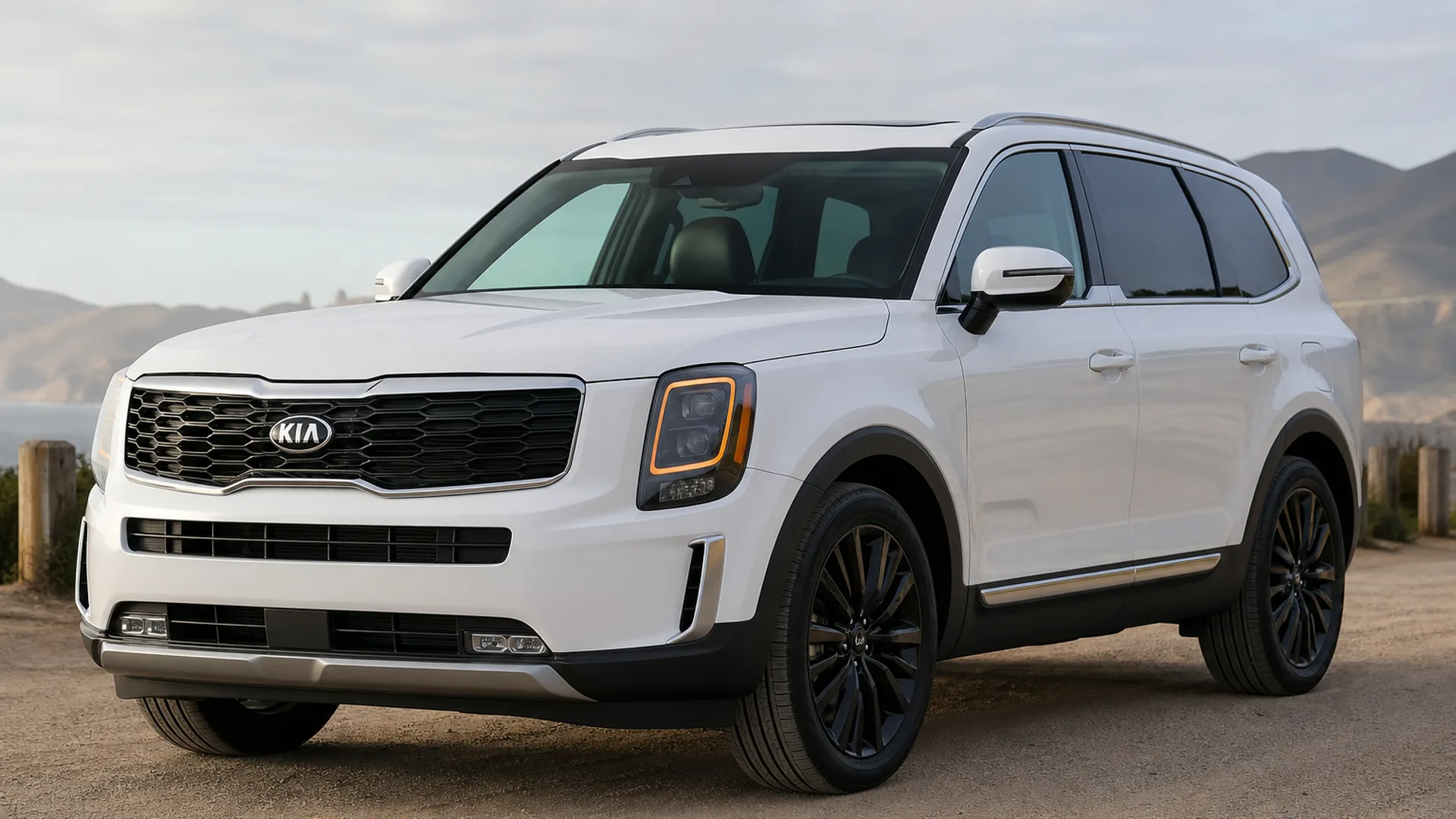
If you’re considering a midsize family SUV, understanding the Kia Telluride years to avoid can save you from unexpected repair bills down the road. Since its debut in 2020, the Telluride has impressed drivers with its upscale interior, strong V6 performance, and luxury features at an affordable price. It even won “World Car of the Year” in its launch year—cementing its status as one of the most desirable SUVs in its class. However, not every model year lives up to that reputation. Some early Tellurides have been plagued by engine oil consumption, transmission failures, and serious safety recalls that impact long-term reliability.
The worst Kia Telluride years to avoid are 2020 and 2021, both plagued by engine oil consumption, transmission failures, and major safety recalls. The best Kia Telluride years to buy are 2022 through 2024, which feature improved build quality, updated software, and far fewer mechanical complaints. If you’re shopping used, focus on these newer models with completed recalls to enjoy the Telluride’s luxury and reliability without the early-year problems.
How we rated the best and worst Kia Telluride years
Our team analyzed NHTSA recall data, Consumer Reports reliability scores, and thousands of owner complaints from Kia forums and automotive databases. We cross-referenced JD Power quality ratings with class-action lawsuit filings and warranty extension bulletins to identify patterns. Real-world depreciation data from CarEdge and KBB helped us track which years hold their value—and which ones don’t. We also reviewed mechanic feedback and dealership service records to understand the most expensive repairs owners face.
The Most Common Kia Telluride Problems
Before diving into specific model years, it’s important to understand the recurring issues that have affected the Kia Telluride since its debut. While the Telluride remains one of the most popular midsize SUVs on the market, its early years revealed several reliability concerns. The most frequently reported problems involve excessive engine oil burning, transmission and drivetrain malfunctions, electrical failures, lighting defects, and ongoing brake and glass quality issues. Here’s a detailed look at these major problem areas and their real-world impact on owners.
1. Engine Oil Burning and Failures
Engine reliability has been one of the Telluride’s biggest weak points, particularly in 2020 and 2021 models. Owners frequently report excessive oil consumption caused by faulty piston rings and bearing wear, leading to oil burning and eventual engine failure—sometimes before 100,000 miles.
Kia acknowledged the issue through a class-action settlement, extending engine warranties to 150,000 miles for affected vehicles. This step, while helpful, underscores how severe and widespread the defect is. Replacing a damaged engine can cost over $8,000 out of pocket for those without coverage, making this one of the most expensive Telluride problems to date.
2. Transmission and Drivetrain Issues
The Telluride’s 8-speed automatic transmission has shown multiple failure points, especially in early models. Common complaints include shuddering during acceleration, slipping between gears, or entering “limp mode” unexpectedly. These issues often stem from torque converter malfunctions or defective control modules.
Even more serious is the rollaway recall affecting 2020–2023 models. Due to improperly assembled driveshafts and parking brake components, some Tellurides could roll away even when parked—a clear safety hazard. Kia issued multiple recall campaigns to correct this, but it remains one of the most significant reliability concerns for early production years.
3. Electrical System Failures
Electrical system problems have frustrated many Telluride owners. Dashboard clusters have been known to go completely dark, removing access to speed, warning lights, and fuel information. Infotainment screens can freeze, reboot, or lose Apple CarPlay and Android Auto connectivity without warning.
Kia released several software updates to address these failures, but in many cases, dealerships had to replace the entire instrument cluster or head unit. When critical systems like the speedometer or backup camera fail during operation, it raises both safety and reliability concerns—especially for family vehicles.
4. Lighting System Failures
Lighting defects are another common source of complaints. Early Tellurides, particularly 2020 models, experienced widespread headlight malfunctions. NHTSA received more than 100 complaints about lights failing prematurely, leaving drivers with limited nighttime visibility. Both low and high beams were affected, along with daytime running lights.
In some cases, internal wiring and moisture intrusion caused short circuits that required complete headlight assembly replacements. Kia responded with safety recalls, but replacement parts were often back-ordered due to high demand.
5. Glass and Build Quality Issues
Even as Kia improved mechanical reliability, quality control problems persisted. Windshield cracking without impact has been repeatedly reported, especially in 2023 models. Some owners describe cracks forming overnight or during mild temperature changes. Paint peeling on roof trim and oil filter housing leaks have also been noted, raising concerns about material durability and assembly precision.
While these issues are less catastrophic than engine or transmission failures, they contribute to ongoing maintenance costs and reduced resale value—two key considerations for used buyers.
6. Brake System Concerns
Braking performance is another area of scrutiny for Telluride owners. A class-action lawsuit filed in late 2024 claims that brake master cylinder defects across 2020–2024 models cause “spongy” pedals and inconsistent braking force. Some drivers reported delayed braking response or reduced pressure after prolonged use.
Although Kia has not yet confirmed a widespread defect, reports of complete brake failure incidents are under investigation. Until official results are released, buyers of earlier models should have the braking system inspected as part of any pre-purchase evaluation.
Kia Telluride Years to Avoid Completely
2020 Kia Telluride – Stay Away
The launch year is easily the worst Telluride you can buy. This model has the highest complaint volume, the most recalls, and the worst long-term reliability record. Oil consumption problems are rampant, with many owners needing engine replacements well before 100,000 miles. The transmission develops shuddering and slipping issues. Lighting failures are common enough that NHTSA issued recalls. Build quality problems include leaking plastic housings and peeling paint. The driveshaft rollaway recall affects every 2020 model.
2021 Kia Telluride – Still Problematic
Unfortunately, most of the 2020 problems carried over into 2021. Engine oil burning continues to be reported. The same rollaway recall applies. Electrical issues with the dashboard cluster and infotainment system persist. While complaint volumes dropped slightly compared to 2020, that’s not saying much. The class-action engine settlement covers 2021 models, which should tell you something about expected reliability.
Years That Require Extra Caution
2022 Kia Telluride – Much Better, But Not Perfect
This is where things start improving. Software updates resolved many of the dashboard cluster blackouts. Fewer powertrain failures were reported compared to earlier years. JD Power rated the 2022 Telluride “Great” for quality (85/100). But you’re still dealing with the driveshaft recall, and some owners reported wind noise and rattles from misaligned trim. If you’re considering a 2022, make sure all recalls and software updates are completed.
2023 Kia Telluride – Generally Solid
JD Power ranked the 2023 Telluride as the #1 midsize SUV with an 86/100 quality rating. Most of the earlier bugs were worked out by this point. However, spontaneous windshield cracking became a new concern, and some owners report brake pedal inconsistencies. The driveshaft recall still applies to early 2023 builds, but overall reliability is much improved.
2024 Kia Telluride – The Mature Platform
Most recalls are now resolved at the factory level for 2024 models. Early builds (before October 20, 2023) are still subject to the driveshaft recall, but later builds should have the fix from day one. Some isolated reports of brake system issues exist due to the ongoing lawsuit, but these appear to be outliers rather than widespread problems.
Best Telluride Years to Consider
If you’re set on a Telluride, here’s what we recommend:
2022-2024 Models Are Your Safest Bet
These years benefit from software fixes, improved quality control, and resolved manufacturing issues. The 2022 still carries an 85/100 JD Power rating, while 2023 jumps to 86/100. You’re getting the same 291-hp V6 and luxury features, but with significantly fewer headaches.
Why 2023 is the Sweet Spot
By 2023, Kia had worked out most of the early bugs. The driveshaft problem was fixed through a supplier change. Software updates addressed the cluster blackouts. JD Power rates it as the class leader. Yes, there are some reports of windshield cracking and brake feel issues, but these are isolated compared to the widespread problems of 2020-2021.
2024 for Maximum Peace of Mind
If budget allows, a 2024 model gives you the most refined version of the platform. Most recalls are resolved from the factory. You get the latest tech updates and the full remaining warranty. While depreciation will be higher initially, you’re avoiding the risk of major repairs that plague earlier years.
Critical Tips for Used Buyers:
- Verify all recalls are completed using the VIN
- Confirm software updates are installed
- Get a pre-purchase inspection focusing on engine oil consumption
- Consider Certified Pre-Owned for extra warranty protection
- Avoid high-mileage 2020-2021 models unless the engine was recently replaced
Better Alternatives Worth Considering
Before you commit to a Telluride, consider these proven alternatives:
Toyota Highlander (2017-2020): The reliability champion. Toyota‘s track record speaks for itself, and these years balance modern features with proven durability. JD Power gives it a “Best” resale rating, and you won’t find the widespread engine and transmission issues that plague early Tellurides.
Honda Pilot (2019-2022): Solid family hauler with standard AWD starting in 2019. While earlier Pilots had some transmission recalls, the 2019+ models are much more reliable. JD Power rates the 2023 Pilot at 84/100 for quality.
Hyundai Palisade (2022+): Essentially the Telluride’s twin, but Hyundai seems to have better quality control on newer models. The 2022+ Palisades share the same platform improvements without the early teething issues. JD Power scores the 2023 Palisade at 81/100.
The Bottom Line
Skip the 2020-2021 Kia Tellurides entirely. These early years are plagued with engine, transmission, electrical, and safety problems that can cost thousands in repairs. The 2022 model year marks a significant improvement, while 2023-2024 models are generally solid choices.
If you’re shopping used, a 2022 or newer Telluride with completed recalls and software updates can be a good value. But honestly, for the same money, a Toyota Highlander or Honda Pilot will give you better long-term reliability and fewer headaches.
The Telluride’s accolades are well-deserved when it works properly. Just make sure you’re buying one of the years that actually delivers on that promise. Your wallet—and your sanity—will thank you later.