
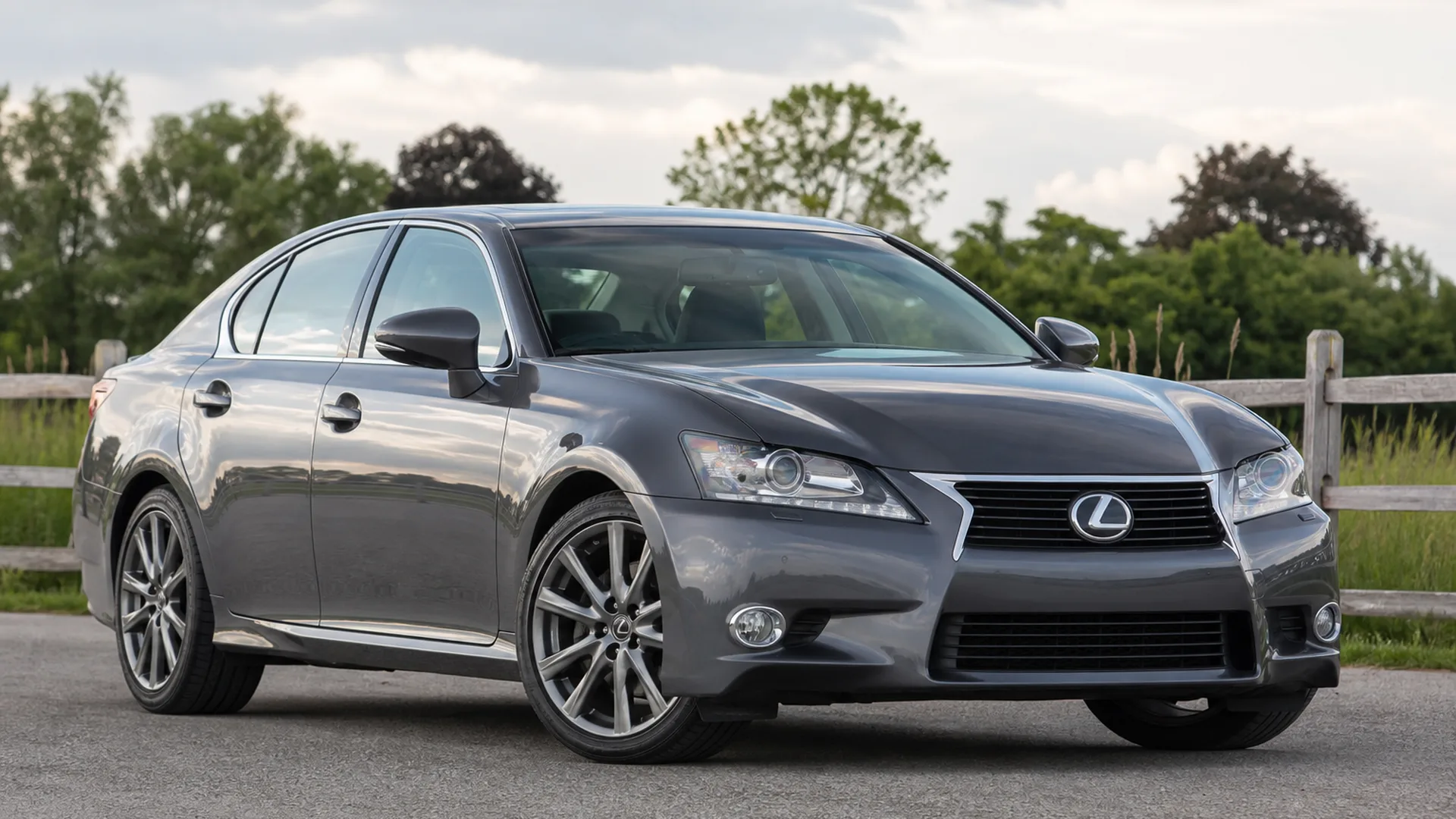
The Lexus GS 350 earned a solid reputation as a refined mid-size luxury sedan. It paired a punchy 3.5L V6 with rear-wheel drive, premium cabin materials, and the build quality Lexus is famous for. From 2007 to 2020, the GS 350 delivered smooth power (peaking at 311 hp in later years) and held its value better than many German rivals.
But not every GS 350 lived up to that promise. A handful of model years were plagued by engine defects, electrical bugs, and recall campaigns that left owners stranded or stuck with expensive repairs. If you’re shopping for a used GS 350, knowing which years to skip—and which ones to target—can save you thousands in repair bills and frustration. This guide breaks down the problem years, the most reliable alternatives, and competing sedans that might suit your needs even better.
How we rated the best and worst Lexus GS 350 years
Our team pulled data from multiple authoritative sources to give you the full picture:
- NHTSA complaint and recall databases for official safety campaigns and owner-reported failures
- Lexus Technical Service Bulletins (TSBs) to identify known defects and factory fixes
- Consumer Reports reliability ratings and long-term satisfaction scores
- ClubLexus forums and owner feedback to capture real-world experiences mechanics don’t always document
- Edmunds, KBB, and IIHS data on crash safety, depreciation, and repair frequency
We cross-checked forum reports against official recalls to separate isolated incidents from widespread problems. Every claim in this guide is backed by verifiable sources—no speculation, just facts.
Most Common Lexus GS 350 Problems
The GS 350 is generally dependable, but certain issues pop up more often than others. Here’s what to watch for if you’re considering a used model.
1. Engine & Drivetrain Issues
Early third-generation GS 350s (2007–2008) had a serious valve spring defect. Lexus recalled those engines after valve springs broke and caused sudden stalling—sometimes at highway speed, which created a real safety hazard. The recall replaced faulty springs, but some engines developed oil consumption problems afterward if the repair wasn’t done right.
Another recall hit 2007 models for loose VVT-i actuator gear bolts. Those bolts could back out, allowing the timing gear to leak oil and rattle at cold start. A few owners reported startup knock or excessive oil use even after the fix. Lexus later recalled 2006–2011 engines to tighten VVT actuator bolts that could loosen over time and stop the engine.
On later models, Lexus replaced defective Denso fuel pumps (affecting some 2013–2014 and 2018–2019 GS 350s) that could fail and leave you stranded. Most of those pumps were swapped under warranty, so check the service records if you’re looking at those years.
The 3.5L V6 itself is strong once the recalls are handled, but buyers should confirm every campaign was completed. A missed valve spring recall or VVT gear fix can turn into a $3,000+ engine teardown.
2. Transmission Quirks
Lexus used a 6-speed automatic in 2013–2015 RWD models, then switched to an 8-speed in later years and AWD variants. The 8-speed can “hunt” for gears on the highway—constantly shifting between seventh and eighth when cruising. Owners on forums describe it as indecisive, though it’s not a failure. Some 2013–2015 drivers also mention hesitant or jerky throttle response, especially in Eco mode.
These are driveability annoyances rather than mechanical breakdowns. Toyota’s Aisin transmissions last a long time, and serious failures are rare. Still, test-drive any GS 350 with an 8-speed to see if the shift logic bothers you.
3. Electrical Gremlins
The 2013–2015 GS 350 had a well-documented parasitic battery drain caused by a Network Gateway computer that wouldn’t go to sleep. Owners would come out to a dead battery after parking overnight. Lexus issued a TSB to reprogram or replace the gateway ECU, which fixed the problem. If you’re considering a 2013, confirm that update was applied.
Other electrical quirks include Bluetooth pairing glitches (especially 2013–2014), a failed Mark Levinson amp on older models (leading to no sound), and sluggish side mirror motors. Serious electrical failures are uncommon, but early fourth-gen cars had more tech hiccups than later models.
4. Suspension & Brake Wear
Third-generation GS 350s (2006–2011) often need front lower control arm bushings replaced around 80,000–100,000 miles. You’ll hear squeaking or feel looseness in the front end—it’s a wear item, not a defect, but it shows up frequently enough to budget for.
GS models with Adaptive Variable Suspension (AVS) occasionally develop leaking shocks or struts, even at low mileage. Standard suspensions hold up better. A few 2013–2015 owners reported warped brake rotors or vibration under braking, likely from heavy use or neglected pad changes. Lexus also recalled 2007–2009 GS 350s for a potential brake fluid leak at a fuel pipe junction—dealers reinforced the lines.
Routine maintenance covers most suspension and brake issues, but check for leaks if you’re test-driving an F-Sport or AVS-equipped car.
5. Interior & HVAC Problems
Early third-gen GS sedans (2007–2008) suffered from the infamous melting dashboard issue—sticky, cracked surfaces in hot climates. Lexus extended warranties to replace those panels, so most affected cars should have been fixed by now. Some owners report creaking dashes or consoles on 2007–2011 models, usually solved with insulation or new clips.
A handful of 2013s had spontaneous sunroof glass cracks (rare but documented), and auto-dimming rearview mirrors sometimes discolor over time. Climate control is mostly solid, though any 10-year-old car might need an A/C recharge or condenser replacement.
Check that all fuel system recalls (valve spring, fuel pump, fuel pressure sensor) were completed—Lexus issued multiple campaigns for those components.
Worst Lexus GS 350 Years to Avoid
A few model years stand out for their frequency of problems or expensive repairs. If you’re shopping used, approach these with caution—or skip them entirely.
2007 Lexus GS 350 – Avoid
As the first year with the 3.5L V6, 2007 took the hit for early engineering issues. The valve spring recall was the biggest: broken springs could cause total engine failure or stalling at any speed. A separate recall fixed loose VVT timing gear bolts that could also stop the engine. These powertrain problems gave 2007 the highest complaint volume of any GS 350 year.
Most 2007s on the market should have the recall work done, but a poorly reassembled engine (from the valve spring job) can lead to oil consumption or long-term damage. Unless you have documented proof of every recall and consistent maintenance, the 2007 GS 350 is a year to avoid.
2008 Lexus GS 350 – Avoid
The 2008 carried over 2007’s issues—early builds used the same flawed valve springs, so they were included in the recall. Complaint volume dropped slightly, but 2008 still logged above-average problems. The melting dashboard issue hit 2007–2008 hardest, so inspect the interior carefully. A well-maintained 2008 with all recalls done can be okay, but the 2009–2011 models are safer bets with fewer headaches.
2013 Lexus GS 350 – Avoid
The debut year of the fourth-generation GS introduced new tech—and new bugs. The 2013 GS 350 has more complaints than any other model year. The parasitic battery drain was the most common issue: many owners needed multiple dealer visits before the gateway ECU fix was applied. A few 2013s also had a sunroof that cracked or exploded spontaneously (rare, but documented).
Other problems included interior creaks, Bluetooth pairing failures, and infotainment glitches as Lexus worked out kinks in the new design. The drivetrain is solid, but the electrical annoyances and high complaint count make 2013 a risky buy. If you find one with all updates done and a strong service history, it can be a bargain—but a 2014 or later is safer.
2014–2015 Lexus GS 350 – Caution
These years are generally decent, with far fewer complaints than 2013. The 2014 GS 350 was part of the fuel pump recall, so confirm the pump was replaced with the updated unit. A fuel pipe sealing recall also hit some 2014s. By 2015, most bugs were ironed out, though one odd report mentioned wheel studs falling out (likely a one-off torque issue).
In general, 2014–2015 are fine purchases. But if you want the absolute safest choice, the post-refresh 2016+ models had almost zero recurring problems.
Best Lexus GS 350 Years to Buy
If you want a trouble-free GS 350, target these model years for low complaint rates and long-term reliability.
2009–2011 GS 350 – Proven Reliable
The last few years of the third-generation GS are rock-solid. By 2009, Lexus had addressed the early engine recalls at the factory, and interior materials improved. Complaint volume dropped to nearly zero. A 2011 GS 350 gives you the classic Lexus formula: a smooth 303-hp V6, hydraulic steering, and a comfortable ride, with no common failures reported.
Just confirm any outstanding recalls were completed—most 2009–2011 cars should have that done already. These late third-gens are a smart buy if you want Lexus reliability in a slightly older, more affordable package.
2016–2020 GS 350 – The Sweet Spot
The 2016 model year brought a mid-cycle refresh that refined the transmission programming, updated the infotainment system, and added standard safety tech. Owners of 2016+ GS 350s report almost no problems. For example, 2018 GS 350s had only one problem reported across all sources, and 2019 had zero complaints.
These later years benefit from all the improvements Lexus made after the rocky 2013 launch. Consumer surveys and extended warranty data consistently rank the 2016+ GS near the top of its class for reliability. If your budget allows, a 2018–2020 GS 350 is the top recommendation—you get the newest features and nearly bulletproof dependability. The 2020 GS 350 “Black Line” special edition was the final U.S. model, and it’s as reliable as the 2019, just harder to find.
Honorable Mentions
If you’re focused on value, the 2013 GS 350 can actually be a bargain. Many had their issues fixed under warranty, and they offer a roomy, fast, feature-rich sedan for a lower price. Consumer satisfaction stayed relatively high despite the early bugs, so a well-sorted 2013 with service records isn’t necessarily a bad car—it’s just riskier.
Similarly, 2014–2015 models are quite reliable and often cheaper than 2016+ cars. They miss out on a few tech updates, but mechanically they’re sound.
Better Alternatives to the Lexus GS 350
If you’re hesitant about the GS 350 or want to cross-shop other luxury sedans known for reliability, here are a few worth considering—with specific model years to target.
Lexus ES 350 (2013–2018)
The ES 350 is the GS’s front-wheel-drive sibling, prioritizing comfort over sportiness. It lacks the GS’s handling sharpness, but it excels as a smooth, efficient luxury cruiser. More importantly, the ES is one of the most reliable luxury cars ever made. These cars use a simpler drivetrain and typically cost less to buy and maintain than a GS.
If you value a plush ride and Lexus dependability over rear-drive dynamics, a sixth-gen ES 350 (or the newer 2019+ ES) is a great alternative. Maintenance costs run about $400–$600 per year, and major failures are almost unheard of.
Infiniti M37/Q70 (2011–2019)
Infiniti’s mid-size sedan is the GS’s closest Japanese competitor. The 2011–2013 Infiniti M37 (renamed Q70 from 2014–2019) offers a strong 3.7L V6 (330 hp) with RWD or AWD. These cars are known for their solid powertrain and reliable performance, especially in later years.
A Q70 doesn’t hold its resale value like a Lexus, so you can often get a newer car for less money. It’s a spacious, comfortable sedan with Japanese build quality and lower ownership costs than German rivals. Best years: 2016–2018 Q70.
Acura TL (2009–2014) & RLX (2016–2017)
The fourth-gen Acura TL isn’t quite as large as the GS, but the SH-AWD version delivers excellent handling and Honda reliability. The Acura RLX (2014–2020) was Acura’s flagship sedan, closer in size to the GS. It’s very reliable mechanically and offers a quiet ride, a roomy back seat, and the confidence of Honda engineering.
Best years: 2016–2017 RLX. These cars don’t have Lexus’s brand cachet, but they’re built to last and cost less to maintain than German competitors.
Genesis G80 (2017–2019)
For a more recent option, the Genesis G80 (from Hyundai’s luxury division) has quickly built a reputation as a well-built, reliable sedan. The first-gen G80 offers strong V6 or V8 engines, rear-wheel drive, and an industry-leading warranty if you find a certified used model.
Reliability is surprisingly good—the G80 is noted for its mix of comfort and dependability, and it was designed with proven Hyundai/Kia components. The 2017 G80 comes loaded with safety tech and had minimal issues reported in its early years. Genesis doesn’t yet have Lexus’s decades-long track record, but early data shows it holds up well.
Keep in mind maintenance costs can run slightly higher than a Lexus ES due to fewer dealerships. If you want a modern luxury sedan and aren’t set on a legacy brand, a lightly used Genesis G80 is a strong alternative to the GS 350.
German Luxury Sedans
If driving dynamics or brand prestige draw you to German options (BMW 5 Series, Mercedes E-Class, Audi A6), be aware that reliability will generally be lower than Lexus. These cars can offer more advanced technology or performance variants, but their long-term maintenance and repair needs tend to be greater.
Some specific German models and years are reasonably reliable: a 2016 or 2018 BMW 5 Series (F10/G30) with the simpler six-cylinder engine can be a decent choice, and the 2012 Mercedes E350 (W212) was noted for improved reliability after its facelift. If you consider these, look for one-owner cars with full service history, and be prepared for higher upkeep costs.
In the end, if bulletproof reliability is your priority, the safer bets are the Japanese and Korean models above—or the Lexus GS itself.
Final Verdict: Skip the Problem Years, Aim for the Sweet Spot
The Lexus GS 350 remains a strong choice in the used luxury sedan market, as long as you target the right years. Avoid 2007–2008 and 2013 for serious engine and electrical issues. Focus on 2009–2011 for proven reliability in an older package, or 2016–2020 for the safest, most refined experience.
If you want long-term reliability, go with 2016–2020. If you want luxury on a budget, choose 2010–2011 with full service records. If you need safety and tech, stick to 2018–2020 for advanced infotainment and the Black Line styling.
Need an alternative? The Lexus ES 350 and Genesis G80 are top picks with minimal downside. A well-maintained 2016 GS 350 with full service history can deliver 150,000+ trouble-free miles—for thousands less than comparable German sedans with higher maintenance needs.
Whatever you choose, confirm all recalls were completed via VIN lookup, inspect suspension components for wear, and look for service records that show consistent oil changes and brake maintenance. With the right model year and proper care, a Lexus GS 350 can give you a refined, dependable ride for years to come.