
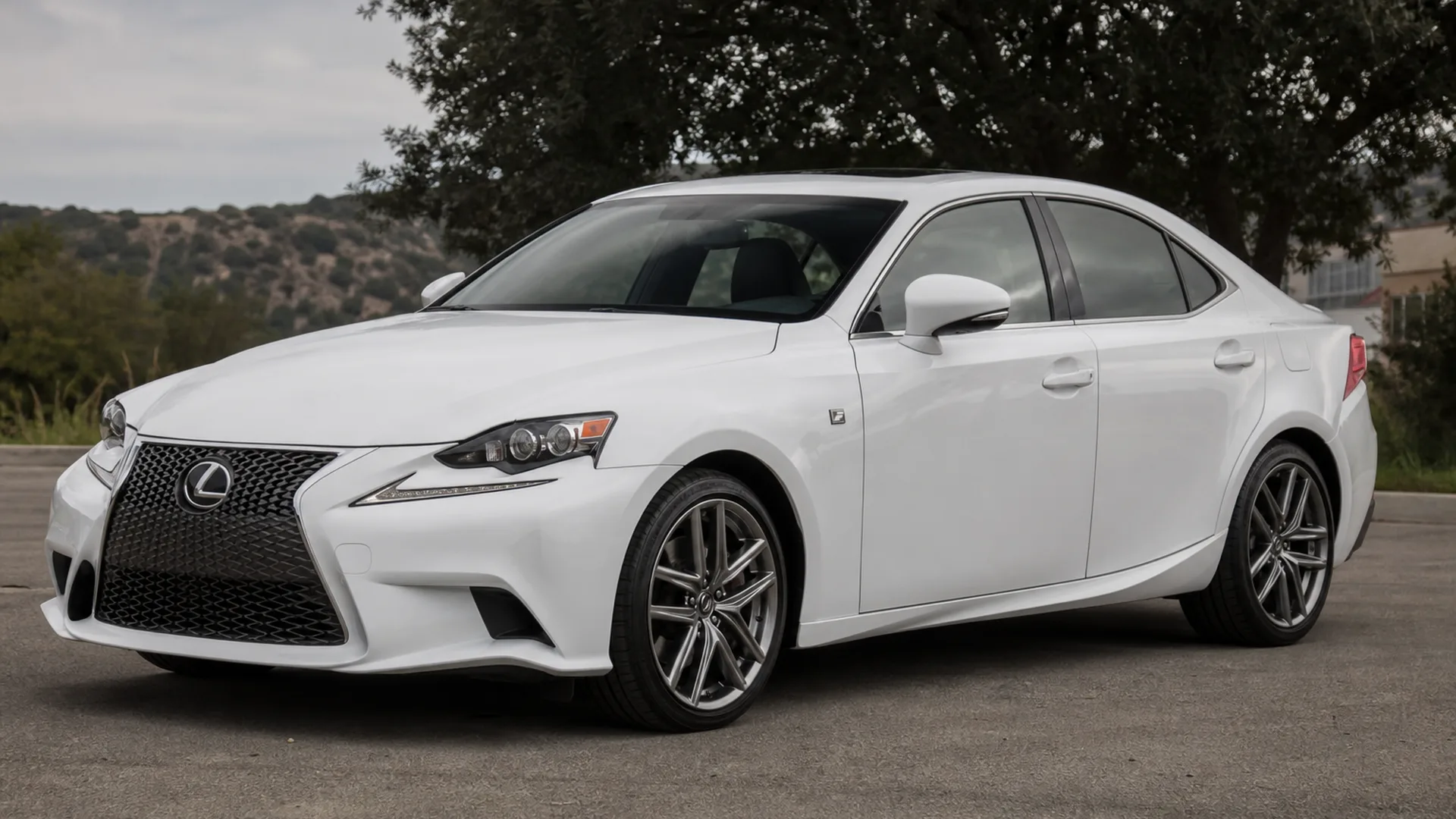
Lexus built its reputation on bulletproof reliability and premium build quality. The IS 350—a compact luxury sedan powered by a smooth 3.5L naturally aspirated V6—should be one of the safest bets in the used-car market. You’d expect solid engineering, minimal complaints, and low repair bills.
But not every IS 350 model year lives up to that promise. Some early-production models battled melting dashboards, fuel system recalls, and engine oil leaks. A few mid-generation years surprised owners with premature suspension wear and electrical gremlins. If you’re shopping for a used IS 350, knowing which years to skip can save you thousands in repairs and a lot of headaches.
How We Researched This Guide
We built this analysis from multiple authoritative sources to give you the full picture:
Primary Data:
NHTSA complaint database (tracking problem frequency by model year), official Lexus recall records, and Technical Service Bulletins that reveal factory-acknowledged defects.
Owner Feedback:
CarComplaints severity ratings, Consumer Reports reliability scores, J.D. Power dependability rankings, and RepairPal cost data.
Expert Input:
Long-term ownership reports from Lexus forums, independent mechanic insights, and firsthand accounts from Toyota master technicians who’ve seen these engines age over 10+ years.
We weighted both complaint volume and repair severity—a low number of catastrophic failures can be worse than many minor issues. This approach identifies systemic problems, not one-off flukes, so you know which years genuinely struggled.
Most Common Lexus IS 350 Problems
1. Engine & Drivetrain
The 3.5L V6 in the IS 350 is a workhorse when maintained properly. But early versions (2006–2010) had some growing pains. Water pumps tended to fail around 100,000 miles—catch it too late and you risk warping the heads from overheating. Early engines also leaked oil from the timing cover and VVT-i cam gears, leaving puddles under the car and causing cold-start rattles.
One serious issue: a rubber oil pressure hose could rupture and drain the crankcase in seconds. Lexus ran a Limited Service Campaign replacing those rubber lines with metal ones on 2007–2009 models. If you’re looking at an older IS 350, confirm that update was completed. By 2012, Lexus had strengthened these weak points—post-2011 engines are far more reliable.
2. Transmission
Automatic transmissions in the IS 350 are generally dependable, but some high-mileage 2006–2008 units threw occasional codes. Owners saw Check Engine lights with P0751, P2714, or P0894—usually traced to a faulty transmission control module, not internal damage. Replacing or reprogramming the PCM (roughly $600–$1,800) fixed it.
The third-generation IS (2014+) brought an 8-speed automatic that shifted crisply but sometimes felt jerky when cold. Lexus released software updates to smooth that out. Fluid leaks are rare, and there are no widespread mechanical failures. Still, changing the transmission fluid every 60,000 miles is smart, even though Lexus calls it “lifetime.”
3. Electrical & Interior Electronics
Lexus electronics are normally rock-solid, but a few annoyances popped up. The auto-dimming rearview mirror on 2006–2010 models could leak fluid, turning the glass brown and blurry (replacement runs about $400). Instrument cluster lighting faded on some first-gen IS 350s after a decade, dimming the orange needle illumination.
Navigation and stereo systems in 2007–2009 models had higher failure rates, screens froze or became unresponsive. One owner couldn’t get their nav unit replaced until the melting dashboard issue was addressed, which tells you how intertwined these problems were. The 2014–2016 Enform system is more modern but lacks Apple CarPlay and Android Auto, frustrating tech-savvy buyers. Climate controls and other electronics have been mostly trouble-free.
4. Brakes & Suspension
The IS 350’s brakes perform well, but rear suspension clicking became common after 100,000 miles on 2006–2013 models. It’s not dangerous—usually worn bushings or sway bar links—but it’s annoying. Fixes range from lubricating bushings to replacing rear struts, costing $800–$1,000 if you want the noise gone.
Some owners hear a rapid ticking from the brake actuator (the ABS pump) on startup or during driving. It’s usually just a noisy pump, but in rare cases the actuator needs replacement (expensive outside warranty). Brake pads and rotors wear at normal rates, though F-Sport performance pads go faster. No widespread brake system failures have been documented—just listen for odd sounds during your test drive.
5. Air Conditioning
The AC system in the IS 350 is reliable. Most owners report ice-cold air with no chronic failures. A few older models developed musty odors from mold on the evaporator—easily fixed with a new cabin filter and vent cleaner.
One thing to watch: the AC condenser sits low behind the front grille, making it vulnerable to stone damage. If the AC isn’t cold, check for condenser punctures. Otherwise, compressor defects and refrigerant leaks are virtually nonexistent on this platform.
6. Melting Dashboard & Interior Panels
This is the big one. The 2006–2008 IS had a notorious problem with soft-touch dashboard and door panel materials degrading in hot climates. The surface turned shiny, sticky, and reflective—some owners said the dash was glossy enough to leave fingerprints and cause dangerous windshield glare.
Lexus eventually extended the warranty, offering free replacement dashboards and door panels to owners who complained within 10 years of purchase. Many missed that window and ended up stuck with sticky interiors or on long parts waitlists. By 2009, Lexus quietly improved the materials—2010+ models don’t commonly have this problem.
If you’re shopping for a 2006–2008 IS in a warm climate, check that the dash and door panels were replaced. Without that fix, you’re looking at aftermarket dash covers or DIY upholstery jobs (some owners wrapped their dashes in suede).
Recall History
The IS 350 had several significant recalls, mostly in its early years:
Fuel System Recalls:
In 2011, Lexus recalled 2006–early 2008 IS 350s for a fuel pressure sensor that could loosen and leak fuel. In 2018, they issued another recall for 2006–2013 models to replace the fuel delivery pipe—the pulsation damper diaphragm could crack and cause a fire risk. About 115,000 IS and GS vehicles got new fuel pipes.
Takata Airbag Recall:
Like most 2000s cars, certain 2007–2013 IS 350s were recalled for exploding Takata passenger airbags. Most dealers will replace these inflators for free—verify the work was done.
Other Recalls:
A 2009 recall addressed floor mat interference with the accelerator. A small batch of early IS 350s got new front seatbelt buckles. Once these fixes are applied, the issues rarely return.
Worst Lexus IS 350 Years to Avoid
2006 – Skip This One
The debut year of the second-generation IS 350 logged the highest number of owner complaints. Early-production bugs combined with the melting dashboard, fuel leaks, and airbag recalls made 2006 a triple threat. CarComplaints data shows 2006 leading in problem reports, with interior degradation topping the list.
Brake issues, power steering glitches, and aging engine components add up to a car that will cost you more time and money than it’s worth. Many experienced Lexus owners flat-out say “skip 2006 if you can.”
2007–2008 – Melting Dash Epidemic
These years continued the sticky dashboard nightmare, especially in warm states. The 2007 IS also had power steering ECU problems and airbag sensor faults. The 2008 model year (mostly the IS 250) racked up over 300 NHTSA complaints—among the highest in the IS lineup.
If you’re considering a 2007–2008 IS 350, confirm the dash and door panels were replaced under warranty (budget around $2,000 if they weren’t). These years also overlap with the fuel sensor and Takata airbag recalls—verify those repairs before buying. A well-maintained ’07–’08 can still run, but you’re rolling the dice on reliability.
2009–2010 – Better, But Still Aging
By 2009, Lexus had addressed the interior materials and some mechanical weak points. These aren’t nearly as problematic as 2006–2008. But 2010 IS 350s still experienced occasional Check Engine lights from faulty PCM modules, and owners had to watch for aging water pumps and oil hose leaks until Lexus updated those parts around 2011.
These models are now 13–15 years old and entering high-mileage territory. If reliability is your main goal, newer years make more sense—2009–2010 sit in the “transitional” zone.
2015 – Low Volume, High Severity
CarComplaints rated 2015 as the “worst” IS 350 year, not because of complaint volume (there were only a few) but because of severity. Some owners reported rear wheel bearing failures around 35,000 miles—unusually early and expensive to fix (roughly $1,300). Others heard mysterious rattling noises at low mileage.
These issues weren’t widespread, but they mark 2015 as an outlier. The 2014 debut year didn’t have these problems, and by 2016 Lexus seemed to have ironed them out. If you’re looking at a 2015, have it inspected for wheel bearing noise and suspension rattles—there was no recall, so you’d be on the hook for repairs.
General Note: Early 3.5L V6 Engines (2006–2011)
Experienced Toyota and Lexus techs point out that the early 3.5L V6 (2GR-FSE) had multiple weak spots before 2012. Leaking oil cooler lines, cam gear seal failures, and occasional head gasket issues after overheating were more common on 2006–2010 models.
One master tech bluntly said the 3.5L engines “were junk up until 2012” and became much more reliable afterward. If you’re looking at a high-mileage 2006–2009 IS 350, make sure it has extensive service records showing the water pump, metal oil line, and timing cover work were done. The 2011–2013 models benefited from most of these fixes—the worst years cluster around 2006–2008.
Bottom line: Avoid 2006–2008 IS 350s unless you find one with documented repairs and a replaced dashboard. Be cautious with 2015 unless it passes a thorough pre-purchase inspection. Lexus improved the IS significantly over time—newer models have far fewer headaches.
Best Lexus IS 350 Years to Buy
2012–2013 – Late Second-Gen Sweetspot
By 2012, Lexus had debugged the 3.5L V6 and upgraded the interior materials. Complaints dropped to nearly zero for 2012–2013 IS 350s. Consumer Reports and J.D. Power gave these years strong dependability marks (the 2013 IS earned an 85/100 J.D. Power rating).
Owners report rock-solid reliability: no melting dashes, no electrical quirks. If you want an affordable IS 350 with the classic naturally aspirated V6 and hydraulic steering, a 2012 or 2013 is your pick. These represent the final, fully refined version of that generation.
2014 – Redesigned and Reliable
Lexus launched the thoroughly redesigned third-generation IS in 2014. Despite being a first-year model, the 2014 IS 350 has been remarkably dependable. It brought a new infotainment system, an 8-speed transmission (on RWD models), and improved suspension tuning—all with minimal growing pains.
Industry data lists 2014 among the most reliable IS years. Owners enjoyed modern styling and better tech without sacrificing Lexus’s legendary durability. The Remote Touch infotainment feels dated now (no CarPlay), but mechanically it’s bulletproof. Many 2014s are available with full service histories, making them smart used buys.
2016–2017 – Mid-Cycle Refresh
The 2016 IS 350 got a mid-cycle refresh, and 2017 added updated styling plus Lexus Safety System+ as standard. By this point, virtually all early bugs were squashed—the infotainment was improved, the drivetrain was tuned, and complaint rates were near zero.
If you want advanced safety features like adaptive cruise control and collision mitigation, the 2017 IS 350 is an excellent choice—it was the first IS to include those systems as standard. Both 2016 and 2017 use the proven 306 hp V6 with no known defects. They balance modern features with Lexus reliability.
2018–2020 – Peak Dependability
By this period, the IS 350 was among the most reliable luxury sedans on the market. Multiple sources highlight 2018 and 2019 as top-tier reliability picks. Owners report almost no unscheduled repairs—just routine maintenance. The 2018 model got a small horsepower bump and continual infotainment tweaks.
Average annual repair costs for the IS run around $550 (per RepairPal), and that holds especially true for late-model years. A 2018–2020 IS 350 with proper maintenance could easily run for 200,000+ miles with minimal trouble. If your budget allows, these are the best used years to buy—you get modern amenities (some 2020s even have Apple CarPlay) and stellar reliability scores.
2021–2023 – Refreshed and Promising
The 2021 IS got a significant styling update, improved infotainment with standard CarPlay/Android Auto, and the same proven 3.5L V6. Early data looks positive—no major issues have surfaced. Lexus appears to have delivered a trouble-free refresh.
If you’re shopping nearly new, a 2021 or 2022 IS 350 should provide the same high reliability with the latest tech and styling. They’re fundamentally the same mechanically as the bulletproof 2018–2020 models, so long-term dependability should be excellent.
Summary: The best IS 350 years are 2012–2013 for second-gen and 2014, 2016–2020 for third-gen. These combine Lexus’s renowned engineering with improvements that fixed earlier flaws. Stick to later model years and you’ll maximize your chances of a trouble-free ownership experience.
Better Alternatives to Consider
If the IS 350’s history doesn’t quite fit your needs, here are a few solid alternatives with strong reliability records:
Acura TLX (2017–2020)
The TLX is a direct competitor, known for value and dependability. You get a comfortable ride, available V6 power (290 hp), and AcuraWatch safety tech. By 2017–2018, Acura had fixed the 9-speed transmission quirks from earlier models. Owners report very few problems with 2017+ TLXs, and Acura’s V6 is timing-belt-free and durable.
RepairPal actually ranks Acura slightly above Lexus among luxury brands for reliability. The TLX won’t match the IS for interior refinement, but it’s cheaper to buy used and easier to maintain. If you want something slightly larger, the previous Acura TL (2012–2014) is another ultra-reliable option with a proven 3.5L or 3.7L V6.
Infiniti Q50 (2018–2019)
The Q50 offers more power than the IS 350—especially 2016+ models with 300–400 hp twin-turbo engines—and a roomier back seat. For reliability, the 2014–2015 Q50 with the older 3.7L V6 is dependable (though thirstier on gas). The 2016 refresh brought turbos—faster but more complex.
Look for a 2018 or 2019 Q50, by which time Infiniti had refined the Direct Adaptive Steering and fixed earlier software bugs. The Q50 hasn’t quite reached Lexus’s faultless reputation (some early models had infotainment glitches), but it’s generally average to above-average reliable. It’s also cheaper on the used market—great for buying, not as strong for resale.
BMW 3 Series (2016–2018 F30 340i)
For driving engagement, the BMW 3 Series is the class benchmark. The 2016–2018 340i with the B58 six-cylinder engine has a strong reputation—it’s quick and one of BMW’s more reliable modern powerplants. You get excellent handling, turbocharged punch, and a premium cabin.
The trade-off? More maintenance. German sport sedans require more attention as they age—expect occasional sensor replacements, gasket work, and cooling system repairs. Lexus has a clear edge in long-term reliability, but if you’re an enthusiast willing to maintain it properly, a 3 Series can be rewarding. Consider certified pre-owned and budget extra for upkeep.
Other Options Worth Exploring
Audi A4 (2017–2019 B9): High-quality interior, Quattro all-wheel drive, and improved efficiency. The 2017+ B9 generation has been average reliability-wise, though maintenance costs run higher than Lexus.
Mercedes-Benz C-Class (2015–2018): More luxurious feel, beautiful interior, smooth ride. Reliability is mixed—engine and electrical issues crop up as they age. Both Audi and Mercedes rank below Lexus in dependability, but individual cars can perform well with proper care.
Lexus GS 350 (2013–2018): If you like Lexus reliability but want more space, the GS 350 is worth a look. It’s a midsize sedan with the same 3.5L V6 in a slightly higher state of tune, and it’s renowned for dependability. You get a roomier backseat without significantly higher running costs. Since Lexus discontinued the GS, used prices are attractive.
Final Thoughts
The Lexus IS 350 is one of the most reliable compact luxury sedans you can buy—but not all model years are created equal. The 2006–2008 models struggled with melting dashboards, fuel system issues, and early engine component failures. The 2015 year had low-mileage suspension problems that caught some buyers off guard. If you’re shopping for a used IS 350, steering clear of these years will save you time, money, and frustration.
Focus your search on 2012–2013 for affordable second-gen reliability, or 2016–2020 for the best balance of modern features and proven dependability. If you want the latest tech, the 2021+ refresh continues Lexus’s strong track record with updated infotainment and styling.
If the IS 350 doesn’t quite fit your needs, alternatives like the Acura TLX offer similar reliability at a lower price, the Infiniti Q50 brings more power for less money, and the BMW 3 Series delivers driving thrills at the expense of higher maintenance.
Smart shopping tip: A well-maintained 2018 Lexus IS 350 will cost you far less to own over five years than repairing a discounted 2007 model with interior and fuel system failures. Spend a little more upfront for the right year, and you’ll enjoy worry-free driving for many miles to come.