
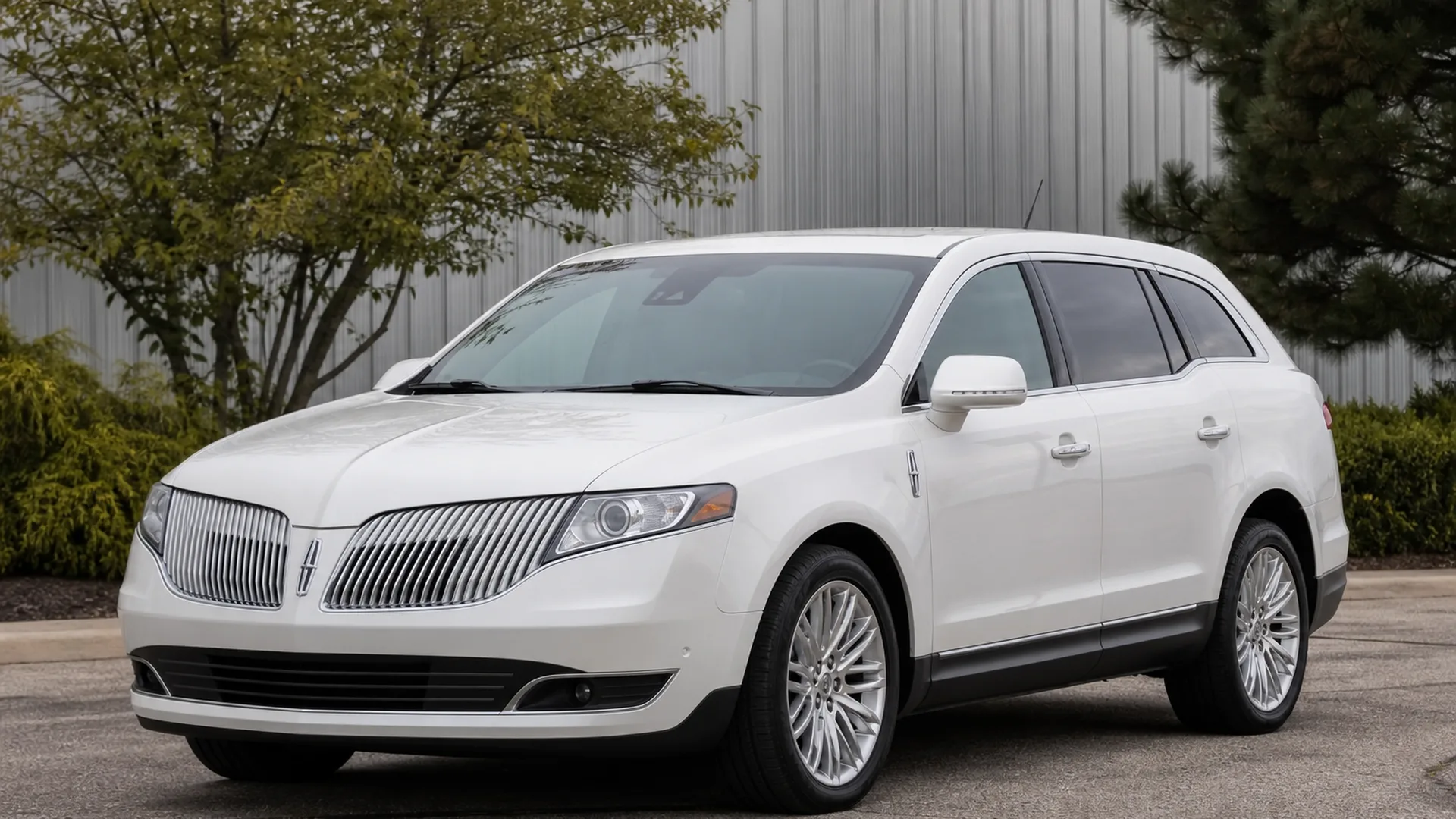
The Lincoln MKT was Lincoln’s stylish answer to the three-row luxury crossover market from 2010 to 2019. With its bold, squared-off design, plush interior, and powerful engine options – including a turbocharged 3.5L EcoBoost V6 – the MKT aimed to give families a comfortable, upscale ride with plenty of space for passengers and cargo.
On paper, it sounds pretty great. But here’s the catch: certain MKT model years developed serious reliability issues that can drain your wallet and leave you stranded. We’re talking steering failures at highway speeds, engines destroyed by internal water pump leaks, and electrical gremlins that make the infotainment system feel like it has a mind of its own.
How we rated the best and worst Lincoln MKT years
To figure out which MKT years are risky, we pulled data from several trusted sources. The NHTSA complaint and recall database gave us hard numbers on safety-related failures and official manufacturer recalls. CarComplaints.com provided complaint frequency and severity ratings from real owners. We also checked TrueDelta for reliability trends, Kelley Blue Book for owner satisfaction scores, and iSeeCars for longevity analysis.
What sets this research apart? We didn’t just count complaints – we weighted them by severity. A water pump failure that destroys your engine is obviously a bigger deal than a squeaky door panel. We also looked at how often certain problems clustered in specific years and whether recalls overlapped with owner dissatisfaction. This method helps separate the truly problematic years from the ones that just had a few isolated issues.
Most Common Lincoln MKT Problems
Before we zero in on specific years, let’s talk about the issues that have shown up across the MKT lineup. Some of these are minor annoyances. Others can be expensive and dangerous.
1. The Water Pump That Ruins Engines
Early MKTs, especially the 2010 model, had a design flaw that caused nightmares for owners. The V6 engine uses an internal, chain-driven water pump. When this pump fails, coolant can leak into the engine oil. That might not sound catastrophic, but it is. The contaminated oil stops protecting internal engine parts, leading to overheating, knocking, white smoke from the exhaust, and sometimes total engine failure.
Replacing an engine isn’t cheap. We’re talking thousands of dollars – often more than the car is worth at that age. Some 2010 owners reported this happening with no warning at relatively low mileage. The turbocharged 3.5L EcoBoost in some MKTs also had isolated cases of turbo failure, though these are much rarer in later, well-maintained vehicles.
On the flip side, the 6-speed automatic transmission has been mostly dependable. There’s an occasional report of slipping or reverse engagement issues, but these are outliers rather than widespread problems.
2. Steering Failures That Are Genuinely Scary
Here’s where things get serious. Owners of 2010–2012 MKTs reported sudden, complete loss of electronic power steering assist – sometimes at highway speeds or during turns. Imagine trying to muscle a 4,800-pound SUV through a corner with zero power assist. It’s not just hard; it’s dangerous.
This issue happened across a wide range of mileages, from under 5,000 miles to over 150,000. Ford issued a recall in 2015 (NHTSA Campaign 15V340000) covering 2011–2013 MKTs to replace faulty steering components. If you’re considering an early MKT, confirming this recall work was completed isn’t optional – it’s necessary. A few 2014 owners also reported odd steering behavior, like the wheel moving on its own or the vehicle shimmying unexpectedly, though these cases are rare.
3. Electrical Quirks That Range from Annoying to Frustrating
Electrical problems top the complaint list for the MKT. These aren’t usually catastrophic, but they can make daily driving irritating. Backup cameras and infotainment screens in 2013–2015 models sometimes freeze or go dark. “Door ajar” warnings stay on even when every door is shut tight – a known Ford/Lincoln glitch from that era. Climate control panels occasionally act up, changing temperature or fan speed without you touching anything.
Many 2010–2012 MKTs came with the early MyLincoln Touch (Ford Sync) infotainment system, which was slow and buggy. Touchscreens would reboot mid-drive or refuse to respond to inputs. Lincoln addressed this in 2016 by introducing the Sync 3 system, which is far more stable and user-friendly. MKTs from 2016 onward have significantly fewer tech complaints.
4. HVAC Issues That Leave Passengers Cold (or Hot)
The 2010 MKT struggled with heating and air conditioning. One of the most common complaints was inadequate heating on the passenger side – the dual-zone climate would blow cold air when you needed heat. The A/C fan speed also changed on its own, making it hard to maintain a comfortable temperature. These problems were usually traced to faulty blend door actuators or control module glitches.
Lincoln fixed most of these issues by 2012. If you’re test-driving a used MKT, crank the heat and A/C on both sides to make sure everything works evenly.
5. Brakes, Tires, and Suspension
These areas haven’t shown systemic problems, but there are a few complaints worth noting. The 2010 MKT logged a case of premature brake failure around 87,000 miles and chronic premature tire wear – tires worn out by 32,000 miles, costing owners around $2,200 to replace. Later MKTs didn’t commonly report brake or tire problems beyond normal wear.
The suspension is generally comfortable, though a 2014 owner reported a sudden suspension/steering anomaly that led to a minor crash. Cases like this are very rare, but it’s smart to inspect the suspension (ball joints, tie rods, etc.) on any used MKT, especially if you hear clunks or feel vibration.
6. Safety Recalls You Need to Know About
Ford/Lincoln issued several important recalls for the MKT. The power steering recall (15V340000) covered 2011–2013 models to prevent sudden steering loss. Another major recall in 2016 addressed fuel pump control module failure (NHTSA 16V621000) affecting 2013 MKTs. In affected vehicles, the fuel pump module could fail and cause the engine to stall at speed – obviously a serious safety concern.
Other recalls covered suspension components in livery/fleet versions, airbag sensor issues, and a halfshaft/axle problem on 2014 AWD models. Always check the VIN for open recalls before buying. Later years (2015–2019) had fewer recalls and known issues, reflecting continuous improvements Lincoln made over the MKT’s production run.
Worst Lincoln MKT Years to Avoid
If you’re shopping for a used MKT, these are the years you should skip – or at least approach with extreme caution.
2010: The Year That Had Everything Wrong
The 2010 MKT is the worst year by a wide margin. As the debut model, it had what you might call a “perfect storm” of issues. HVAC malfunctions left passengers freezing. The internal water pump failed and destroyed engines. Steering assist cut out without warning. Tires wore out at 30,000 miles. There was even a report of total brake failure at 87,000 miles.
Not every 2010 MKT will have all these problems, but the fact that every other model year turned out more reliable means there’s little reason to gamble on a 2010. Even if you find one cheap, the potential repair costs can quickly exceed what you saved on the purchase price.
Bottom line: avoid the 2010 MKT.
2013: A Step Backward
The 2013 MKT is the second-worst year. Lincoln had updated the MKT’s styling and added a more powerful engine tune, but reliability took a hit. Owner complaints spiked in 2013, and it has one of the highest numbers of reports and recalls on record.
Key issues in 2013 included a resurgence of power steering failures (before the recall fix was widely implemented) and new problems with the fuel system. The 2013 was subject to the fuel pump module recall (16V621000) after instances of the engine stalling at speed. Some drivers also experienced electrical issues and, in rare cases, the fixed panoramic sunroof spontaneously shattering.
If you’re set on a 2013 MKT, ensure all recall repairs are done and get a thorough pre-purchase inspection focusing on the steering and fuel system. Otherwise, skipping 2013 in favor of a later year is the smarter move.
2014: Better, But Not Great
The 2014 MKT improved compared to 2013, but it still had above-average complaint rates. A few unique issues popped up this year, such as the panoramic sunroof glass unexpectedly shattering (rare, but dramatic) and lingering electrical quirks with the climate controls and backup camera. There were also isolated accounts of steering/suspension weirdness causing sudden vehicle movements.
We wouldn’t label 2014 an outright “must avoid” year, but any buyer considering one should verify any applicable recalls and test all electronics carefully.
Best Lincoln MKT Years to Buy
The good news? Most MKT model years after 2010 are quite reliable. Lincoln worked out the majority of the kinks, making later MKTs a solid used luxury crossover purchase. Some years, though, are especially trouble-free.
2011–2012: Budget-Friendly Picks
The 2011 MKT showed a significant drop in complaints compared to 2010, and 2012 improved further. These years weren’t perfect – 2011s had a few carryover power steering problems before the recall fix was widely applied, and there was an isolated case of turbocharger failure. By 2012, many problems were addressed and complaint volume dropped sharply.
If you find a well-maintained 2011 or 2012 MKT with recall work done, it can be a smart buy for budget-conscious shoppers. You get the same general design and features as 2010, but with most of the reliability woes cured.
2015–2019: The Sweet Spot
The best years to buy are 2015 and newer, with a particular sweet spot from 2016–2019. By 2015, complaints had fallen to very low levels. These later MKTs benefited from continuous refinement – the troublesome steering issues were largely solved, and electrical/tech glitches became scarcer.
Another perk: 2016 introduced the Sync 3 infotainment system with improved reliability and usability, eliminating many of the old MyLincoln Touch problems. If you opt for a 2016–2019 MKT, you’re getting the model at its peak maturity – all the luxury, space, and power, with minimal headaches. Even the 2015 (pre-Sync 3) is a strong buy, as it still has very few reported issues and may come at a lower price.
In fact, 93% of owners would recommend the 2019 Lincoln MKT according to user data. Owners who used the MKT for family hauling or livery service often praise its smooth ride and ample space.
Summary: The most reliable Lincoln MKT years are 2015–2019, with 2016+ being the absolute standouts due to tech updates and near-zero problem reports.
Better Alternatives to the Lincoln MKT
The MKT is a fairly niche vehicle, and not everyone will love its looks or driving dynamics. If you’re on the fence, here are some alternative luxury SUVs/crossovers that offer similar space and features – potentially with stronger reliability or resale value.
Acura MDX (2011–2013, 2017–2020)
The Acura MDX is a midsize luxury crossover that offers three-row seating and a blend of comfort and performance. It has a strong reputation for reliability. The 2011–2013 models are quite dependable, and the 2017–2020 MDX hit a sweet spot of advanced safety features and solid dependability. The MDX delivers a sportier driving experience and strong build quality.
Lexus RX 350 / RX 350L (2011–2015, 2018–2021)
Lexus is legendary for reliability. The Lexus RX 350 is a two-row midsize luxury SUV; if you don’t need a third row often, it’s a top contender. Great used RX years include 2011–2015 and 2018–2021 (including the RX L, which adds a small third row). These vehicles are known for lasting well past 200,000 miles with proper maintenance.
Lexus GX 460 (2010–2020)
For those who want a true three-row SUV with more room, the Lexus GX 460 is a durable, truck-based SUV known for longevity and minimal issues over long mileage. The downside is poorer fuel economy and a more old-school driving feel, but it’s a strong choice if long-term durability is the priority.
Buick Enclave (2017–2019, 2018+ Second Generation)
The Buick Enclave is a near-luxury three-row crossover that offers a roomy interior like the MKT. Early Enclaves had issues, but later first-gen models (2017–2019) improved. The redesigned 2018–2021 Enclave saw further gains with updated tech and generally better dependability. The Enclave can be a good value on the used market if you stick to the later years.
Lincoln Aviator (2021–Present)
If you’re a Lincoln loyalist, the MKT’s modern successor is the Lincoln Aviator (introduced for 2020). It’s newer, more powerful, and more expensive. A lightly used 2021+ Aviator can be appealing, but be mindful that the first model year (2020) had some teething issues. Look for later years or ensure updates/recalls have been completed.
Final Thoughts
The Lincoln MKT can be a great used luxury crossover if you choose the right year. Avoid 2010 and 2013, approach 2014 with caution, and you’ll find that later MKTs (especially 2015–2019) are actually very dependable. Always do a thorough check for completed recalls and get a pre-purchase inspection for any used vehicle.
If you follow that advice, a 2015+ Lincoln MKT could serve you well as a comfortable, powerful family hauler that stands out from the usual SUV crowd. And if you decide it’s not the perfect fit, there are plenty of strong alternatives in the luxury three-row segment that can meet your needs with equal or greater reliability.