
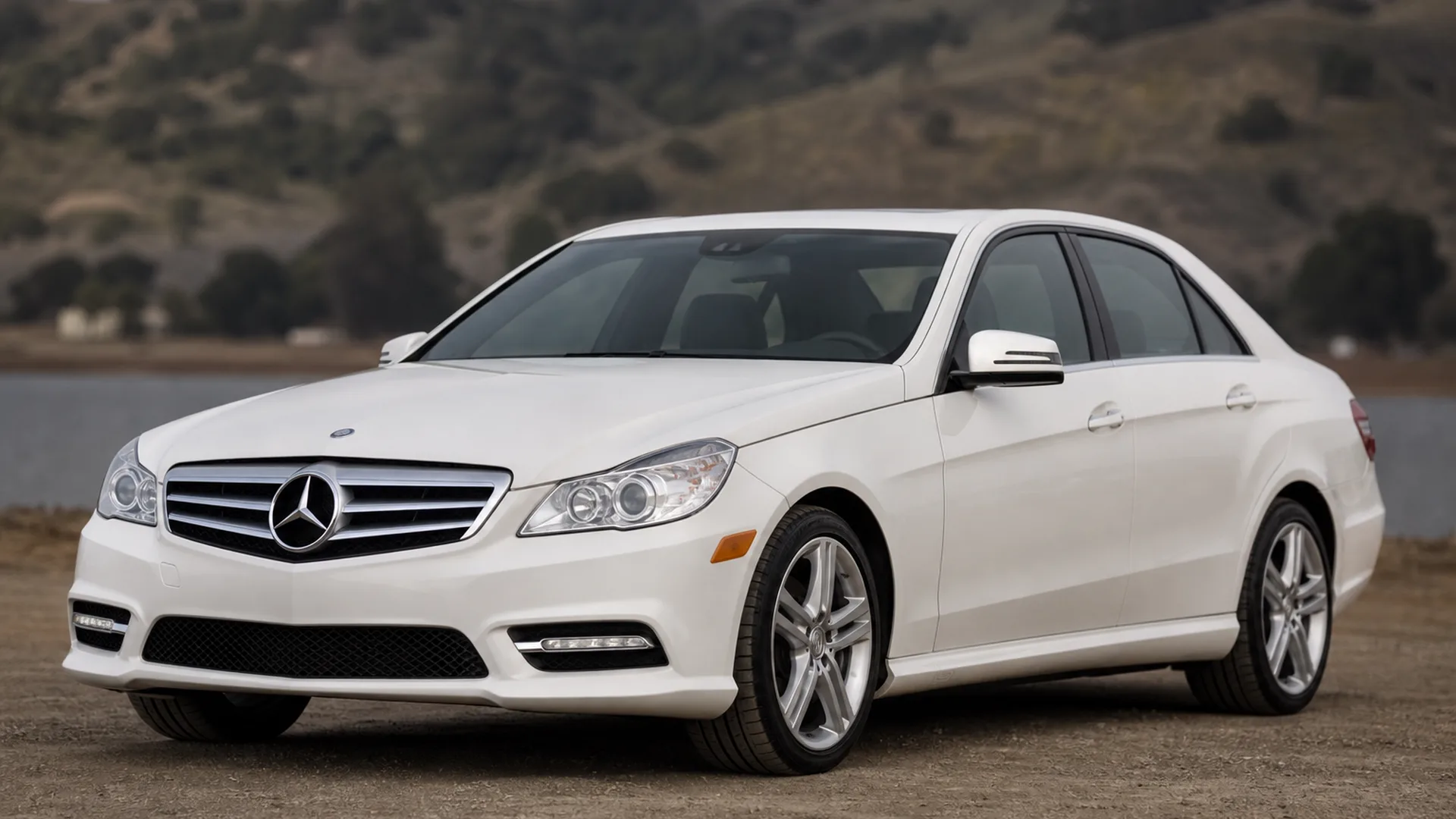
The Mercedes E-Class has long been the benchmark for midsize luxury sedans, blending German engineering with comfort and prestige. The E350, with its smooth V6 engine and refined ride, represents a sweet spot in the lineup – powerful enough for highway confidence, yet practical for daily driving. It’s the kind of car that makes you feel like you’ve made it, whether you’re commuting to work or taking a weekend road trip.
But here’s the reality check: not all E350 model years are created equal. Some suffered from catastrophic balance shaft failures that cost thousands to repair. Others leaked fuel, burned out audio systems, or left owners stranded with failed steering locks. While many E350s will serve you well for years, certain model years carry significantly higher risk of expensive problems. This guide identifies the E350 years to steer clear of and highlights the solid, dependable alternatives that won’t drain your wallet.
How we rated the best and worst Mercedes E350 years
Our team analyzed data from multiple authoritative sources to give you the most accurate picture of E350 reliability. We pulled complaint records from NHTSA and CarComplaints.com, identifying which years generated the most owner frustration. We cross-referenced this with Consumer Reports reliability ratings and Edmunds ownership cost data.
We also dug into Mercedes technical service bulletins (TSBs) and recall information, paying special attention to the massive Takata airbag campaign that affected 2010–2014 models. Online Mercedes owner communities – MBWorld, BenzWorld, and dedicated E-Class Facebook groups – provided real-world insights into how these problems actually play out over 100,000+ miles of ownership.
Special focus went to the notorious M272 engine balance shaft defect, Airmatic suspension failures, and the rear subframe corrosion issue that prompted Mercedes to extend warranties in some markets. For diesel variants, we examined BlueTEC emissions system reliability, since DEF heater and NOx sensor failures are common and costly. Finally, we compared repair costs across different model years to help you understand the true financial risk of each generation.
The Most Common E350 Problems
1. Engine Troubles That Can Break the Bank
The early E350’s biggest nightmare was the balance shaft gear failure in the 3.5L V6 (engine code M272). This internal defect typically showed up around 80,000 miles, triggering check-engine lights and rough running. The repair is brutal – pulling the entire engine to replace internal gears, typically costing $4,000 to $7,000. This wasn’t a minor issue affecting a few unlucky owners; 2006 and early 2007 models had a design flaw that made this failure common enough to earn the E350 a terrible reputation among mechanics.
Other engine headaches include timing chain tensioner wear. You’ll hear rattling on cold starts, and if left unchecked, a worn tensioner can let the chain skip timing – hello, bent valves and thousands in damage. Oil leaks are practically a rite of passage on older E350s. Valve cover gaskets and oil pan seals age and weep, leaving puddles in your garage and burning oil smells in the cabin.
The 2012 and newer E350s switched to direct injection (engine code M276), which solved the balance shaft problem but introduced carbon buildup on intake valves. Symptoms include rough idle and sluggish acceleration. The fix – walnut blasting the intake ports – runs $500 to $800 at a shop.
If you’re considering the E350 BlueTEC diesel, budget for emissions system repairs. The AdBlue/DEF system is complex and prone to failures: DEF tank heaters burn out, NOx sensors fail, and DEF injectors clog. Each component costs $500 to $1,000+ to replace, and you’ll know something’s wrong when warning lights illuminate on your dash.
2. Transmission Issues and Warning Signs
The 7-speed automatic (7G-Tronic) is generally smooth when healthy, but it can develop rough or delayed shifting as it ages. Many owners report harsh 1–2 upshifts or clunky downshifts when slowing down. The usual suspects are a failed conductor plate or valve body, which control hydraulic pressure and gear selection. A worn torque converter can cause shuddering under acceleration, especially when the transmission is cold.
Catching these problems early matters. A transmission fluid and filter change (around $300–$400) can sometimes smooth out minor shifting issues. Ignore them, and you’re looking at valve body replacement or even a full transmission rebuild – easily $2,000 to $3,500 including labor. The good news is that regular fluid changes every 40,000 to 60,000 miles prevent most problems. The 5-speed automatics in earlier W211 models were actually more robust, and the 7-speed became quite reliable once Mercedes sorted out the early bugs.
3. Electrical Gremlins and Tech Failures
Ten-year-old luxury cars often develop electrical quirks, and the E350 is no exception. Common complaints include flickering exterior lights, non-working tail lamps, and random warning messages. The electronic steering lock (ESL) can fail without warning, literally locking your steering wheel and leaving the car undrivable. Replacing the ESL module costs upwards of $800.
Battery drain is another frustration – parasitic draws from faulty relays or control modules can kill your battery overnight. You’ll come out to a dead car in the morning, and tracking down the source requires diagnostic time that adds up quickly.
The 2014 E350 had a specific amplifier problem: the Harman/Kardon audio system could short out, causing speakers to fail suddenly – sometimes with burning smells. Mercedes issued a technical service bulletin for this and revised the amplifier design for 2015-2016 models. If you’re looking at a 2014, check whether this TSB was completed.
Early COMAND infotainment systems can freeze or reboot randomly. Most glitches get fixed with software updates, but in worst cases, you’re replacing the entire head unit (around $1,000 for a used one). Bluetooth connectivity issues and navigation faults are common on older cars, though firmware updates usually resolve these.
Some 2014 owners reported truly bizarre problems: lane-keep assist shutting off randomly, ABS warnings, even the trunk popping open while driving. These were traced to faulty control modules, particularly the rear SAM (Signal Acquisition Module). Replacing a SAM can run $500–$1,200 depending on which one failed.
4. Suspension and Brake Concerns
Early E-Class models (2003–2006) used an electro-hydraulic brake system called Sensotronic Brake Control (SBC). It could fail suddenly, reducing braking power – obviously a serious safety issue. Mercedes extended the warranty on SBC units, but if you’re buying a car where that warranty has expired, a failure means $2,000+ out of pocket. Thankfully, 2007 and newer E350s went back to conventional hydraulic brakes.
On the suspension side, control arm bushings and ball joints wear out around 60,000 to 100,000 miles. Worn bushings cause clunking over bumps and can lead to uneven tire wear. Replacement costs vary, but expect $500–$800 per corner for a shop to handle it.
If your E350 has Airmatic air suspension (optional on many models, standard on wagons), the rear air struts can leak over time. You’ll notice the rear end sagging, or the compressor running constantly. Replacing a single air strut costs around $1,000, and they often fail in pairs.
The most serious suspension issue affects 2010–2016 E-Class models in salt-heavy climates: rear subframe corrosion. The subframe can rust from the inside out and even crack apart, which is extremely dangerous – it can cause loss of control. Mercedes acknowledged this defect and extended the subframe warranty to 20 years in some regions. If the car isn’t covered, replacing a corroded subframe runs $3,500 to $7,000 including labor. If you’re shopping for an E350 from these years, get the undercarriage thoroughly inspected for rust.
5. Climate Control and AC Problems
The dual-zone climate control generally works well, but refrigerant leaks are common culprits when cooling performance drops. A leak at the condenser or at seal connections will cause weak cooling or warm air. Recharging the system costs around $200, but the leak source must be fixed or you’ll just be recharging again next summer.
AC compressor failures happen too, especially on higher-mileage cars. A failed compressor (won’t engage or makes grinding noises) requires replacement – about $1,200 to $1,400 for parts and labor. Some 2014–2016 models had blower motor or climate control module issues: intermittent fan operation, inconsistent temperatures, or clicking sounds from the vents. A bad blower motor costs around $500 to replace.
The good news is that the E350 doesn’t have widespread evaporator core failures or other catastrophic AC problems. Most issues are repairable by any competent independent shop. Regular maintenance – changing the cabin air filter and checking refrigerant pressure – keeps the system running cold for years.
6. Technology Glitches and Feature Failures
As a luxury car packed with technology, the E350 can develop tech gremlins as it ages. Early COMAND systems might freeze or reboot unexpectedly. Software updates typically fix these issues, but sometimes the entire COMAND unit or screen needs replacement – a used unit runs about $1,000+.
Backup camera failures show up on older cars, often as fuzzy images or complete camera failure. Replacement rear cameras cost around $1,100. Advanced driver aids, when equipped, can also act up. Some 2014 owners experienced lane-keep assist and ABS warnings randomly shutting off, traced to electrical faults in control modules.
Later model years (2015-2016) saw much-improved reliability of tech features. Still, when shopping for any used E350, test every electronic feature – windows, power seats, COMAND system, parking sensors – to make sure everything works. Chasing electrical problems can be time-consuming and expensive on a Mercedes. Many owners opt for extended warranties or aftermarket protection plans specifically to cover big-ticket electronics.
The Worst E350 Years You Should Avoid
2006 Mercedes E350 – The Year to Run From
The 2006 E350 earned the dubious honor of “worst model year” for this nameplate. It racks up the highest number of owner complaints and has the most severe problems. The balance shaft gear failure is the primary villain – a design flaw in the M272 V6 that often strikes around 80,000 miles, requiring an engine-out repair averaging $4,800.
This wasn’t a rare defect. Enough 2006 E350s needed this repair that Mercedes mechanics became intimately familiar with the job. Add in the problematic SBC brake system (which could fail suddenly, causing reduced braking power) and the early 7-speed transmission, and you’ve got a used car that’s essentially a ticking time bomb.
Unless you find a 2006 with documented proof that both the balance shaft and SBC brake issues were already fixed – and you see a thick stack of maintenance records – walk away. The financial risk is just too high.
2007 Mercedes E350 – Fuel System Nightmares
The 2007 model year brought a new set of headaches: fuel system problems. Owners reported strong gasoline smells in the cabin after refueling, often traced to leaks on top of the fuel tank. Worse, fuel seepage near hot engine components created a genuine fire risk.
Many 2007 owners also dealt with fuel pump failures that caused sudden engine stalling at highway speeds – a terrifying safety issue. Faulty fuel level sensors meant the gas gauge could read incorrectly, leaving you guessing how much fuel you actually have. Mercedes did extend warranties on certain fuel tank components, but only after the 2007 had already earned a reputation for unreliability.
Data shows the 2007 has the second-highest number of E350 complaints (after 2006), with “gas tank leaks when full” noted as a top problem averaging $2,400 to fix. Some early 2007 builds still had the balance shaft defect too, making this a year to avoid unless all recalls and warranty fixes were completed.
2010–2013 – The Takata Airbag Shadow
These early W212-generation models were mechanically solid, introducing updated styling and features. The problem is that they were caught up in the massive Takata airbag recall. While the car itself was fairly reliable (no widespread engine or transmission problems), owners had to deal with long waits for replacement airbags and the anxiety of driving with a recalled safety device.
By late 2025, most affected airbags have been replaced under recall. The main concern when shopping for a 2010–2013 E350 is verifying that the airbag recall was completed. Always run a VIN check and confirm documented proof of the recall repair.
Aside from the airbag issue, 2010 had a few first-year bugs – some power steering leaks and early sensor failures – but nothing approaching the severity of 2006/07 problems. If the recall work is done and you find a car with solid maintenance records, a 2010–2013 E350 can be a good value.
2014 Mercedes E350 – New Tech, New Problems
The 2014 refresh brought updated styling and advanced technology – along with a fresh set of problems. Customer complaints centered on electrical and technology issues. The audio system could fail completely, with speakers cutting out and, in some cases, burning smells from the amplifier. Mercedes issued a technical service bulletin and revised the amplifier design for 2015.
Driver-assist features also had gremlins: intermittent lane-keep assist, random ABS warnings, and even bizarre cases of the trunk popping open while driving. These issues stemmed from faulty control modules and early production bugs in newly introduced electronic systems like Collision Prevention Assist.
The powertrain itself was solid – the updated 3.5L V6 with direct injection (producing 302 hp) had no major faults, and the 7-speed transmission was refined by this point. But the electronic glitches can be frustrating and costly to fix. A failed COMAND head unit or amplifier can easily exceed $1,000.
Unless you find a 2014 with all technical service bulletins completed and perhaps an extended warranty, many enthusiasts suggest skipping this year in favor of the improved 2015–2016 models.
The Best E350 Years Worth Your Money
2008–2009 E350 – Late W211 Excellence
These final years of the W211 generation are often called the most sorted E350s of the first-generation model. By 2008, Mercedes had updated the balance shaft in the V6 engine, eliminating the catastrophic failure that plagued 2006–2007. The troublesome SBC brake system was also phased out, replaced with conventional hydraulic brakes.
Owner complaint volumes dropped sharply – CarComplaints shows only 5–10 total complaints for these years, compared to 40+ for 2006. The 2009 E350 in particular benefitted from continuous refinement and was the last year before the complete redesign.
These cars deliver the classic Mercedes tank-like feel with modern conveniences (navigation, Bluetooth, etc.) but without the complex electronics of later models. Maintenance costs are reasonable for a Benz – just watch for oil leaks and ensure the transmission was serviced regularly.
Many 2008–2009 E350s have been daily-driven past 150,000 miles with minimal drama. If you want a reliable E350 at a budget-friendly price, a 2008 or 2009 with documented service history is your best bet.
2012 E350 – The Sweet Spot
The 2012 model introduced the new direct-injection V6 (M276 engine), which increased power and efficiency while proving to be highly reliable. This engine doesn’t suffer from the balance shaft issue of the older M272, and aside from potential carbon buildup (mitigated by using quality fuel and occasional cleaning), it’s a robust powerplant.
Consumer feedback on 2012 E350s is overwhelmingly positive, with one of the lowest complaint rates among early W212 models. By 2012, Mercedes had addressed the minor issues from the 2010 launch – software updates fixed early sensor problems, and the car benefitted from two years of real-world refinement.
The 2012 also predates the added complexity of the 2014 refresh, meaning fewer electronic systems to go wrong. It retained hydraulic steering and the proven 7G transmission – a combination many drivers find more engaging and simpler to maintain than later electrically assisted setups.
If you want a W212 E350, the 2012 (or close siblings 2011 and 2013) represents an excellent choice. Just verify the Takata airbag recall was completed, if applicable.
2015–2016 E350 – The Gold Standard
The final two years of the E350 in the U.S. market (2015 sedan, 2016 coupe/convertible) are widely regarded as the pinnacle of E-Class reliability. By 2015, Mercedes had implemented all running improvements: the 2014 facelift’s bugs were fixed, including the revised Harman/Kardon amplifier that prevented speaker failures.
Standard safety features expanded to include Collision Prevention Assist Plus, and the refined 302-hp V6 delivered smooth, confident power. Owners and mechanics frequently describe the 2015 E350 as nearly bulletproof – modern enough for advanced tech and comfort, yet old-school Mercedes in build quality.
Best Alternatives to the Mercedes E350
If the E350’s potential repair bills give you pause, several other sedans deliver a luxury experience with far less risk. Here are a few worthy alternatives (both luxury and mainstream) known for top-notch reliability:
Lexus ES 350: A cushy midsize luxury sedan famed for rock-solid dependability. The ES 350 offers a smooth V6, plush ride, and an upscale interior without the drama of costly repairs. It’s consistently rated among the most reliable luxury sedans, with lower-than-average maintenance costs compared to German rivals. It’s renowned for its reliability and smooth ride, making it one of the most bulletproof luxury sedans you can buy used.
Acura TL / TLX: Acura’s midsize offerings (the older TL or newer TLX) blend Honda’s reputation for reliability with luxury touches and a sportier edge. These cars deliver an engaging drive without the maintenance headaches of a Benz. The TLX, in particular, is praised for sporty handling, a luxurious interior, and strong long-term reliability, making it one of the safest used luxury sedan picks.
Genesis G80 (Hyundai Genesis): The G80 (previously the Hyundai Genesis sedan) is a newer player in the luxury segment that has quickly earned respect. It offers a quiet, refined ride and a long list of standard features backed by a lengthy factory warranty. The interior quality and comfort rival established German brands, yet ownership is far more predictable and budget-friendly. Late-model certified examples are excellent values.
Toyota Avalon: Don’t need a luxury badge? The Avalon is a full-size Toyota that often outshines the E-Class in reliability and cost of ownership. It shares DNA with the Lexus ES, prioritizing comfort, space, and durability. It holds resale value well, runs on regular fuel, and is known for reaching high mileage with minimal issues. The trade-off is less brand prestige, but far fewer surprises.
Final Thoughts and Recommendations
Buying a used Mercedes E350 can reward you with comfort and prestige for a reasonable price – if you choose the right year. The key is to steer clear of the known problem years that can undermine the ownership experience. As outlined above, the 2006 and 2007 E350 are the biggest red flags that can turn ownership into a financial nightmare. The 2014 model also earned a spot on the “worst years” list due to its early facelift electrical and technology issues.
On the other hand, Mercedes significantly improved the E350 over time. The 2008–2009 models represent the most reliable years of the older generation, while the 2012 E350 stands out as a well-balanced, refined option in the newer body style. The 2015–2016 models are widely regarded as the most dependable E350s sold in the U.S., with nearly all early issues fully resolved.
If you decide to buy an E350, always verify that all recalls have been completed, especially Takata airbag replacements on 2010–2013 models. A pre-purchase inspection is essential – pay close attention to the rear subframe for corrosion, timing chain noise on cold starts, suspension wear, and stored fault codes. A well-documented service history is far more important than mileage alone.
Finally, be honest about your priorities. If long-term reliability and predictable costs matter most, alternatives like the Lexus ES, Acura TLX, or Toyota Avalon may be smarter choices. But if you’re drawn to the E-Class experience and choose a proven model year with solid records, the E350 can still be a deeply satisfying luxury sedan to own.