
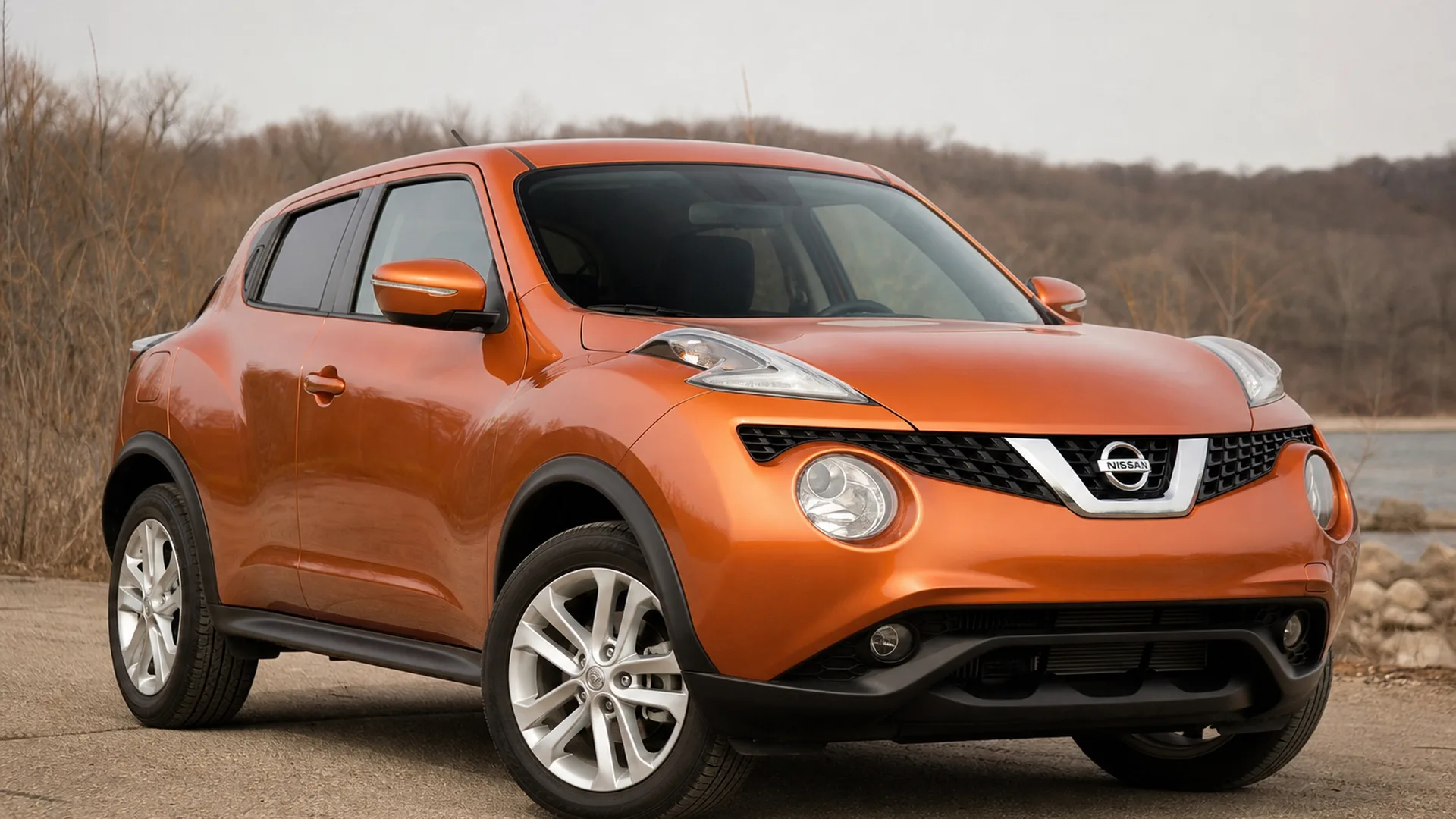
You know that friend who always looks amazing but shows up late, forgets plans, and borrows money they never pay back? That’s the Nissan Juke in car form.
When Nissan launched the Juke in 2011, people either loved the bug-eyed styling or hated it—there was no middle ground. The promise was enticing: a funky-looking compact crossover with sporty turbo power, 31 mpg combined, and a starting price under $20,000. Sounds pretty good, right?
Here’s what actually happened. Early Juke models became notorious for CVT transmissions that failed so spectacularly they spawned class-action lawsuits. We’re talking about $7,500 replacement bills on cars worth less than that. Timing chains snapped at 7,000 miles. Turbos died at 57,000. Some 2013 models literally caught fire while parked in driveways.
The numbers tell the story: 236 NHTSA complaints for the 2011 model alone. Nissan quietly discontinued the Juke in the US after 2017—basically admitting they couldn’t fix the problems. When What Car? surveyed small SUV reliability, the Juke finished dead last.
We’ve analyzed NHTSA complaint data, recall campaigns, class-action lawsuits, and thousands of owner reports to show you exactly which Juke years will drain your bank account—and which alternatives will actually get you where you’re going.
How we rated the best and worst Nissan Juke years
We didn’t just skim a few forum posts and call it research. Our team spent weeks pulling data from multiple sources to build a complete picture of the Juke’s reliability issues.
The NHTSA complaint database gave us hard numbers: 150 complaints for 2011, 145 for 2012. Those aren’t just complaints about squeaky seats or annoying radio systems. These are reports of transmissions failing, engines stalling, and vehicles catching fire.
Official recall campaigns told us which problems Nissan acknowledged were serious enough to fix. Campaigns like 14V683000 (fuel pressure sensors in 133,592 vehicles) and 11V583000 (turbocharger boost sensors in 28,294 vehicles) revealed systemic issues affecting tens of thousands of Jukes.
What Car?’s reliability survey ranked the Juke last among small SUVs—that’s saying something in a category filled with questionable choices. J.D. Power gave even the best Juke year (2017) only a 3.5 out of 5 reliability score.
But government data and industry ratings only tell part of the story. We also combed through the Nissan Juke Forum, Owners Club discussions, and CarComplaints.com to understand what real people experienced. When you see owner after owner saying “$7,500 transmission quote at 63,000 miles” or “timing chain gone at just 7,000 miles,” those patterns matter.
The CVT class-action lawsuits and Nissan’s decision to extend the CVT warranty to 10 years/120,000 miles were particularly revealing. Companies don’t voluntarily extend warranties unless they know there’s a serious defect. That warranty extension came too late for thousands of 2011-2014 owners who’d already paid for expensive repairs out of pocket.
We also analyzed maintenance costs ($548 annually vs. $466 class average) and depreciation patterns (Jukes lose 55-60% of their value in five years compared to 45-50% for competitors like the Honda HR-V).
Most Common Nissan Juke Problems
1. CVT Transmission Failure: The Big One
If you’re shopping for a used Juke, the CVT transmission is your main concern. This isn’t a “might happen” issue—it’s a “when will it happen” situation for many model years.
Complete CVT failure typically hits somewhere between 56,000 and 140,000 miles. One owner we found had been through three transmissions: the original lasted 56,000 miles, the warranty replacement made it to 140,000, and they were on their third when they finally gave up and sold the car.
When that transmission dies, you’re looking at $3,500 to $7,500 for a replacement. Here’s the problem: on a 2014 Juke with 63,000 miles, that repair bill exceeds the entire value of the vehicle. As one frustrated owner put it: “Dealer quoted $7,500 for transmission—might as well buy another vehicle.”
Before total failure, you’ll notice warning signs. The CVT starts shuddering during acceleration, especially between 30-50 mph. That violent shaking means the clutch packs inside are failing, and you’ve got maybe 5,000-10,000 miles before the transmission gives up completely.
High-pitched whining noises are another red flag. When you hear that sound, metal components are wearing down inside the transmission. Delayed engagement when you shift from Park to Drive—waiting 2-3 seconds for the car to actually move—means the transmission’s hydraulic system is struggling.
Some Jukes go into “limp mode” on highway trips. The CVT overheats, the computer detects the problem, and suddenly your car can barely accelerate. Metal contamination from failing bearings blocks the oil feed, and the transmission starts eating itself from the inside.
Nissan knew the CVT was problematic. That’s why they extended the warranty to 10 years/120,000 miles on certain models. But that extension only covered some years and configurations, leaving many owners stuck with repair bills that bankrupted the value of their vehicles.
2. Timing Chain Failures That Destroy Engines
The timing chain problems split between two different engines, and both are bad news.
European and late-model Jukes with the 1.2L DIG-T engine experienced catastrophic timing chain failures ridiculously early. One owner reported: “2 year old 1.2 DIG-T… timing chain gone at just 7,000 miles. Need new engine!”
Seven thousand miles. That’s barely broken in for most cars.
When the timing chain fails, it doesn’t just need replacing—the valves get damaged, the pistons get scored, and you’re looking at a complete engine replacement. Even with warranty coverage, owners paid £800+ in labor costs. Without warranty, a full engine replacement runs £3,000 ($3,700+).
US-market Jukes with the 1.6L turbo engine had their own timing chain problems, just later in the mileage range. The chain stretches, causing a rattling noise at cold start. The tensioner fails, and if you don’t catch it in time, the chain jumps timing or breaks completely. Total engine failure typically happens between 60,000 and 100,000 miles.
Early warning signs? Listen for rattling at cold start or when idling. Check engine lights with timing-related codes. Decreased performance that seems to get worse over time. If you hear these symptoms and ignore them, you’re gambling with a $3,000-$8,000 engine replacement bill.
3. Turbocharger Breakdowns
The turbo problems affect both the 1.5L diesel and 1.6L petrol turbo models, though the failure mechanism is similar across engines.
Carbon deposits build up and block the turbo’s oil feed line. Without proper lubrication, the turbo overheats and the bearings fail. Average failure hits around 89,000 miles, and replacement costs run $2,840 to $3,350.
One owner’s mechanic confirmed it bluntly: “Turbo component was faulty at only 57,000 miles, manufacturer’s fault.”
When the turbo fails completely, you lose boost pressure and power drops dramatically. But here’s the kicker—when turbos fail, they often contaminate the intake system with oil and metal debris, meaning you need additional repairs beyond just replacing the turbocharger.
Warning signs include loss of power during acceleration, unusual whistling or whining sounds from the engine bay, and blue smoke from the exhaust (burning oil being pushed through the failed turbo).
4. Fuel System Problems That Create Fire Risk
Multiple recall campaigns targeted the fuel pressure sensor, affecting over 180,000 vehicles across several model years. The largest single recall (Campaign 14V683000) covered 133,592 Jukes from 2011-2014.
When the fuel pressure sensor fails, it can cause fuel leaks—and fuel leaks create fire risk. Symptoms include stalling, power loss, and that unmistakable smell of gasoline inside the cabin.
The fuel gauge malfunction is a separate issue but equally frustrating. The gauge reads full when the tank is nearly empty. Multiple owners reported being stranded after their “half-full” tank turned out to be bone dry. Replacing the fuel sensor runs $400-$700, assuming you don’t get stuck on the side of the highway first.
5. Electrical Gremlins and No-Start Nightmares
The 2012 model year was particularly bad for mysterious no-start conditions. Sixteen documented complaints described cars that randomly refused to start even though the battery, starter, and alternator all tested fine.
One owner described the maddening pattern: “Car would randomly not start… checked battery, starter, and alternator—all good shape. Issue sporadic. Would run fine for weeks after jump start, then randomly fail again.”
Multiple dealer visits couldn’t identify the root cause. Diagnostic systems showed nothing wrong. Owners paid for towing, repeated diagnostic fees, and rental cars while their Jukes sat in service bays, all without ever getting a permanent fix.
Other electrical failures included dashboard display screens going blank, climate control systems that stopped working, and persistent check engine lights cycling through multiple sensor failures. Some owners replaced sensor after sensor without solving the underlying electrical system issues.
6. Engine Problems and Fires
Excessive oil consumption plagued many Jukes, especially as they aged. The pattern was consistent: the engine would burn oil gradually around 90,000 miles, then suddenly lock up completely.
Multiple 2013 models caught fire while parked. One owner reported: “Juke burst into flames while parked in driveway.” These fires appeared related to fuel pressure sensor defects and turbocharger oil leaks—two separate problems that could both spark flames.
Oil leaks, fuel leaks, and electrical issues all contributed to fire risk. Some owners came out to find their Jukes completely destroyed by fire, often with no warning that anything was wrong.
The Years You Should Skip Completely
2011: The Nightmare Launch Year
First-year models are often problematic, but the 2011 Juke set a new standard for issues. With 236 NHTSA complaints—the highest of any Juke year—this model earned its reputation as one to avoid at all costs.
Turbo failures happened at an average of 89,000 miles, costing $2,840 to $3,350 to replace. Oil leaks progressed from annoying to catastrophic, with engines locking up completely around 90,000 miles. Timing chain problems damaged valves. Accelerator pedals malfunctioned.
Nissan issued multiple recalls for the 2011 model, including the turbocharger boost sensor (28,294 vehicles), fuel pressure sensor leaks creating fire risk, and various safety system campaigns.
When repair bills total $3,000 to $8,000 for major failures, and the CVT replacement alone costs $4,200, you’re talking about repairs that exceed the vehicle’s entire value. Even low-mileage 2011 examples are ticking time bombs.
Manufacturing defects in the CVT, turbo, and timing chain meant problems surfaced well under 100,000 miles. As word spread about reliability issues, depreciation accelerated. Owners trying to trade in their 2011 Jukes found dealers reluctant to accept them.
Skip this year entirely. There’s no deal good enough to justify the inevitable repair bills.
2012: When Everything Got Worse
If 2011 was bad, 2012 somehow managed to be worse in specific categories. The 145 NHTSA complaints and 4 major recalls tell only part of the story.
That massive fuel pressure sensor recall (Campaign 14V683000) affected 133,592 vehicles nationwide. Fuel leaks plus fire risk equals a dangerous combination. The no-start electrical nightmare peaked in 2012, with 16 documented cases of vehicles refusing to start despite having good batteries, starters, and alternators.
One owner’s experience captured the frustration: “Car would randomly not start… checked battery, starter, and alternator—all good shape. Issue sporadic. Would run fine for weeks after jump start, then randomly fail again.”
No permanent fix despite multiple dealer visits. No diagnostic codes to identify the problem. Just repeated towing charges, rental car costs, and wasted time at the dealership.
The CVT and turbo problems from 2011 continued in 2012, meaning owners faced the same expensive repairs on top of the new electrical issues. Safety concerns from fuel leaks, fire risk, and no-start conditions in potentially unsafe locations make the 2012 model year especially problematic.
2013: Fires, Failures, and Total Frustration
The volume of NHTSA complaints decreased slightly from 2011-2012, but the severity remained extreme. Multiple owners reported their 2013 Jukes catching fire while parked—total losses with no warning.
Turbocharger failures increased from previous years. CVT transmission problems intensified, with owners reporting $5,300 CAD for replacement. Timing chain issues started appearing with more frequency. Air conditioning systems failed completely, requiring $1,200 to $1,800 compressor replacements.
Fire risk came from multiple sources: faulty fuel pressure sensors, turbocharger oil leaks, and electrical system failures. Some vehicles stalled suddenly in traffic. Others experienced total power loss without warning.
When your repair options include $5,300 for transmission, $2,840 to $3,350 for turbo, $1,200 to $1,800 for AC, or total loss from fire, the 2013 model becomes financially indefensible. Insurance companies began flagging Jukes as high-risk vehicles, and some increased premiums accordingly.
Years That Are Almost as Bad
2014: The CVT Nightmare Intensifies
CVT failures reached peak frustration in 2014. One owner received a dealer quote of $7,500 for transmission replacement at 63,000 miles and realized buying another vehicle made more financial sense.
Multiple owners reported being on their third CVT replacement. The original transmission averaged 56,000 miles. The warranty replacement might make it to 140,000 miles. By the time they needed a third transmission, owners were ready to walk away from their Jukes entirely.
With over 100 NHTSA complaints and 2 more recalls, the 2014 model continued the turbocharger and electrical problems from earlier years. Extended warranties cost $2,500 to $3,500 if you could still get one, but without warranty coverage, many owners abandoned their vehicles rather than pay repair bills exceeding the car’s value.
The transition from peak problems (2011-2013) to slightly improved but still terrible reliability made 2014 a frustrating middle ground. Nissan clearly knew about the CVT defect but hadn’t issued a recall. Problems persisted, costs mounted, and resale values plummeted.
2015: Peak Recalls and New Engine Problems
2015 marked the largest recall year for the entire Juke model line, which should tell you something about how many things needed fixing.
A new critical problem emerged: 1.2L DIG-T timing chain failures as early as 7,000 miles. One owner reported needing a complete engine replacement on a 2-year-old vehicle with barely any miles. Repair costs hit £800+ just for labor, with full engine replacement running £3,000+ ($3,700+ USD).
Premature chain stretch, tensioner failures, cam gear damage, catastrophic valve damage when the chain failed—the 1.2L engine’s timing chain issues added another expensive failure point to an already problematic vehicle.
Nissan’s decision to extend CVT warranty coverage to 10 years/120,000 miles in the US was a clear admission they knew the transmission was defective. But that extension came too late for thousands of 2011-2014 owners who’d already paid thousands for repairs.
CVT failures continued. Turbocharger issues persisted. Electrical problems remained ongoing. The market responded accordingly: used Juke values dropped dramatically, extended warranty prices increased, and dealers became increasingly reluctant to accept Jukes on trade-in.
The Least Bad Options (Still Not Great)
2016-2017: Better, But Still Problematic
If you absolutely must buy a Juke, the 2016-2017 models represent your best bet—which is like saying this is the least painful way to stub your toe.
The 2016 model showed minor manufacturing improvements and software updates for CVT and engine management. But here’s the problem: Nissan used the same fundamental components that caused 70% of major problems. Same Jatco CVT. Same problematic turbo design. Just slightly better execution.
The 2017 final year earned the title of “most lauded version” with a J.D. Power predicted reliability rating of 3.5 out of 5. That’s “slightly above average,” not “good” or “great.” Complaint volumes dropped to the lowest of any year, with fewer catastrophic failures and better initial quality.
But Nissan discontinued US production after 2017, replacing the Juke with the Kicks for the 2018 model year. When a manufacturer gives up on a model after just seven years, that’s admission the problems couldn’t be