
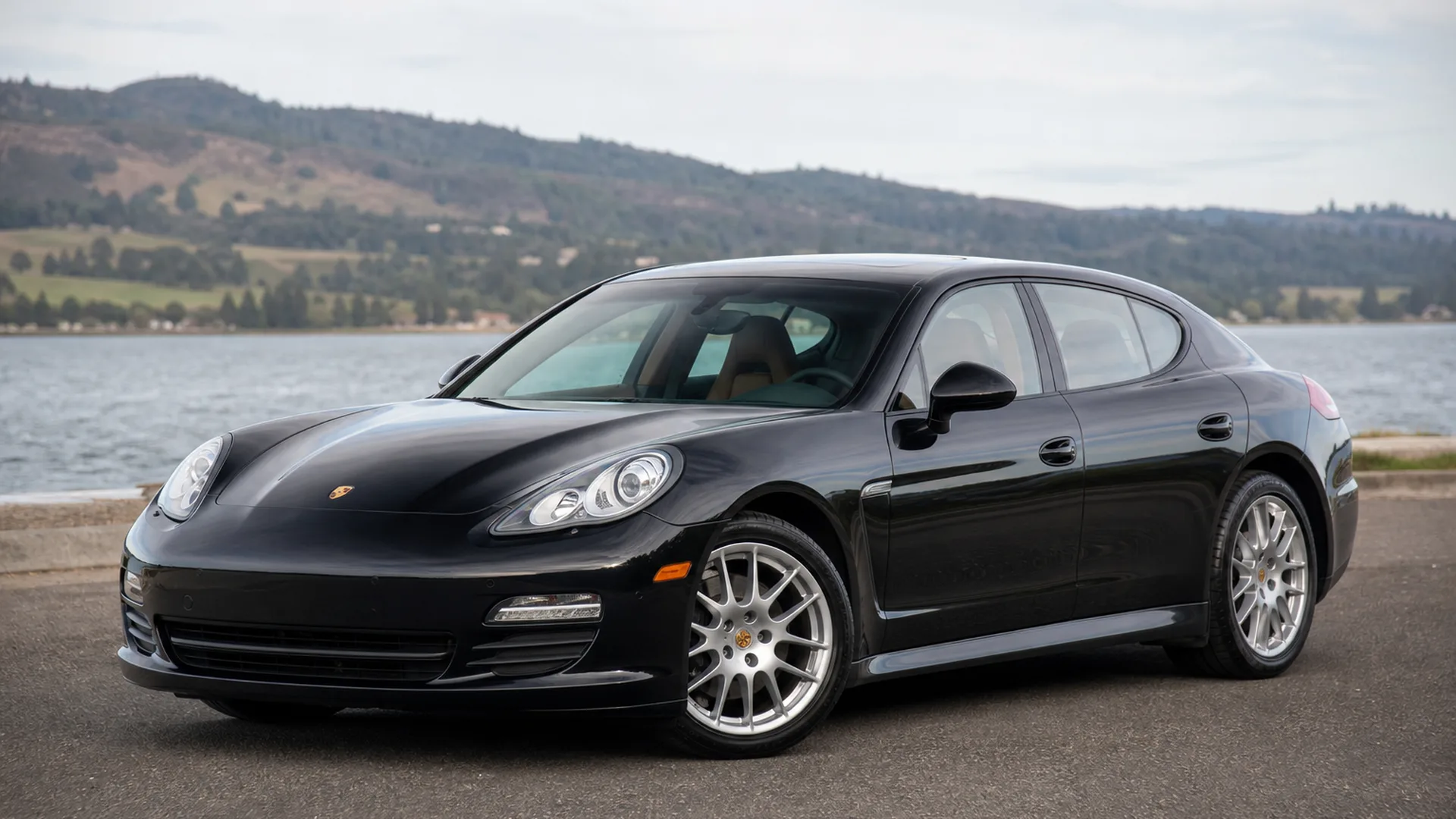
The Porsche Panamera arrived in 2010 as the brand’s answer to buyers who wanted proper sports-car handling without sacrificing back seats or trunk space. Over 300,000 have sold globally across three generations (970, 971, and the current 972), cementing its place as Porsche’s luxury grand tourer. But here’s the catch: Some model years are plagued by cooling-system failures, transmission gremlins, and recalls serious enough to pose fire risks. This guide breaks down which Panamera years you should steer clear of, which ones deliver reliable thrills, and what alternatives might save you thousands in repair bills.
How we rated the best and worst Porsche Panamera years
We pulled data from multiple angles to give you the full picture. NHTSA complaint databases revealed which years racked up the most owner frustrations, while official recall records flagged safety-critical defects. Porsche specialist forums provided real-world repair costs—think $6,000 mechatronic units and $900-per-corner air struts. We cross-referenced Consumer Reports and J.D. Power reliability scores, then layered in professional technician insights on common failure points. The result? A cost-and-complaint map that shows exactly where the Panamera stumbles—and where it shines.
Most Common Porsche Panamera Problems
1. Cooling System Catastrophes
Early V8 models earned a reputation for coolant leaks, often traced to brittle plastic pipes or failing water pumps. Left unchecked, these leaks lead to overheating and warped cylinder heads. Turbocharged variants sometimes lose power when oil lines clog or wastegate actuators stick, occasionally demanding full turbo swaps. Porsche even recalled 2010–2012 cars for loose camshaft adjusters that could stall the engine mid-drive. Regular oil changes help, but the design itself was flawed in those early years.
2. PDK Transmission Troubles
Porsche’s dual-clutch PDK can feel razor-sharp when new, but age brings rough shifts and clutch slippage. The culprit is usually a worn mechatronic unit or degraded clutch packs—repairs that run four to six thousand dollars. All-wheel-drive Panameras add another headache: transfer case binding or vibration under throttle, sometimes fixed only by rebuilding the case or flashing new software. A recall on 2010–2016 models addressed a shifter cable bushing that could let the car roll in Park, so owners were told to rely on the parking brake until the fix was done.
3. Suspension Sag and Clunks
Optional air suspension sounds great until the struts start leaking. You’ll notice the car sitting lower on one corner, or a dashboard warning screaming at you every startup. Replacement air springs cost £600 to £900 each in the UK—multiply that by four corners if multiple struts fail. Heavy Panameras also chew through bushings and control arms, causing clunks over bumps and uneven tire wear. Porsche recalled 2017–2018 models because rear anti-roll bar links could detach and cause loss of control, so check that any car from those years had Campaign AJ06 completed.
4. Electrical Gremlins Galore
Battery drain is a common complaint—dozens of control modules sipping power even when parked. Early PCM infotainment units freeze or reboot mid-drive, and backup cameras quit (often from water sneaking past seals). The scariest issue hit 2010–2016 cars: water could seep into the A/C blower control module, risking an electrical short or fire. Porsche issued a recall to seal the blower housing, but if you’re eyeing an older Panamera, confirm that recall was done. Clearing sunroof drains regularly can prevent water from reaching sensitive electronics in the first place.
5. Brakes, HVAC, and Tech Annoyances
High-performance pads and rotors wear fast—some owners report premature replacements even with light driving. Vacuum pump leaks can make the brake pedal feel rock-hard, robbing you of power assist. On the HVAC side, blower motors and vent flap actuators fail, leaving you with weak airflow or no heat. Early infotainment systems (2010–2013) feel ancient and glitched constantly, from Bluetooth drops to frozen navigation. Later models improved, but even second-gen 2017+ cars had software bugs like PDK hesitation at crawl speeds or fuel-door sensor faults. Porsche’s software updates addressed many of these issues, so ask if the car’s firmware is current before buying.
Worst Porsche Panamera years to avoid
2010 – First-Year Blues
Debut models always carry risk, and the 2010 Panamera delivered. Owners reported rough PDK shifts, PCM reboots, and early mechanical faults. Porsche recalled early 2010s for seat-belt anchor defects and pushed software updates to fix drivetrain bugs. A well-kept 2010 can survive, but you’re gambling on whether the previous owner stayed on top of every service bulletin.
2011 – The Worst of the Bunch
If there’s one year to run from, it’s 2011. This model racked up the most NHTSA complaints and five separate recalls, including the camshaft controller defect (engine could stall without warning) and the A/C blower fire-risk recall. Oil leaks, coolant leaks, and electrical malfunctions dominated owner forums. Interior trim rattled loose, and build quality felt rushed. Unless you have iron-clad proof that every recall was completed and major systems replaced, a 2011 Panamera is a ticking time bomb.
2012 – Still Shaky
Improvements over 2011 were modest. Cooling system failures persisted—hose leaks, thermostat issues, frequent check-engine lights for exhaust sensors. Park assist sensors failed, door handles malfunctioned, and Porsche kept issuing technical service bulletins to patch software. If you’re considering a 2012, verify that cooling components and the battery have been updated. Otherwise, you’re inheriting the tail end of the first-gen’s teething pains.
2016 – The Recall Wildcard
By 2016, most bugs were squashed—except for one big problem. Porsche recalled several hundred 2016 and early 2017 models because rear anti-roll bar links wore prematurely and could detach, risking loss of control. Owner complaints are otherwise low, so a 2016 can be solid if you confirm the suspension recall (Campaign AJ06) was performed. Skip that check, and you might be driving a car with a suspension component ready to fail at highway speed.
The broader truth: 2010–2013 Porsche Panameras carry lower reliability ratings across the board. Most experts say avoid 2010–2012 entirely unless you have full service records and warranty coverage. The 2014 facelift finally delivered the sorted car buyers expected from Porsche, making earlier years harder to justify.
The Best Porsche Panamera Years Worth Your Money
2014–2016 – The Facelift Sweet Spot
Porsche gave the Panamera a thorough refresh for 2014 (970.2 series), updating engine internals to fix cam-adjuster issues, reinforcing cooling pipes, and refining PDK calibration. Data shows 2014 logged only 18 complaints and three recalls—a huge drop from prior years. Owners describe these facelifted cars as “sorted,” with the glitches of 2010–2012 finally resolved.
The 2015 Porsche Panamera earned strong reviews for balancing performance and comfort, and even the S E-Hybrid variant proved more dependable than the earlier hybrid attempt. By 2016, the car had four recalls but almost no owner gripes. Enthusiasts on forums call the 2016 “flawless” aside from routine maintenance. If you want classic V6 or V8 power without early-year headaches, 2014–2016 is your sweet spot.
2017 – Second-Gen Fresh Start
Porsche launched the redesigned 971 chassis for 2017, bringing updated engines (2.9L twin-turbo V6 and 4.0L twin-turbo V8), a new 8-speed PDK, and modern electronics. Critically, the troublesome plastic coolant tubes disappeared, and the electrical architecture became more robust. A few early recalls surfaced—anti-roll bar links again, plus a software update for rear-axle steering—but once those were addressed, 2017 Panameras showed strong durability. The redesign also delivered a vastly improved infotainment system and interior. If your budget stretches, a 2017 gets you into the newer generation where earlier issues were engineered out from day one.
2018 – Peak Reliability
Among second-gen years, 2018 shines brightest. Data shows almost zero complaints, and reliability scores placed it near the top of the large premium car class. Porsche issued seven recalls for 2018 (brake sensor software, airbag sensors), but these were preventative rather than responses to systemic failures. Reviews praised the car’s performance, ride comfort, and build quality. A well-maintained 2018 offers modern tech with the lowest odds of major faults across the entire Panamera lineup.
2019 and Beyond
The 2019 model continued the trend, and by then Porsche had expanded the lineup with the Sport Turismo wagon and more E-Hybrid trims. Owner satisfaction stayed high. The 2020–2021 refresh swapped the Turbo for a Turbo S, bumped power slightly, and updated the auxiliary water pump on V8s—addressing a weak point some 2017–2019 V8 owners encountered. Forums and recall databases show no widespread problems for 2021–2024 models, suggesting any second-gen Panamera from 2018 forward is a safe bet. Keep in mind, even the best Porsche Panamera demands diligent service—oil changes, brake inspections, software updates. But at least these later years won’t pile on inherent defects.
Alternatives That Might Save You Thousands
Audi A7 / S7 / RS7 (2016–2018)
Audi’s sleek four-door coupe delivers Quattro traction and similar performance. A 2016–2018 S7 packs a 450 hp twin-turbo V8, while the RS7 cranks out 560+ hp. These years benefited from Audi’s mid-2014 facelift (C7.5), which fixed earlier turbo oil-screen issues. Maintenance on an RS7 still runs high—twin-turbo V8s need care, and air suspension can leak—but electronics are simpler than Porsche’s, and parts availability through Audi’s network is strong. Ideal picks: 2016 S7 or 2017 RS7 Performance.
BMW 6 Series / 8 Series Gran Coupe
BMW’s 6 Series Gran Coupe (F06) offered a sleek 4-door platform with a 650i twin-turbo V8 (~445 hp). The 2016 model, after a 2015 facelift, refined iDrive and engine tuning. For pure power, the M6 Gran Coupe (2014–2018) delivered 560 hp, though its reliability mirrors a Panamera GTS—expect routine $$ maintenance.
The newer 8 Series Gran Coupe (2019–present) brings modern tech and can be found nearly new with warranty coverage. BMWs tend to use simpler suspension (steel springs on many models) and no dual-clutch gearbox, potentially avoiding costly failures. They also depreciate heavily, so you can snag a newer BMW for the price of an older Panamera. Ideal picks: 2016 BMW 650i Gran Coupe or 2020 BMW 840i Gran Coupe.
Mercedes-Benz CLS / AMG GT 4-Door (2014–2020)
Mercedes pioneered this segment with the CLS, and a second-gen CLS 550 (2014–2018) offers a 4.7L bi-turbo V8 (~402 hp) with a plush ride. The 2014–2015 models benefited from a COMAND infotainment refresh and LED lighting. By 2014, Mercedes had fixed earlier camshaft adjuster bugs, leaving the 5.5L AMG engine reliable aside from routine oil leaks. For a performance match to high-end Porsche Panameras, the AMG GT 4-Door Coupe (2019–present) brings up to 630 hp and exceptional dynamics. Early models had a rear-axle-bolt recall, but no chronic problems emerged. Mercedes alternatives often deliver the most luxury and tech—S-Class opulence for Porsche money. Ideal picks: 2015 Mercedes CLS 550 or 2020 Mercedes-AMG GT 53.
Lexus LS 460 / LS 500 (2013–2021)
If reliability trumps razor-sharp handling, the Lexus LS is unbeatable. A 2013–2017 LS 460 (4.6L V8) runs for hundreds of thousands of miles with minimal issues. The F-Sport package adds agility, and the V8 still delivers ~360 hp of effortless power. For something newer, the LS 500 (2018–present) introduced a twin-turbo V6 and modern design.

Lexus beats Porsche in long-term dependability—the LS ranks #1 in its class for overall quality. Ideal years: 2013 (last of the bulletproof 4th-gen LS 460) or 2019 (second year of the new LS 500, after first-year bugs were sorted). A used Lexus LS will have far fewer issues and often comes with more warranty coverage (if certified) than a similar-year Panamera. Ideal picks: 2013 Lexus LS 460 or 2019 Lexus LS 500.
Porsche Taycan / Tesla Model S (Electric Twists)
If you’re open to electric, the Porsche Taycan (2020–present) is the EV cousin of the Porsche Panamera—blistering speed, similar styling, Porsche build quality. Early 2020 Taycans had software recalls, but the model’s been well-received, and far fewer moving parts mean lower long-term maintenance (no engine or transmission headaches).
The Tesla Model S, while not as lavish inside, delivers supercar acceleration (especially P100D or Plaid trims) and a spacious cabin. A 2016–2018 Model S often lands under $50k and sidesteps the Panamera’s mechanical pitfalls, though Teslas have their own quirks (touchscreen failures, door handle repairs, battery degradation in older models). These EVs excel at high performance with a different ownership experience—mainly charging and software updates. Ideal picks: 2021+ Porsche Taycan or 2017 Tesla Model S 100D.
Each alternative leans a different direction—Audis and BMWs balance sport and luxury, Mercedes emphasizes luxury with ample performance, Lexus prioritizes reliability and comfort, and EVs offer futuristic speed. Your choice depends on what matters most: driving dynamics, luxury features, or low maintenance. The good news? Many of these alternatives deliver similar price-to-performance ratios with fewer long-term headaches.
A used Lexus LS or Audi S7 will generally cost less to keep running than an aging Porsche Panamera, while still providing a high-end experience. Always research the specific model year’s known issues (every car has some) and aim for post-facelift or later-production examples where the kinks are worked out. With the right pick, you might find a car that checks the same boxes as the Panamera—power, prestige, comfort—but with better reliability or value down the road.
Final Word: Buy Smart or Pay Later
Skip 2010–2012 entirely—especially 2011, which holds the record for serious powertrain and electrical problems. Use caution with 2016 unless you confirm the suspension recall was completed. Your best bets? A 2014–2016 facelifted Porsche Panamera if you want value, or 2018+ second-gen models for top reliability. If peace of mind matters more than the Porsche badge, alternatives like the BMW 840i or Taycan offer less risk. Here’s the bottom line: A cheaper 2011 Panamera might cost more in engine or suspension repairs than a newer Audi or Lexus with better reliability. Armed with this research, you can dodge Porsche’s problematic years and find a Panamera—or its rival—that delivers luxury without the heartbreak.