
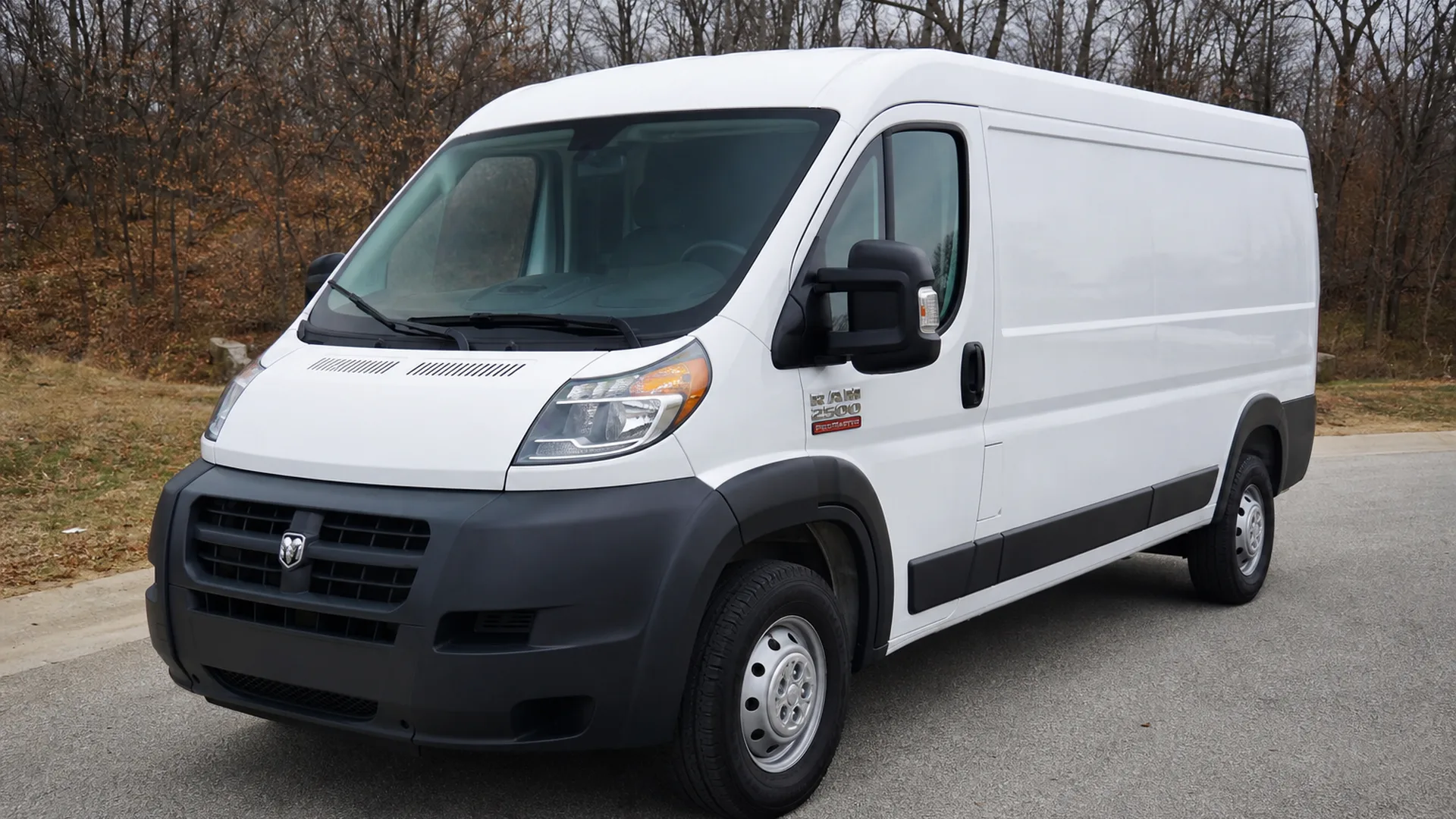
The Ram ProMaster has become one of North America’s go-to cargo vans since its 2014 debut, and it’s easy to see why. That front-wheel-drive layout gives you a low, flat load floor that makes hauling cargo a breeze. The tall, boxy interior gives you tons of usable space—perfect for contractors, delivery fleets, and van-life builders looking to create their dream mobile home. But here’s the catch: those early ProMaster years were plagued with serious reliability issues.
We’re talking transmission failures that left vans stranded, electrical gremlins that shut down vehicles mid-route, and brake defects that put drivers at genuine risk. For businesses, that kind of downtime can drain thousands from your bottom line. For someone building out a camper van, it can derail your entire project. This guide will walk you through exactly which Ram ProMaster years to avoid, which ones are safer bets, and what alternatives might save you money and a whole lot of headaches.
How we rated the best and worst Ram ProMaster years
We didn’t just pull this information out of thin air. Our team spent weeks combing through the NHTSA complaint database, where we found complaint spikes concentrated heavily in the 2014–2017 model years—especially around powertrain, brakes, and electrical systems. We cross-referenced that with NHTSA recall records, which show those same early years racked up 12–16 recalls each, covering everything from transmission pump failures to electrical shorts. The 2019–2021 years had their own transmission rollaway recall, and a massive 2018–2026 recall addresses a cooling fan electrical defect that poses a fire risk.
Beyond official data, we looked at owner forums like ProMaster Forum and Reddit’s r/vandwellers community, where real-world users share unfiltered experiences. We also reviewed feedback from fleet mechanics and independent repair shops, who see these vans cycle through their bays regularly. Finally, we compared complaint density against production volume and analyzed cost-of-failure scenarios—because a $5,000 transmission rebuild hits very differently than a $200 sensor swap. We also stacked the ProMaster’s track record against competitors like the Ford Transit, Mercedes Sprinter, and Chevy Express to give you perspective on where it really stands.
The Most Common Ram ProMaster Problems
Before we get into specific years, let’s talk about the recurring issues that ProMaster owners—especially those with early models—keep running into. Knowing these problem patterns will help you spot red flags when you’re evaluating a used van.
1. Engine Trouble Spots
The 3.6L Pentastar V6 that powers most ProMasters is actually a pretty solid engine. With regular maintenance, many of these motors cruise past 200,000 miles without major drama. That said, they do have a few quirks you should know about. One of the most common is what owners call the “Pentastar tick“—a tapping noise that comes from worn valve lifters or rocker arms.
It usually shows up on higher-mileage vans and can cost around $1,500 to fix properly. Another frequent headache is oil leaking from the oil cooler housing. The plastic housing can warp over time, and many mechanics recommend upgrading to an aftermarket aluminum unit when you replace it. You might also see coolant leaks from the thermostat housing on vans with serious miles.
Now, here’s where things get dicey. From 2014 to 2016, Ram offered a 3.0L EcoDiesel four-cylinder option. Sounds great on paper—better fuel economy, more torque. In reality, those EcoDiesel ProMasters turned into money pits. Owners dealt with constant emission system failures (clogged EGR valves, failing DPF filters), fuel injector problems, and glow plugs that broke repeatedly. The maintenance costs got so bad that Ram quietly dropped the diesel option after 2016. If you see a used EcoDiesel ProMaster for sale, walk away. The upfront savings aren’t worth the repair bills you’ll face down the road.
2. Transmission Headaches
This is where early ProMasters really struggle. Models from 2014 through 2020 came with a Chrysler 62TE six-speed automatic that has proven to be the van’s Achilles’ heel. Owners report hesitation when shifting, slipping between gears (especially that 2nd-to-3rd shift), and delayed downshifts that make merging onto highways feel sketchy. Some vans hard-shift or just refuse to downshift at all. Ignore those symptoms too long and you’re looking at total transmission failure—which means a full rebuild or replacement that can easily cost $3,000 to $6,000.
Ram issued a recall for some ProMasters because debris could get into the 62TE and prevent the park pawl from engaging properly. That creates a rollaway risk, which is obviously dangerous if you’re parked on any kind of slope. The good news? In 2021, Ram finally swapped in a ZF nine-speed automatic. This newer transmission has been way more reliable so far, with smoother shifts and far fewer complaints. If you’re shopping for a ProMaster, that 2021 transmission upgrade is a huge reason to aim for newer model years.
3. Electrical System Nightmares
Ask any early ProMaster owner about electrical problems and you’ll probably see them wince. Electrical faults are frustratingly common and can cause all kinds of bizarre symptoms. Random warning lights start flashing across your dash. The van refuses to start for no clear reason. Or—and this one’s scary—the vehicle suddenly drops into limp mode while you’re driving, cutting power drastically and leaving you crawling to the shoulder. Poor grounding connections have been traced to many of these starting and stalling issues.
Body control modules can go haywire, causing power door locks to stop working or backup cameras to glitch out. But the most infamous electrical problem hits 2015–2017 models: chronic headlight failures. Owners were replacing low-beam bulbs every few months, sometimes multiple times a year. Even heavy-duty aftermarket bulbs would burn out fast, and the van doesn’t warn you when a headlight goes out—so you might drive around for days with one dead bulb without realizing it. These electrical gremlins often require serious diagnostic time, software updates, or replacing faulty modules, which adds up fast at the shop.
4. Brake and Suspension Failures
Braking issues were especially bad on the 2014 ProMaster, where owners reported front brakes squealing and grinding at ridiculously low mileage. More concerning, some 2014–2015 vans experienced actual loss of braking power—particularly when reversing—or brake pedals that felt completely unresponsive. ABS and traction control warnings would light up the dash. Techs traced this back to defective ABS/ESC control modules in those years, which could fail to provide proper brake pressure. That’s a serious safety risk.
On the suspension side, ProMasters tend to wear out components faster than you’d expect, especially if you’re loading them heavy or driving on rough roads regularly. Owners of 2014–2016 vans noted premature suspension sag, deteriorated strut mounts, and worn bushings that led to clunking noises and a harsh ride. It’s not unusual to replace shocks, struts, and related hardware around the 50,000-mile mark if you’re putting the van through commercial use. Catching these issues early during inspections helps—letting them slide affects handling and chews up your tires unevenly.
5. Air Conditioning Failures
AC problems might not sound as dramatic as transmission or brake failures, but they’re surprisingly common and expensive. A bunch of ProMaster owners have reported AC compressor failure right around 30,000 to 40,000 miles—often just outside the factory warranty window, which is convenient for nobody. Other AC-related complaints include refrigerant leaks in the condenser and AC lines. Replacing a compressor typically runs over $1,000, sometimes closer to $1,500 depending on your shop.
If you’re looking at a used ProMaster, spend some time testing the AC system thoroughly. Run it on max cold for a while and listen for any weird noises or cycling patterns. If the air blows warm or the compressor sounds like it’s struggling, that’s your cue to either negotiate the price way down or keep shopping.
Recall Patterns and Overall Reliability
Early ProMasters were recall magnets. The 2014 and 2015 models each had over 13 recalls covering everything from transmission pump failures to electrical shorts that could cause fires. More recently, certain 2019–2021 vans got recalled for that transmission rollaway risk we mentioned earlier. Then there’s a big one affecting model years 2018 through 2026: a cooling fan electrical defect that can lead to overheating or even fire. Ram is working on a fix, but it shows that even newer ProMasters aren’t completely problem-free.
Reliability-wise, the ProMaster sits in the middle of the pack compared to competitors. Annual maintenance costs typically run between $1,100 and $1,500, which is reasonable for a commercial van. Resale values tend to be modest—these vans work hard for a living, and the market knows about their mixed reliability history.
Ram ProMaster Years to Avoid: The Worst of the Bunch
If you’re shopping for a used ProMaster, there are some model years you should cross off your list immediately. The 2014–2017 span represents the worst reliability period for this van, with widespread problems and sky-high recall counts. Let’s break down exactly why these years are so problematic.
2014 Ram ProMaster: The Disastrous Launch Year
Every new vehicle model has some first-year bugs to work out. The 2014 ProMaster took that concept to a whole new level. This launch year was an absolute disaster across almost every system. Brake failures tied to faulty ABS modules left drivers with reduced stopping power or pedals that went to the floor. Electrical issues caused frequent stalling, overheating, and sudden power loss while driving. The transmission was already showing signs of the problems that would plague the 62TE for years.
The 2014 model year racked up 13 recalls and generated over 60 complaints in the NHTSA database—which is extremely high for a single model year. Fleet owners reported brutal downtime rates with these vans spending more time in the shop than on the road. If someone offers you a 2014 ProMaster, even at a bargain price, just say no. The headaches aren’t worth it.
2015 Ram ProMaster: The Worst Overall Year
If 2014 was bad, 2015 was somehow even worse. The 2015 ProMaster holds the record for the highest total complaint count of any year in the model’s history. Transmission hesitation and outright failure were epidemic. Electrical faults and safety system malfunctions continued unabated. Owners reported taking their vans back to the dealer repeatedly for the same issues, only to have them pop up again weeks later.
The problem density on 2015 models is so high that many fleet managers won’t even consider them as used purchases anymore—they’ve been burned too many times. This is the Ram ProMaster year to avoid above all others. Even if you find one with supposedly low mileage and a clean history, remember that these systemic defects can surface at any time.
2016 Ram ProMaster: Minor Fixes, Major Problems Persist
By 2016, Ram had implemented some fixes based on early feedback. But the improvements were superficial at best. The 2016 ProMaster still suffered from most of the same chronic issues that plagued 2014–2015. The troublesome EcoDiesel engine option was still available (and still a terrible idea). ABS module failures, electrical faults, and AC compressor problems continued to show up.
One new issue that started cropping up in 2016 was premature wear on suspension components, likely because the design just wasn’t beefy enough for heavy commercial loads. Overall, 2016 is marginally better than the first two years, but that’s an incredibly low bar. Unless you find one at an absolute steal and budget for major repairs, keep looking.
2017 Ram ProMaster: Slight Improvement, Still Too Risky
The 2017 model year finally showed some real improvement—Ram had discontinued the problematic EcoDiesel, and some of the worst early bugs had been addressed. But 2017 still carried over plenty of issues from the previous years, particularly in the electrical system and transmission. This was also the peak year for that infamous headlight bulb burnout problem that frustrated so many owners.
Many fleet operators draw the line at 2018 when considering used ProMasters. The 2014–2017 batch is just too prone to expensive failures. If you’re shopping around 2017, you’d better find one with immaculate service records showing that every major system has been replaced or rebuilt recently—and even then, you’re taking a gamble. For most buyers, it makes more sense to stretch the budget a bit and get into a 2018 or newer model.
Year-by-Year Reliability Breakdown: What to Expect from Each Model Year
Let’s walk through each model year in detail so you can see exactly how the ProMaster evolved and where the reliability sweet spots are.
2014 Ram ProMaster: First-year defects absolutely everywhere. Brake failures linked to bad ABS modules, electrical stalling and overheating, transmission issues from day one. With 13 recalls and 60+ NHTSA complaints, this is hands-down the year to avoid. Skip it entirely.
2015 Ram ProMaster: Somehow worse than 2014, with the highest total complaint count in ProMaster history. Transmission problems reached their peak, electrical malfunctions caused safety system failures, and owners reported endless trips to the dealer. Absolute hard pass.
2016 Ram ProMaster: Ram started making small fixes, but most major problems persisted. The EcoDiesel was still on the menu (still a bad choice). ABS, electrical, and AC failures remained common. Only consider if it’s dirt cheap and you’re prepared for serious repairs.
2017 Ram ProMaster: Slight improvement over earlier years—the EcoDiesel was finally gone, and some bugs were squashed. But the headlight burnout epidemic was in full swing, and transmission issues hadn’t been fully resolved. Better than 2014–2015, but still risky territory.
2018 Ram ProMaster: This is the turning point year. Complaint rates dropped sharply as Ram addressed most of the early defects. The 2018 ProMaster expanded configuration options, made the rearview camera standard, and added quality-of-life upgrades like better infotainment. Most importantly, the 3.6L V6 and six-speed transmission combo became much more reliable thanks to software updates and hardware improvements. For used buyers, 2018 offers excellent value—you get a dramatically more reliable van at a price that’s still reasonable.
2019–2020 Ram ProMaster: These years continued the improvements seen in 2018. Reliability remained solid, and owners reported far fewer engine and transmission problems. Some units were affected by the transmission rollaway recall, but overall these are good used buys. The rearview camera became standard equipment across all trims, and Ram kept refining the interior with small updates. If you’re shopping used and want to balance cost with reliability, 2019–2020 models hit a sweet spot.
2021–2022 Ram ProMaster: The 2021 model brought the biggest mechanical upgrade since the van’s launch—the new ZF nine-speed automatic transmission. Paired with the same proven 3.6L V6, this transmission delivers smoother shifts, better fuel economy, and far better reliability than the old six-speed. These years also added driver-assistance tech like blind-spot warning, forward collision mitigation, and crosswind assist. An optional crew van package with a second row of seating became available, and a refreshed grille updated the look. Complaint volumes on 2021 and 2022 models are very low. These are the best used ProMasters you can buy if you want modern reliability without paying new-car prices.
2023–2024 Ram ProMaster: These are the latest iterations and the best overall ProMasters ever built. The 2023 model introduced the “Super High Roof” option—giving you even more vertical cargo space—and a roll-up rear door on certain configurations. Ram refreshed the front styling and improved the headlights. Inside, you get upgraded infotainment with larger optional screens and integrated navigation. More advanced safety features come standard.
The 3.6L V6 and nine-speed transmission have proven themselves by now, with a solid reliability track record. Owner feedback praises these vans for driving smoothly and handling heavy payloads without drama. If you want the absolute best ProMaster and money isn’t a major concern, go with 2023 or 2024. Just be ready to pay near-new prices.
Best Ram ProMaster Years to Buy
Now that we’ve covered what to avoid, let’s focus on the good stuff—the Ram ProMaster years that actually deliver reliable service without draining your wallet or stranding you on the side of the road.
2018–2020: The Value-to-Reliability Sweet Spot
If you’re shopping used and want to balance affordability with dependability, the 2018–2020 ProMasters are your best bet. By 2018, Ram had worked out the vast majority of early bugs. These vans show far fewer complaints across the board compared to 2014–2017 models. The 3.6L V6 paired with the six-speed automatic became significantly more robust—likely due to software refinements and running changes that don’t always show up in official specs.
These years also brought practical updates. Ram expanded the range of configurations, offering different wheelbases, extended lengths, and multiple roof heights to suit various needs. The rearview camera became standard equipment. Inside, you got upgraded touch-screen infotainment and additional cargo tie-downs. For someone building a camper conversion or running a small business fleet, a 2018–2020 ProMaster with documented service history is a smart pick. You save money compared to newer models while still getting a van that’s genuinely reliable.
2021–2022: Best Drivetrain Reliability
The 2021 model year brought the biggest mechanical improvement in ProMaster history—the switch from the problematic six-speed to the ZF nine-speed automatic transmission. This transmission has been a game-changer. Shifts are smoother, acceleration feels more responsive, and fuel economy improved noticeably. Most importantly, early data shows way fewer reliability complaints compared to the old transmission.
Beyond the drivetrain upgrade, 2021–2022 ProMasters added modern driver-assistance features that earlier models lack. Blind-spot monitoring, forward collision warning with mitigation, and crosswind assist all became available, making these vans safer and easier to drive—especially if you’re hauling heavy loads or driving in challenging weather. An optional crew van configuration added factory second-row seating, which is great if you need to carry a small crew to job sites. Cosmetically, Ram freshened up the grille and tweaked other styling elements. If you can stretch your budget a bit beyond the 2018–2020 range, a 2021 or 2022 ProMaster gives you the best combination of proven engine technology and modern transmission reliability.
2023–2024: The Best Overall (But at a Premium)
If you want the absolute best Ram ProMaster experience and money isn’t your primary concern, go with a 2023 or 2024 model. These are the most refined, reliable, and feature-rich ProMasters ever built. The 2023 refresh introduced the “Super High Roof” option—giving you seriously impressive vertical cargo space—and a roll-up rear door that’s way more convenient than traditional swing-out doors in tight parking situations.
Inside, the infotainment system got a significant upgrade with larger available screens and integrated navigation that actually works well. More advanced safety features became standard rather than optional. The 3.6L V6 and nine-speed auto continue unchanged, which is a good thing—they’ve proven themselves reliable by this point. Owner feedback consistently highlights smooth driving dynamics and excellent payload capability. If you’re starting a business or building your dream camper van, a 2023 or 2024 ProMaster gives you the confidence that you’re buying the most reliable version available. Just be prepared to pay close to new-vehicle prices, even for used examples with low mileage.
When to Consider Buying a ProMaster (and What to Check First)
Even with the improved reliability of 2018+ models, buying any used commercial van requires careful inspection. Here’s what you need to verify before handing over your money:
Absolutely confirm all recall work has been completed. Check the VIN through NHTSA’s recall lookup tool and make sure the current owner has documentation showing every recall was addressed. Some of these recalls involve serious safety issues—don’t skip this step.
Get a thorough pre-purchase inspection from a mechanic familiar with commercial vans. These aren’t passenger cars—they need someone who understands how to evaluate heavy-duty suspension, commercial-grade brakes, and high-mileage engines. Budget around $150–$200 for a proper inspection.
Avoid any ProMaster with the 3.0L EcoDiesel engine, regardless of year. These 2014–2016 diesel models have proven to be money pits with chronic emission system failures. Even if someone offers one for free, the repair costs will eat you alive.
Check service records carefully. You want to see documented oil changes, transmission services, and brake work. For a van that’s been used commercially, expect some wear—but there should be evidence that the previous owner kept up with maintenance.
Budget for commercial-grade wear items. Even reliable 2018+ ProMasters will need suspension components, brake work, and possibly transmission service if they’ve been driven hard. Factor that into your purchase price.
Better Alternatives to the Ram ProMaster
The ProMaster isn’t your only option in the full-size van market. Depending on your specific needs and concerns, these alternatives might be better fits.
Ford Transit: Available AWD and Often Better Dynamics
The Ford Transit is the ProMaster’s closest competitor and arguably its biggest rival. It offers a similar range of configurations with a rear- or all-wheel-drive layout. Reliability has been pretty good overall, but steer clear of the earliest Transit model years (2015–2016), which had some engine, transmission, and electronics issues that Ford later addressed.
Starting with 2017, Ford worked out most bugs, and later years have shown solid reliability. In 2020, Ford refreshed the Transit with a new 10-speed transmission and available all-wheel drive—a huge advantage if you drive in snowy climates or need extra traction for work sites. The Transit’s V6 engines are known for running well past 200,000 miles with proper maintenance, and build quality is generally strong.
If you need available AWD or just prefer Ford’s service network, aim for a 2018 or newer Transit (2020+ if you want AWD). Like any vehicle, used Transits have their quirks—turbocharged models require more maintenance, and you’ll want to research common issues for the specific engine you’re considering. But overall, a Transit delivers comparable cargo space with often better driving dynamics and reliability that matches or beats the ProMaster in later years.
Mercedes-Benz Sprinter: Premium Engineering at a Premium Price
The Sprinter is the OG of modern commercial vans, known for German engineering and turbo diesel power. Current Sprinters (2019–present) offer impressive features—turbo diesel or gasoline engines, rear- or all-wheel drive, and advanced safety tech that rivals luxury SUVs. But all that sophistication comes at a steep cost, both upfront and in long-term maintenance.
Newer Sprinters (2019–2021 and beyond) are generally better bets than older, emissions-heavy diesel years, which can be plagued by expensive DEF and emissions system problems. A Sprinter’s long-term reliability depends heavily on maintenance quality and having access to a qualified shop for diagnostics and diesel work—preferably one that specializes in Mercedes commercial vehicles.
The bottom line: a well-maintained Sprinter with proper service records can be excellent and may outlast competitors. But expect significantly higher repair costs than Ford or Ram alternatives. Shop rates at Mercedes dealers are brutal, and even independent Euro specialists charge premium prices. Parts aren’t cheap either. If you want a Sprinter, aim for newer examples with comprehensive service records and avoid neglected high-mileage vans that have been run hard with deferred maintenance.
Chevrolet Express / GMC Savana: Old-School Reliability
If maximum reliability and minimal maintenance cost are your top priorities—and you can live without a factory high roof—the Chevrolet Express (and its GMC Savana twin) deserve serious consideration. These are old-school American vans that haven’t changed much in decades. That outdated design is exactly what makes them reliable.
The Express/Savana use proven engines and simpler mechanicals that can rack up hundreds of thousands of miles with basic maintenance. The design is dated, sure, but fewer electronics mean fewer things that can go wrong. Owners consistently report lower maintenance costs compared to more complex modern vans. There aren’t really “bad” late-model years in the Express/Savana lineup—they’re consistently solid workhorses.
The biggest downsides: no factory high-roof option (if you want standing room, you need an aftermarket conversion), and the cabin feels like a time capsule from the 1990s. Fuel economy can be rough, especially with V8 engines. But if your use case allows a traditional van and you value simplicity and reliability above all else, a 2010s-era Express or Savana can be an extremely durable choice. A 2015–2022 model will likely outlast and cost less to maintain than any of the more modern alternatives.
Final Recommendations: Make the Smart Choice
Here’s what you need to remember when shopping for a Ram ProMaster:
Avoid 2014–2017 ProMasters completely. These early years have too many systemic problems across critical systems. The money you might save upfront will quickly disappear into repairs, and you’ll deal with constant reliability headaches. Fleet operators who run these vans commercially learned this lesson the hard way—now you can benefit from their experience.
Never, ever buy an EcoDiesel ProMaster. The 2014–2016 models with the 3.0L diesel engine are absolute money pits. Chronic emission system failures, injector problems, and repeated glow plug replacements make these vans financially unviable. Ram discontinued the diesel option for good reasons.
Target 2018 or newer ProMasters for the best experience. The 2018 model year represents a genuine reliability turning point. Complaint rates dropped dramatically, and major problem areas were addressed. These vans offer solid used value without the nightmare issues of earlier years.
Consider 2021+ models for the best long-term ownership. The upgraded nine-speed transmission introduced in 2021 is significantly more reliable than the old six-speed. If your budget allows, a 2021 or newer ProMaster gives you modern reliability with fewer worries.
For businesses, reliability matters more than purchase price. A cheap 2015 ProMaster might look tempting, but calculate the cost of downtime when your van is in the shop instead of generating revenue. An extra $5,000–$10,000 for a reliable 2018+ model pays for itself quickly when you’re not dealing with constant repairs and missed jobs.
For van-life builds, start with 2018+ or choose a Transit. If you’re sinking serious money into a camper conversion, the last thing you want is to be broken down on the side of the road in the middle of nowhere. Start with a reliable platform. A 2018+ ProMaster or 2017+ Ford Transit gives you the dependable foundation your build deserves.
Don’t overlook the Chevy Express if high roof isn’t critical. If you can work with a standard-height van, the Express/Savana offers rock-solid reliability at a lower total cost of ownership than any modern alternative. It’s not fancy, but it works.
The truth is, a cheap 2015 ProMaster can easily cost you more in repairs, downtime, and frustration than a newer, more reliable van. Knowing which Ram ProMaster years to avoid can save you tens of thousands of dollars and countless headaches. Do your homework, verify all recalls are complete, get a thorough pre-purchase inspection, and aim for 2018 or newer. Make the smart choice now, and you’ll have a van that serves you reliably for many years and many miles.