
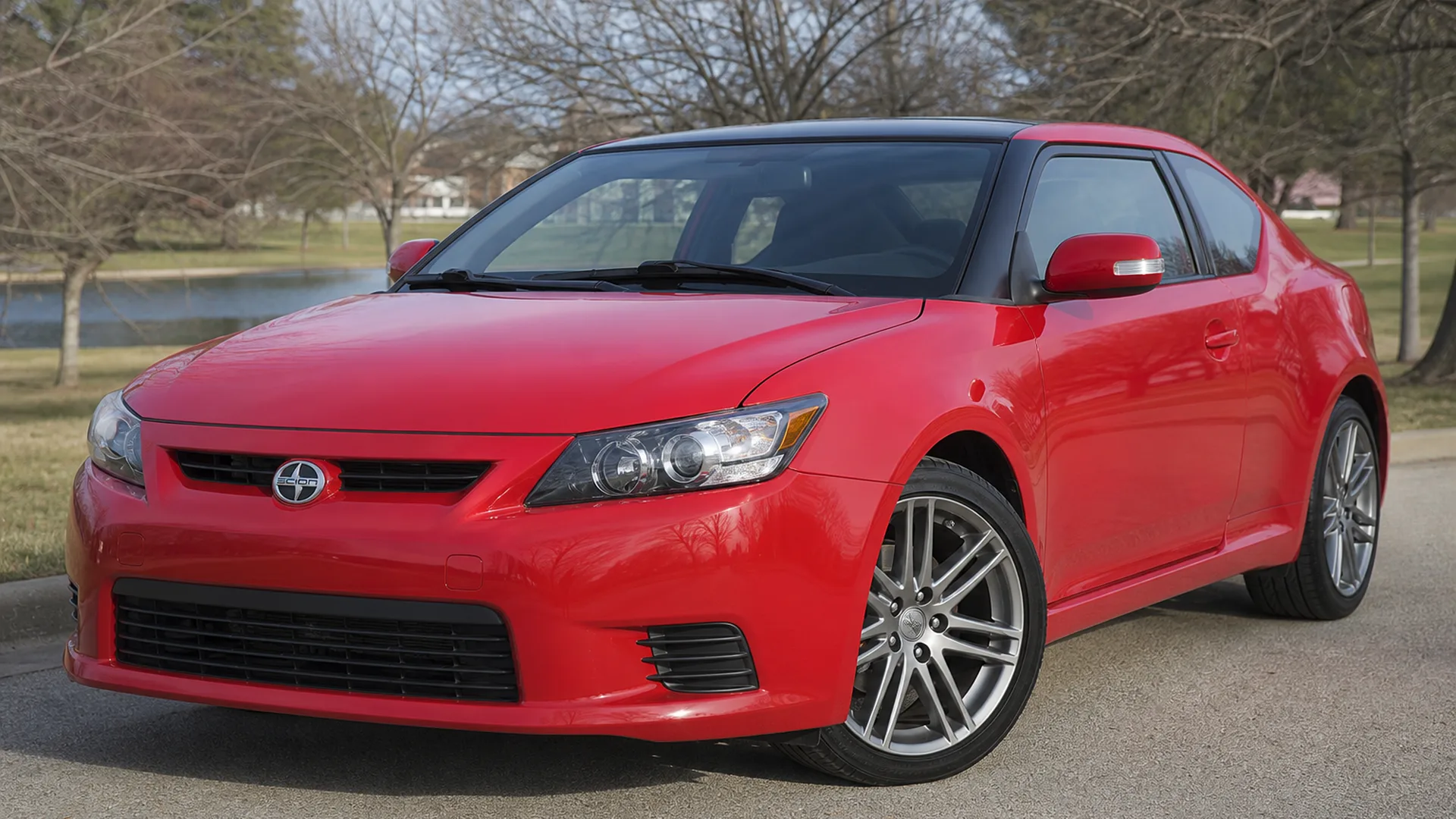
The Scion tC was Toyota’s attempt at capturing younger buyers with a sporty coupe that didn’t break the bank. It combined hatchback practicality with sleek two-door styling, a standard panoramic sunroof, and a fun-to-drive personality. Backed by Toyota’s engineering, the tC seemed like a safe bet for anyone wanting affordable performance with Japanese reliability.
But here’s the catch: not all tC model years live up to that promise. Some struggle with excessive oil consumption that can destroy engines, while others battle clutch failures, shattered sunroofs, and electrical gremlins. If you’re shopping for a used Scion tC, knowing which years to skip—and which ones deliver—can save you thousands in repair bills. This guide breaks down the Scion tC years to avoid, the common problems behind them, and the model years that actually hold up over time.
How we rated the best and worst Scion tC years
To give you accurate, trustworthy advice, we pulled data from multiple authoritative sources. The NHTSA complaint database provided real-world owner reports and recall information for every tC model year. We cross-referenced those with Toyota’s Technical Service Bulletins (TSBs) to identify factory-acknowledged defects and their fixes. Consumer Reports and IIHS safety ratings filled in the reliability and crash-test picture.
We also combed through owner forums, mechanic feedback on sites like CarComplaints, and aggregated repair data to spot patterns—like which years had the most catastrophic engine failures versus minor annoyances. By comparing complaint volume against production numbers and tracking failure trends across both tC generations, we identified the model years with the highest risk and those offering the best value. This isn’t guesswork—it’s a data-driven look at what really goes wrong with the Scion tC.
Most Common Scion tC Problems
Even with Toyota DNA, the tC has some weak spots. Here’s what to watch for, broken down by system.
1. Engine Troubles That Can Cost You Big
The 2.4L engine in first-gen tCs (2005–2010) is infamous for guzzling oil between changes. Owners routinely added a quart every 1,000 to 1,500 miles—not because of leaks, but because worn piston rings and sludge buildup let oil slip into the combustion chamber. Toyota acknowledged the issue with a service bulletin offering piston-and-ring replacements on affected models. Skip that fix, and you’re looking at severe engine damage when oil levels drop too low.
Head gasket failures hit early models hard, too. A design flaw let head bolts pull out of the block under stress, mixing coolant with oil and causing overheating. Fixing it means replacing the gasket and repairing the bolt threads—a repair reported by dozens of 2005–2008 tC owners. If you’re test-driving an early tC, check the oil cap for milky residue (a sign of coolant mixing) and ask for maintenance records proving the head gasket was addressed.
Transmission and Clutch Headaches
The automatic transmission is generally trouble-free, but manual tC owners weren’t so lucky. A growling noise with the clutch engaged plagued 2011–2013 models, traced to a bad input shaft bearing. Toyota issued a TSB for bearing replacement, often covered under warranty. If you’re buying one of these years, listen carefully during a test drive—any growl or grind when you press the clutch means that bearing may not have been fixed.
Clutch hydraulic failures also popped up on hard-driven examples. One 2011 owner had their clutch hydraulics fail completely, destroying the clutch in the process. The 2007 automatic had its own quirk: rough, jerky shifts that sometimes improved with fresh fluid or an ECU update. These aren’t dealbreakers, but they’re worth negotiating over if the seller hasn’t addressed them.
Electrical and Interior Annoyances
Power window motors and regulators died frequently on 2006–2007 tCs. Windows would stop moving mid-travel, leaving you stuck until the motor was replaced. It’s a minor fix compared to engine work, but it’s annoying—and common enough that you should test every window before buying.
Interior rattles are practically a tC trademark. The cabin’s full of hard plastics that shake and creak over rough pavement. Most owners just turn up the stereo and live with it. Later models brought fancier tech, which introduced new problems: 2016 tC owners reported Bluetooth connectivity glitches and infotainment screens freezing. The 2011 also had a batch with reverse lights that wouldn’t work due to wiring faults. None of these are catastrophic, but they chip away at the ownership experience.
Brakes and Suspension – Mostly Fine
The tC’s brake and suspension setup is straightforward and generally reliable: four-wheel disc brakes, MacPherson struts up front, double-wishbone rear. Some owners mention premature brake pad wear or warped rotors, but that’s typical for any sporty compact driven enthusiastically. The ABS can feel abrupt when it kicks in on bumpy roads—forums note this, but the system’s working as designed.
The first-gen tC earned only four-star crash ratings and has a firm ride that telegraphs every bump. You’ll hear road noise and feel impacts more than in a modern car. That’s not a defect—it’s just the nature of an older, budget-focused sport coupe. Suspension complaints are minimal; most issues fall under normal wear.
Body Bits and the Infamous Sunroof
The panoramic sunroof is both a signature feature and a problem area. Early models had wind deflectors that cracked or broke off, prompting a 2005 recall to add reinforcing film. Scarier still, sunroof glass shattered unexpectedly on some 2011–2012 tCs—often blamed on stress or temperature swings. If you’re shopping for those years, inspect the glass carefully and ask if it’s been replaced.
Another weak spot is the trunk handle. It’s held on with plastic clips that snap under use. Many tC owners have watched their trunk release handle fall off. Some dealers replaced these as goodwill, recognizing the flawed design. Check that the handle’s secure before you buy. Paint chipping on front bumpers and hoods showed up on 2016 models, but that’s typical wear on a used car—nothing alarming compared to the mechanical issues.
Worst Scion tC Years to Avoid
Not all tC model years are created equal. If you want to dodge the biggest headaches, steer clear of these.
2007 Scion tC – The Absolute Worst
The 2007 is hands-down the worst tC year to buy. It racks up the most owner complaints and sits at the top of the “avoid” list for good reason. Nearly 200 complaints flooded in, with excessive oil consumption leading the charge. Owners burned through oil so fast that many didn’t realize the problem until serious engine damage had already occurred. Add in power window failures and rough-shifting automatics, and you’ve got a model year that’s more trouble than it’s worth. With two recalls on top of everything else, 2007 should be a hard pass—even at a bargain price.
2006 Scion tC – Second Place for Problems
The 2006 model isn’t much better. CarComplaints data shows over 220 complaints and five recalls—the highest complaint count of any tC year. Excessive oil consumption strikes again, forcing drivers to top off between oil changes. Water pump failures also cropped up, leading to overheating if not caught early. Some 2006 models even had windshield molding that came loose. Combine engine troubles with build-quality issues, and 2006 earns its spot on the “skip it” list.
Early First-Gen Models (2005–2008) – Proceed with Caution
The entire first-generation run (2005–2010) had more problems than the second-gen, but 2005–2008 were the roughest years. The 2005 debut logged over 200 complaints and four recalls, including the sunroof deflector fix. Some 2005s suffered complete engine failures. Oil consumption persisted through 2008, though complaint volume started dropping by then. Toyota extended warranties and issued service fixes for certain engine problems, so a well-documented early tC can be okay—but you’re taking a gamble. For most buyers, it’s smarter to look at 2009–2010 or jump to the second generation.
Here’s the reality: no tC year is a total disaster like some notoriously bad cars. Even 2006–2007 models can rack up high mileage if they got the piston-ring fix and proper maintenance. But those two years stand out for costly engine issues—think $4,000+ rebuilds if the rings are shot. If peace of mind matters more than saving a few hundred bucks, avoid 2005–2008 unless you have proof that all the critical fixes were done.
Best Scion tC Years to Buy
If you want a tC that won’t nickel-and-dime you, focus on these later years. The second generation (2011–2016) cleaned up most of the first-gen’s messes and delivered solid reliability.
2011 Scion tC – A Fresh Start
The 2011 kicked off the second generation with a pleasant surprise: it’s reliable. With just 46 complaints logged on CarComplaints and only one minor recall, it earned an “Awesome” reliability seal from the site. The new 2.5L engine ditched the oil-burning woes of the old 2.4L, and safety features improved across the board. There was a known clutch bearing TSB (growling noise), but most dealers fixed it under warranty. Some 2011s had faulty reverse lights, but that’s minor. If you find a 2011 with a clean history, it’s one of the best-value tCs out there.
2012 Scion tC – Building on Success
The 2012 carried forward the 2011’s strengths. Consumer Reports praised its 180 hp engine and good fuel economy, and the NHTSA database shows only eight complaints and two recalls—impressive for a car this old. The most common gripe? A few owners had panoramic sunroof glass shatter unexpectedly (rare, but check for cracks if you’re looking at a 2012). Beyond that, it’s a solid, dependable choice with updated styling and minimal problems.
2013–2015 Scion tC – Peak Reliability
These mid-cycle years saw complaint counts drop to nearly nothing. The 2013 logged under ten issues on CarComplaints. In 2014, the tC got a refresh: tighter steering, new LED tails, and updated infotainment. Reliability stayed strong through 2015, with modest annual maintenance costs (around $400–$450). There were a handful of recalls—like a 2015 brake-component fix—but no systemic failures. A 2014 or 2015 tC gives you a slightly more modern feel and look without the early-model bugs or final-year scarcity.
2016 Scion tC – The Best of the Bunch
The 2016 is widely considered the best tC year. As the final model year, it had all the production refinements plus new standard features: a 7-inch touchscreen, backup camera, and polished build quality. U.S. News gave it a 7.9/10 overall score, and reliability is described as “exceptional.” Complaints were minimal (some Bluetooth hiccups, a rattling seat back), and there are no major engine or transmission issues on record. Toyota issued about three recalls for 2016 (brake parts, faulty jack)—make sure those were handled. If your budget allows, a low-mileage 2016 tC is the best year for worry-free ownership.
Bottom line: Target 2011–2016 for reliability, with 2016 being the gold standard. Even late first-gen models (2009–2010) are decent—they logged only about ten complaints each. Condition and maintenance history always matter, but starting with a good model year gives you a head start.
Better Alternatives to the Scion tC
The tC is a fun, practical coupe, but it’s not your only option. If the problem years scare you off—or you just want to compare—here are some solid alternatives.
Honda Civic Coupe / Si (2006–2015)
The Civic coupe, especially the Si, is the tC’s main rival. It offers two-door style, a fun drive, and Honda’s bulletproof reliability. The 2006–2011 Civic Si packed 197 hp; the 2012–2015 Si bumped that to 201 hp. Even the regular Civic EX is efficient and dependable. The 8th-gen Civics (’06–’11) had excellent engine and transmission durability (a few had cracking engine blocks, but Honda fixed those under warranty). A 2010–2013 Civic coupe earned top reliability marks from Consumer Reports and has no major flaws. Parts are cheap and everywhere. If you want a reliable small coupe with strong resale value, the Civic is the safe bet.
Hyundai Veloster (2012–2017)
The Veloster is Hyundai’s quirky answer to the tC: a 3-door hatchback with an asymmetric design (two doors on the passenger side, one on the driver’s). It came in regular (130 hp) and Turbo (201 hp) trims. The Veloster Turbo was seen as the tC’s direct competitor. A 2014–2017 Veloster Turbo offers lively performance and decent reliability—Hyundai’s quality improved by the mid-2010s, and they backed it with a long warranty. The ride is firm, and some interior materials feel cheap (like the tC). Early 2012–2013 models had weak clutches and a panoramic sunroof recall, so stick with later years. If you want quirky style and modern tech, the Veloster delivers.
Toyota 86 / Scion FR-S / Subaru BRZ (2013–2020)
For pure driving fun, the rear-wheel-drive Scion FR-S (renamed Toyota 86 after 2016) is a step up. It’s a true 2+2 sports coupe with nimble handling that embarrasses the front-drive tC. You give up rear seat room and cargo space, but you gain a richer, more engaging drive. The FR-S/86 has a solid reliability track record (when not abused). Go with 2014 or newer—2013 had a few recall quirks, like a valve spring issue. You get Toyota engineering in a performance package. Just avoid heavily modified or track-beaten examples. If you want Toyota reliability with rear-drive thrills, this is your pick.
Honda Accord Coupe (2008–2017)
Step up a size, and the Accord Coupe gives you sporty looks with more comfort. It’s a mid-size two-door, so you get a usable back seat and a smoother ride than the tC. The 2008–2012 (8th gen) and 2013–2017 (9th gen) Accord coupes have excellent reliability records—the Accord regularly wins awards for dependability. You can get a potent V6 (~270 hp) with a manual in some trims—something the tC never offered—or stick with an efficient four-cylinder. An Accord Coupe is a great choice if you want a slightly larger, more mature car that’s less likely to rattle or have small-car quirks. A 2011 or 2013 Accord LX-S or EX-L can easily run 150,000+ miles with basic maintenance.
Acura RSX (2002–2006)
If you’re open to an older car, the Acura RSX was a direct first-gen tC rival. It’s a premium Civic coupe with a hatchback and a high-revving engine (especially in Type-S form). The RSX has Honda reliability and a strong aftermarket. Being older, low-mileage examples are harder to find. On the flip side, Honda revived the Integra name in 2023 as a 5-door liftback—more of a premium sporty compact. If you’re considering a late-model used tC, the new Integra might be worth cross-shopping if your budget can stretch.
Volkswagen Golf GTI (2010–2017)
The GTI blends practicality with performance better than the tC. It offers a more upscale interior and sharper handling, plus a punchy turbo engine. VW reliability isn’t on Toyota/Honda’s level—some GTIs need DSG transmission maintenance, and carbon buildup is a known issue—but many owners are happy, especially with the 2015–2017 Mk7 GTI, which improved quality. If you’re willing to do a bit more maintenance for superior driving dynamics, a used GTI could be a “better” alternative in terms of fun and refinement. Just go in with your eyes open about upkeep costs.
Final Verdict – Should You Buy a Scion tC?
The Scion tC was designed as an affordable, sporty coupe for younger buyers who wanted style, practicality, and a bit of fun. When you pick the right year, it delivers on that promise. But choosing wrong—especially 2006 or 2007—can leave