
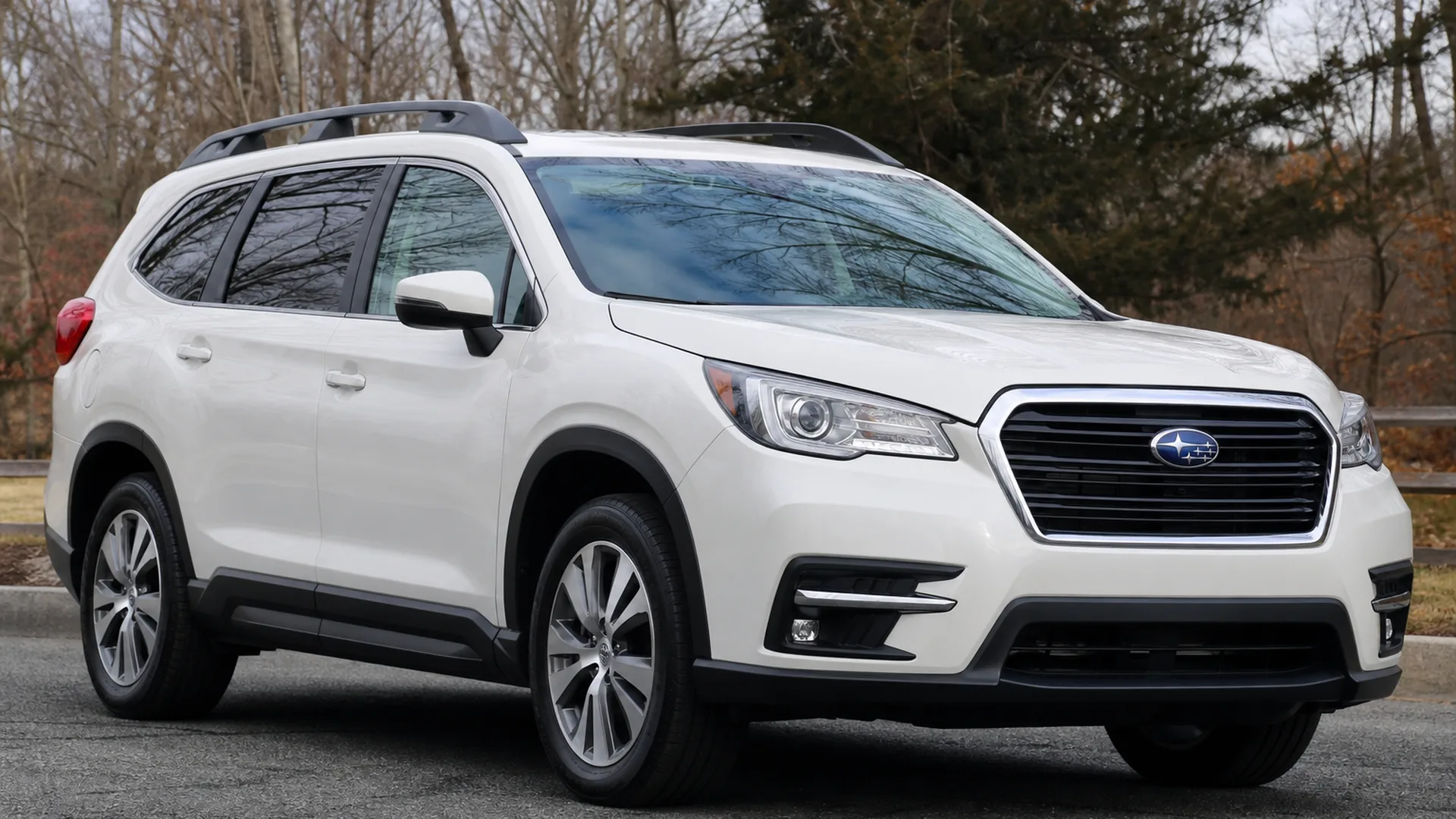
If you’re in the market for a midsize family SUV, knowing the Subaru Ascent years to avoid can save you from expensive repairs and frustrating ownership experiences. The Ascent debuted in 2019 as Subaru’s first three-row SUV, combining the brand’s trademark all-wheel drive with family-friendly space and safety features. On paper, it seemed like the perfect upgrade for Subaru loyalists who had outgrown the Outback or Forester.
The worst Subaru Ascent years to avoid are 2019 and 2020, plagued by major reliability issues such as engine and transmission failures, battery drain, and structural weld defects. The best Subaru Ascent years to buy are 2021 through 2023, which benefited from significant improvements in build quality, fewer recalls, and stronger owner satisfaction ratings. If you’re considering a used Ascent, focus on the newer models and steer clear of the early production years to ensure a more dependable long-term experience.
How we rated the best and worst Subaru Ascent years
Our analysis draws from multiple authoritative sources to give you the complete picture. We examined NHTSA complaint databases, tracking 600+ owner complaints filed against various Ascent model years. Recall data came directly from Subaru’s official campaigns and safety bulletins. We also analyzed class-action lawsuits filed against Subaru for battery drain issues and defective windshields.
Owner experiences were gathered from dedicated forums like AscentForums.com and Reddit discussions, cross-referenced with Consumer Reports reliability ratings and J.D. Power quality scores. This multi-source approach ensures our recommendations reflect both official data and real-world owner experiences.
Most Common Subaru Ascent Problems
Before breaking down each issue in detail, it’s important to understand the overall pattern of reliability concerns reported by Subaru Ascent owners. The earliest model years—particularly 2019 and 2020—were affected by a combination of mechanical and electrical flaws. These included engine and transmission failures, battery drain issues, and various quality control problems that undermined the SUV’s reputation for durability. Below is a closer look at the most frequently reported problems and how they impacted owners over time.
1. Engine Troubles That Cost Big Money
Early Ascent models were hit by significant engine-related defects that could lead to breakdowns or costly repairs. One of the most serious issues was a 2019 recall involving faulty PCV (positive crankcase ventilation) valves. These valves could separate and be sucked into the engine, resulting in sudden power loss or total engine failure. In severe cases, Subaru had to replace entire short-block engines under warranty.
Fuel delivery system failures also created major headaches. Both 2019 and 2020 models were affected by the Denso fuel pump recall, where low-pressure pumps could stop working without warning. When this happened, the engine could stall abruptly—even in the middle of traffic. One owner described their brand-new Ascent repeatedly stalling during the first month of ownership until the fuel pump was replaced.
Oil leaks were another recurring complaint among higher-mileage vehicles. Although not as widespread as the major recalls, several owners reported oil seepage around 60,000–70,000 miles, often traced back to gasket or seal deterioration. Collectively, these problems made the first-generation Ascent engines expensive to maintain and unpredictable in daily use.
2. Transmission Problems
The Ascent’s continuously variable transmission (CVT) was another source of frustration in the early years. A programming error in the Transmission Control Unit (TCU) led to insufficient hydraulic pressure, causing the CVT chain to slip. In severe cases, this could cause the chain to break entirely, leaving the SUV without power.
Subaru issued multiple recalls to reprogram the TCU and inspect for damage, but some owners still required complete transmission replacements under warranty. Many 2019–2020 models also displayed harsh shifting, illuminated check engine lights, or total transmission failure within the first year of ownership.
The 2019 Ascent faced a separate recall for transmission sensor harnesses that could misread pressure data, leading to similar chain-slip issues. On top of that, loose driveshaft bolts in some early units risked disconnecting the driveshaft completely. These overlapping defects highlighted serious quality control issues during the Ascent’s first production years.
3. Electrical Issues That Drain Your Wallet
Electrical system problems have consistently ranked among the top owner complaints, especially the infamous battery drain issue. The problem stemmed from a design flaw—if the tailgate was left open, the cargo light remained on indefinitely, draining the small factory-installed battery. Even leaving the tailgate open for an hour or two could leave the vehicle unable to start.
This issue wasn’t limited to older vehicles. Some owners reported dead batteries within weeks of purchasing new Ascents. Subaru claimed the system was functioning “as designed,” but many considered it a clear oversight. A class-action lawsuit later alleged that Subaru used undersized batteries incapable of handling the vehicle’s electrical demands when parked.
Other electrical complaints included malfunctioning power liftgates that opened or closed on their own, as well as infotainment systems freezing or randomly rebooting. The most serious incident came in late 2022, when Subaru recalled 2019–2022 Ascents due to a potential fire risk caused by an improperly fastened ground bolt in the heating system. Owners were cautioned not to leave their vehicles idling until repairs were made.
4. Additional Problem Areas
Beyond the major powertrain and electrical issues, several smaller but frustrating problems appeared in early Ascents. Brake performance was a recurring complaint, with 2019–2020 owners describing squealing, grinding, or premature rotor wear even after warranty service. Suspension components like sway bar links and strut mounts also generated noise and instability, prompting service bulletins from Subaru dealers.
Climate control failures added to owner dissatisfaction. Some 2019 models suffered from weak rear air conditioning or refrigerant leaks in the evaporator line, reducing cooling performance for passengers. While these issues were less severe than engine or transmission failures, they reinforced the perception that early Ascent models lacked the refinement and reliability expected in a family SUV.
The Worst Subaru Ascent Years to Completely Avoid
2019 Subaru Ascent: The Year That Started It All (Badly)
The 2019 Ascent holds the unfortunate title of worst model year for this vehicle. As the debut year, it suffered from an avalanche of defects that generated 425 NHTSA complaints—more than any other year.
This model faced at least six separate recall campaigns, with eight total safety recalls issued by 2022. The problems weren’t minor annoyances—they included potential engine failure, transmission breakdowns, and structural integrity issues.
The most shocking recall involved missing spot welds on the B-pillar. These defects were so severe that Subaru couldn’t repair the affected vehicles. Instead, they bought back and destroyed these units because the missing structural welds made them unsafe to fix. While only nine vehicles fell into this category, it shows just how problematic the initial production run was.
Beyond recalls, 2019 owners dealt with batteries dying unexpectedly, windshields cracking without impact, and isolated cases of unintended acceleration. If you’re looking at a 2019 Ascent, you’re essentially buying someone else’s beta test vehicle.
2020 Subaru Ascent: Still Problematic but Improving
The 2020 model showed improvement but retained several key issues from 2019. Subaru had addressed many major recalls by this point—2020 models came with updated PCV valves and proper structural welds from the factory.
However, the 2020 still generated about 297 NHTSA complaints, roughly half of 2019’s total but still high compared to later years. Windshield cracking remained a significant problem, leading to a class-action lawsuit covering both 2019 and 2020 models for defective glass.
Battery drain issues persisted, with some 2020 owners experiencing dead batteries within their first week of ownership. The same undersized battery problems from 2019 carried over, along with the tailgate drain issue.
On the positive side, powertrain problems decreased significantly in 2020. The factory fixes and recalls seemed to reduce transmission failures and engine troubles compared to 2019. Consumer Reports still flagged the 2020 for electronics and power equipment problems, but it was a step in the right direction.
If you’re considering a 2020 Ascent, make sure the windshield is crack-free and verify that all CVT and fuel pump recalls have been completed. Many buyers find it’s worth spending a bit more for a 2021 model to avoid these lingering issues.
Best Subaru Ascent years to Buy
2021 Subaru Ascent: The Turnaround Year
By 2021, Subaru had worked through most of the Ascent’s teething problems. The improvement is dramatic when you look at the numbers: only 34 NHTSA complaints compared to hundreds in earlier years.
J.D. Power gave the 2021 Ascent strong reliability scores, reflecting real-world improvements. The widespread battery drain and windshield cracking issues largely disappeared. While the 2021 uses the same basic engine and transmission, updated software and components addressed the previous failures.
All the early warranty fixes for brakes, climate control, and other systems were incorporated into 2021 production models. You get all the benefits of the Ascent platform—260 hp, standard AWD, advanced safety features—without the early-year headaches.
For used buyers, a 2021 represents the sweet spot of proven reliability improvements at reasonable used-car prices.
2022 Subaru Ascent: Continued Improvement
The 2022 model maintained the reliability gains from 2021. No major recalls or widespread problems have been reported for this year. While some industry rankings still include the Ascent in less reliable categories, this largely reflects lingering data from the problematic 2019-2020 years.
Owner satisfaction improved, and the advanced safety features that are now standard across all trims work as intended. For used buyers, a 2022 gets you a nearly new vehicle with most early bugs resolved.
2023 Subaru Ascent: The Refreshed Model
Subaru gave the Ascent a mid-cycle refresh for 2023, including updated styling and improved interior technology. From a reliability standpoint, the 2023 continues the clean record established in 2021-2022.
One isolated unintended acceleration complaint was reported, but this appears to be an anomaly rather than a trend. No major recalls have been issued for 2023 models, continuing the improved reliability pattern.
Better 3-Row SUV Alternatives to Consider
If the Ascent’s early troubles have you looking elsewhere, several excellent alternatives offer better reliability records and often superior resale value.
Toyota Highlander: The Reliability Champion
The Toyota Highlander stands out as the most reliable choice in this segment. Both the previous generation (2014-2019) and current generation (2020+) have exceptional track records. The Highlander’s V6 engine and transmission are proven reliable, with many owners reporting trouble-free operation well past 200,000 miles.
Resale values are consistently higher than the Ascent, meaning you’ll get more money back when it’s time to sell. Any third-generation Highlander from 2017-2019 is an excellent choice for used buyers.
Honda Pilot: Proven Longevity
The Honda Pilot (2016-2022) offers spacious seating and a reliable 3.5L V6 engine that’s powered Honda SUVs for years. Unlike the Ascent, the Pilot didn’t suffer from systematic issues in its early years.
Consumer ratings consistently place the Pilot’s reliability above average, with many owners reporting 200,000+ miles of trouble-free service. Look for 2018-2019 models for the best combination of features and proven reliability.
Mazda CX-9: Premium Feel with Solid Reliability
The Mazda CX-9 (2016-2023) brings upscale styling and sporty handling to the family SUV segment. Mazda’s build quality is excellent, and the turbocharged engine has proven durable in real-world use.
While the third row is tighter than some competitors, the CX-9 offers a more engaging driving experience and premium interior materials. Any 2018-2020 model represents excellent value for used buyers.
Kia Telluride and Hyundai Palisade: The New Contenders
These sister vehicles arrived in 2020 and quickly earned praise for their combination of features, quality, and value. Early reliability indicators are very positive, with both models showing few major issues in their first few years.
Owner satisfaction scores are high, and both vehicles have strong resale values. A 2020-2021 Telluride or Palisade offers modern features and apparent reliability, though their long-term durability is still being proven.
Is the Subaru Ascent worth buying?
If you’re set on buying a Subaru Ascent, stick with 2021 or newer models. These years benefit from all of Subaru’s corrections and show dramatically improved reliability. The 2021-2023 models give you the Ascent’s unique combination of standard AWD and safety features without the early-year problems.
Avoid 2019 and 2020 models unless they’re significantly discounted and you can verify all recalls have been completed. Even then, you’re accepting higher risk for relatively small savings.
For most buyers, we’d recommend cross-shopping the Toyota Highlander, Honda Pilot, or Mazda CX-9. These alternatives have longer track records of reliability and often better resale values, which can translate to lower total ownership costs.
Remember that buying a reliable vehicle isn’t just about avoiding repairs—it’s about peace of mind and knowing your family SUV will start every morning and get you where you need to go. With the right information, you can make a choice that serves your family well for years to come.