
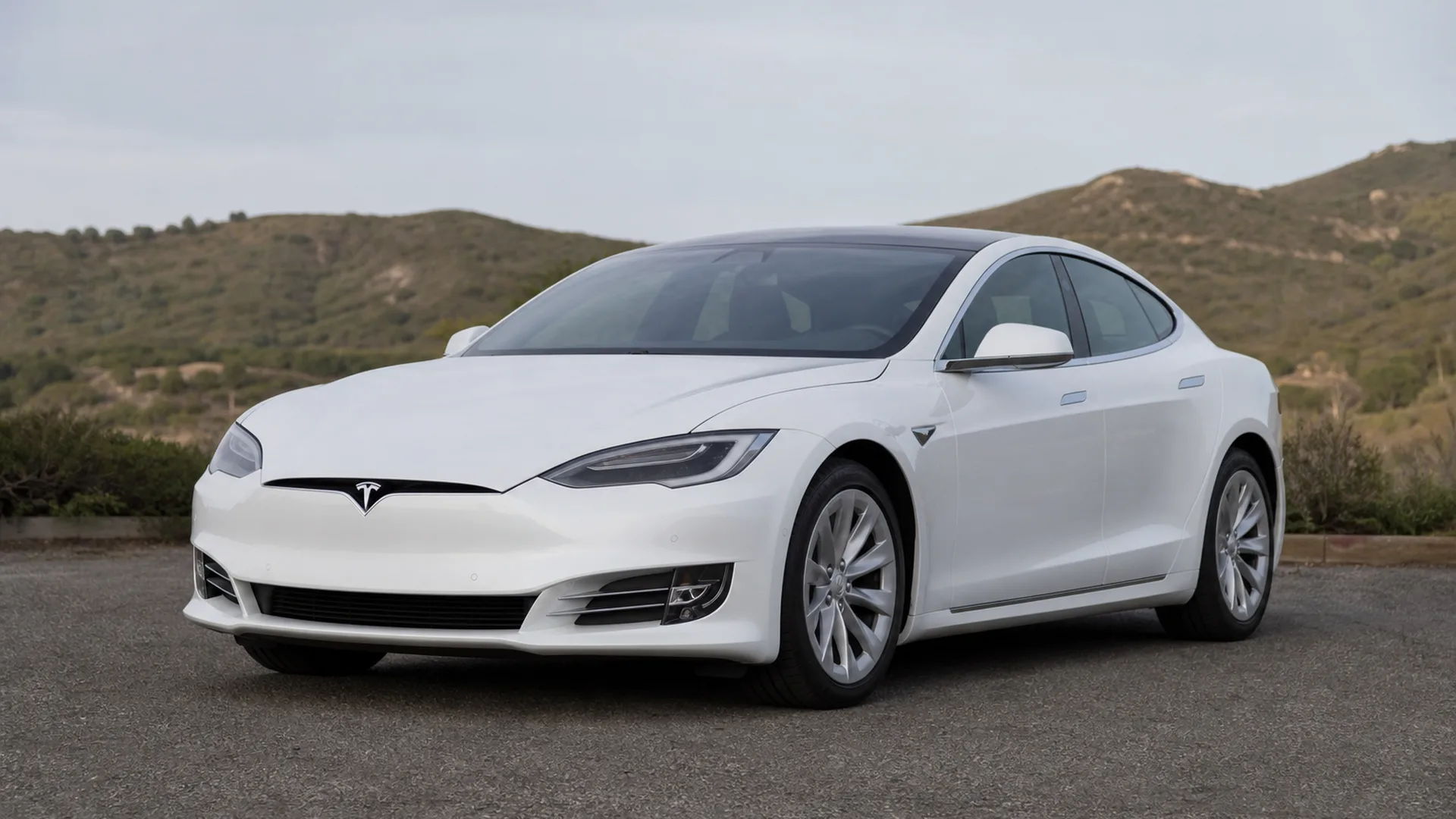
The Tesla Model S rewrote the luxury sedan playbook when it launched in 2012. Zero emissions, blistering acceleration (the Plaid hits 60 mph in under two seconds), and over-the-air updates that make your car better while you sleep. It’s the EV that made electric cool.
But here’s the catch: not every Tesla Model S year delivers that same magic. Some early builds struggled with battery failures, suspension recalls, and infotainment screens that would suddenly go dark. Out-of-warranty repairs can hit $20,000 or more. So if you’re shopping used or just curious which years hold up best, this guide breaks down the Model S years you should skip, the ones worth your money, and what problems to watch for.
How we rated the best and worst Tesla Model S years
We pulled data from multiple trusted sources to give you the full picture:
Official Records: NHTSA recall databases, Consumer Reports reliability surveys, and Tesla service bulletins tracking common repairs.
Owner Feedback: Tesla Motors Club forums (one of the largest owner communities), CarComplaints complaint logs, and Edmunds long-term test reports.
Technical Analysis: We looked at the MCU1-to-MCU2 infotainment transition, eMMC memory recall patterns, and differences between the “Raven” drivetrain and the 2021 “Plaid” refresh.
Cost Data: Real-world repair bills for battery replacements, drive units, and suspension work once the 8-year warranty expires.
Every claim you’ll read here is backed by verifiable evidence – no guesswork, just the facts you need to make a smart call.
Most Common Tesla Model S Problems
Before we call out specific years, let’s talk about the problems that show up again and again across different Model S generations.
1. Battery Health and Cooling
Battery packs don’t last forever. Most Tesla Model S owners see gradual range loss—up to 10-15% by 100,000 miles is normal. But early 85 kWh packs sometimes lost 20% or more. Worse, some cars developed coolant leaks in the battery thermal management system. If coolant stops circulating, the battery overheats and Tesla’s software limits performance or charging speed. Fixing a coolant leak can run $2,000-$5,000. Full battery replacement? That’s $12,000-$22,000 if you’re out of warranty (Tesla covers batteries for 8 years with unlimited miles, but after that you’re on your own).
2. Drive Units and Suspension Trouble
Early Tesla Model S cars had noisy or failing drive units (electric motors). Many owners got replacements under warranty, sometimes two or three times. Tesla eventually redesigned the motor, but if you buy a 2012-2015 car, check whether the drive unit was already swapped.
Suspension is another sore spot. China recalled roughly 30,000 Model S and X vehicles from 2013-2018 to replace front and rear suspension links that could crack. Similar failures happened in the U.S., though Tesla insisted they were caused by road damage rather than design flaws. Either way, air suspension components—compressors, height sensors—can fail as cars age, leading to a harsh ride or error messages.
3. The Infamous Touchscreen Failure
Here’s a big one: the Media Control Unit (MCU1) in 2012-2018 Tesla Model S cars used an 8 GB eMMC memory chip that wore out over time. Symptoms included a black screen, endless reboots, or loss of the backup camera. Tesla eventually issued a recall to replace the memory chip for free, but if you’re looking at an older car, confirm this fix was done. Cars built after March 2018 got the newer MCU2, which doesn’t have this problem.
4. Door Handles That Won’t Open
Tesla’s flush door handles pop out when you approach the car—at least they’re supposed to. Early Tesla Model S door handle motors failed frequently, leaving doors stuck shut. Replacing all four handles out of warranty can cost $1,500-$2,000. Check if a used car has had handles replaced; if not, budget for it.
5. Brakes, HVAC, and Build Quality
Because regenerative braking does most of the stopping, friction brakes on a Model S don’t get used much. That sounds good, but it can cause rotors to warp from sitting unused or pads to corrode. Some owners had to replace rotors earlier than expected. There was also a 2017 recall for parking brakes that could lock up on 2012-2016 cars—not fun if you’re already on the road.
Air conditioning compressor failures hit some early cars, costing over $1,000 to fix. Pre-2021 models used electric resistance heaters for cabin warmth, which drained the battery fast in winter. The 2021 refresh added a heat pump for better efficiency, though initial software bugs caused weak heating until updates rolled out.
Finally, early Tesla Model S years had fit-and-finish issues: misaligned doors, squeaky trim, sunroof leaks. The cabin is quiet, so every rattle stands out. Software glitches—random screen reboots, Bluetooth dropouts, phantom braking on Autopilot—remain ongoing concerns even on newer cars.
The Worst Model S Years (Skip These If Possible)
2012-2014: The Rough Start
The first few Tesla Model S years were essentially beta tests on public roads. The 2013 Model S logged more owner complaints than any other year, according to CarComplaints. Problems ranged from suspension failures around 50,000 miles to battery coolant leaks and malfunctioning sensors. Door handles broke, touchscreens froze, charging ports got stuck.
Tesla issued roughly 5-7 recalls per year for 2012-2016 builds. One massive recall in 2015 covered every 2012-2015 Model S to fix a front seatbelt anchor that could loosen. The Takata airbag recall eventually swept in all 2012-2016 cars too.
Bottom line: Unless you have documentation proving every recall and TSB was completed—MCU memory fix, suspension link replacement, door handle swaps—stay away from 2012-2014 models. They’re out of warranty and most likely to hit you with expensive failures.
2015-2016: Better, But Still Risky
The 2015 Model S brought dual-motor all-wheel drive (P85D, 90D), but drivetrain and electrical gremlins stuck around. It’s still covered by the seatbelt and airbag recalls. The 2016 refresh introduced a new front fascia and Autopilot 2 hardware, but AP2 was buggy at launch—some features took over a year of software updates to catch up to the older AP1 system.
Owners of 2016 builds reported camera/sensor issues with the new Autopilot, and the older MCU touchscreen remained a ticking time bomb (most 2016s still had MCU1, which failed eventually). CarComplaints ranks 2016 as the second-highest complaint year after 2013.
Approach 2015-2016 with caution. They’re better than 2012-2014, but you’re still inheriting known weak points.
2018: A Transition Year
By 2017-2018, Tesla had fixed a lot of early mistakes. But 2018 is tricky because Tesla switched to MCU2 mid-year (around March). Early-2018 cars have the old MCU1, which will fail eventually. Late-2018 builds have MCU2 and are much more reliable.
If you’re considering a 2018, check the build date. A car made after Q2 2018 is a safer bet. Also confirm the eMMC recall fix was done if it’s an early build. Besides the infotainment, 2018 didn’t get a major hardware update (that came in 2019), so it carries some legacy issues like occasional screen bubbling or yellowing on MCU1 units.
2019-2021: New Problems Despite Newer Tech
This one surprises people. Consumer Reports flagged the 2019, 2020, and 2021 Model S as used cars to avoid due to higher-than-average problem rates.
The 2019 and 2020 “Raven” models introduced a more efficient motor and adaptive air suspension. Performance improved, but so did reports of door misalignment, electronic glitches, and suspension noise. The 2021 refresh brought a totally redesigned interior—new yoke steering wheel, revised battery pack—but first-year refresh problems cropped up: misaligned body panels, rattles, plus a controversial yoke that many drivers hated. Consumer Reports blasted the touch-based controls as unintuitive. Tesla even had to issue a software recall for Full Self-Driving cars that didn’t fully stop at stop signs.
By 2022, Tesla ironed out most of these bugs (CR didn’t flag 2022 models). But 2019-2021 Model S years saw more shop visits than average, so tread carefully.
The Best Model S Years to Target
Now for the good news—some Model S years really do deliver on Tesla’s promise.
2017-2018: The Sweet Spot (Especially Late 2018)
By 2017, Tesla had squashed most early bugs. Touchscreen failures, door handle issues, and other gremlins became far less common. Owner satisfaction surveys showed around 90% of 2017 Model S owners would buy the car again. The late-2016 facelift design carried through 2017-2018, giving these years a sleeker look.
2018 (especially post-March) is the real gem. It got the MCU2 infotainment mid-year—snappier, more reliable, and future-proof for software updates. Many 2018 cars also came with free unlimited Supercharging. A 2018 Model S 100D offers 335 miles of range, modern looks, and fewer known issues. It’s one of the last “classic” Model S builds before major changes.
2020 Raven: Modern Performance, Proven Hardware
The mid-2019 “Raven” update brought adaptive air suspension and a more efficient front motor, boosting range. By 2020, teething problems from the Raven launch were sorted out. The 2020 Model S Long Range Plus hit 402 miles EPA range, the first EV to break 400 miles.
These cars also improved thermal management and charging speed compared to earlier models. Crucially, 2020 still has a conventional round steering wheel and physical buttons (no yoke), plus a proven powertrain. If you want long-range EV capability with modern tech but no experimental features, a late-2019 or 2020 Model S is a top pick. Consumer feedback is generally positive aside from minor software quirks.
2022-2023: The Refresh Matures
The 2021 refresh was rough, but by 2022 Tesla had addressed most complaints. The 2022 Model S and Plaid feature a high-performance battery pack, updated interior, and heat-pump HVAC. Early yoke and shifter issues were fixed via software and hardware tweaks. The Plaid trim delivers supercar-level acceleration (0-60 in 1.99 seconds), 375-405 mile range, and the latest Autopilot hardware.
Tesla even brought back a round steering wheel option in 2023 after customer backlash over the yoke. In terms of outright performance and likely longevity, 2022 or 2023 models are the pinnacle of the Model S—if your budget can handle the price tag.
If Not a Model S, Consider These Alternatives
The luxury EV market has exploded. Here are a few competitors worth cross-shopping:
Porsche Taycan (2021+): Porsche’s legendary build quality meets electric performance. The Taycan has less range (206-304 miles) than a Model S, but the sports-car handling and interior craftsmanship are superb. After a recent refresh, Porsche boosted range and power. If you care more about driving feel than maximum miles, the 2021+ Taycan is excellent.
Lucid Air (2022+): A California startup that’s outperforming Tesla in some ways. The 2022 Dream Edition and Grand Touring models hit up to 516 miles of range thanks to efficient 900V battery tech. The Air’s interior is spacious and high-tech. The tri-motor Sapphire is one of the fastest sedans on Earth. Lucid’s long-term reliability is unproven and early cars had software bugs, but for cutting-edge luxury and range, a 2022-2023 Lucid Air is the closest rival to a Model S Plaid.
Audi e-tron GT (2022+): Shares a platform with the Taycan but wrapped in Audi styling. The e-tron GT offers 238-270 miles of range and a plush, traditional luxury interior. It’s quieter and more refined than a Model S, though a bit smaller inside. After a 2022 software update improved charging speed, the e-tron GT became a strong alternative if you value craftsmanship and dealer support.
Mercedes-Benz EQS (2022+): Mercedes’s electric flagship is all about comfort. The EQS 450+ can travel 350+ miles per charge and features a massive “Hyperscreen” dashboard. Internationally, it achieved up to 453 miles under WLTP testing. It’s an ultra-luxury alternative focusing on a serene ride rather than sportiness. The 2023 EQS added styling and software improvements. If you want a limousine experience, the EQS (2022+) is top-tier—though pricey and nowhere near as quick as a Model S Plaid.
Tesla Model 3 or Tesla Model Y (2018+ Model 3, 2020+ Model Y): If you’re open to downsizing, Tesla’s smaller cars often have better reliability. Consumer Reports generally rates the Model 3 above the Model S. The Model Y was named one of CR’s “Best Cars of 2024.” A 2018+ Model 3 or 2020+ Model Y gives you Tesla’s Supercharger network and tech ecosystem, often with fewer issues and a lower price. The trade-off? Less space and prestige, but many owners find them more practical.
Final Thoughts
The Tesla Model S is a groundbreaking car—when you get a good one. Early years (2012-2014) were plagued by problems, and even some newer models (2019-2021) had above-average issues. But by targeting the right years—2018 (late build), 2020 Raven, or 2022-2023—you can get a Model S that delivers on its promise of thrilling performance and advanced tech without constant shop visits.
If you’re on a tighter budget, a 2017 can work, but make sure all recalls and service bulletins were completed and consider an extended warranty. Otherwise, aim for 2018 or newer. Tesla continuously refines the Model S, so newer generally means better.
And don’t forget to shop around. The Porsche Taycan, Lucid Air, Audi e-tron GT, and Mercedes EQS all offer compelling alternatives if you’re concerned about Tesla’s reliability track record or want a different flavor of luxury EV. Before you commit, think about what matters most—range, driving dynamics, build quality, or service network—and compare how a used Model S stacks up.
Money-saving tip: A late-2018 Model S 100D with MCU2 and a clean service record can save you tens of thousands versus a new EV while still delivering 300+ miles of range and modern features. Just make sure you know exactly what you’re buying, verify all recalls are done, and budget for potential repairs down the line. With the right homework, you can land a Model S that’s both thrilling to drive and reasonably reliable.