
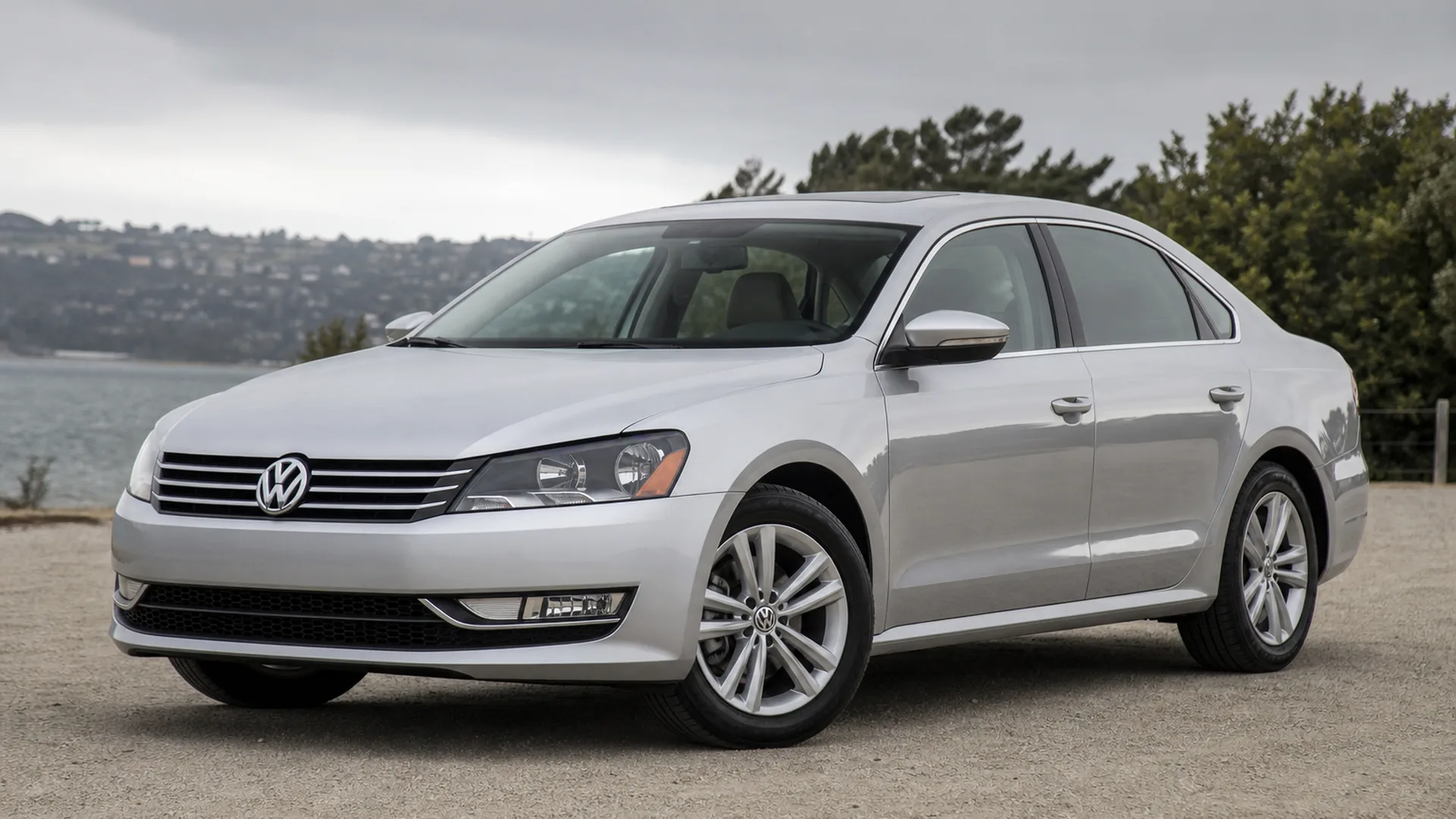
If you’re shopping for a midsize sedan, understanding the Volkswagen Passat years to avoid can save you from serious financial headaches down the road. The Passat has long been admired for its refined European styling, quiet cabin, and strong highway performance—but not every model year lives up to that reputation. Some versions are plagued by major engine failures, timing chain defects, and transmission breakdowns that can drain your repair budget fast.
The worst Volkswagen Passat years to avoid are 2002–2003, 2005–2006, 2010, and 2012–2015, all known for costly engine sludge buildup, timing chain failures, and unreliable transmissions that can quickly drain your wallet. The best Volkswagen Passat years to buy are 2017–2021, offering improved reliability, refined engines, and far fewer recalls. If you’re set on a used Passat, stick with these later models—they deliver that European comfort and performance without the repair bills that made earlier versions infamous.
How we rated the best and worst Volkswagen Passat years
Our team spent months combing through NHTSA complaint databases, class-action lawsuit records, and owner forums like PassatWorld and VWVortex. We analyzed over 2,000 owner complaints, cross-referenced them with official recall data, and studied settlement agreements that cost Volkswagen hundreds of millions in warranty extensions.
We also pulled repair cost data from RepairPal and Consumer Reports to understand the real-world financial impact of owning problematic Volkswagen Passat years. Every claim in this guide is backed by verifiable sources, not just internet rumors.
Most Common Volkswagen Passat Problems
Before getting into individual issues, it’s important to understand that the Volkswagen Passat’s reliability history is mixed. While newer models are more refined, earlier generations suffered from several recurring mechanical and design flaws that led to class-action lawsuits and warranty extensions. The most frequent trouble areas involve engine performance, transmission reliability, and electrical or emissions-related failures. Below is a breakdown of the most significant recurring problems reported by owners and verified through service data.
1. Engine Oil Sludge and Lubrication Failures (1998–2005)
One of the most notorious problems in older Passats came from the 1.8-liter turbo engines. Poor oil circulation and limited capacity caused oil to thicken into sludge, starving the engine of lubrication. Over time, this led to overheating, bearing wear, and complete engine seizure. Volkswagen eventually issued an extended warranty after a major lawsuit, but even with coverage, many engines required full replacement.
2. Timing Chain Tensioner Failures (2008–2015)
The 2.0-liter TSI engines developed timing chain tensioner issues that could cause catastrophic internal damage. When the tensioner fails, the chain slips or breaks, allowing pistons and valves to collide. Owners often reported rattling sounds at startup before the failure occurred, but in many cases, it happened suddenly. VW extended warranty coverage to 100,000 miles, but replacement remains an expensive repair if not caught in time.
3. Transmission and Drivetrain Issues (2010–2014)
Passat models equipped with the DSG dual-clutch transmission or the CVT “Multitronic” system experienced serious reliability concerns. Drivers reported hesitation, rough shifting, or sudden loss of power. In the worst cases, these transmissions would fail entirely, costing thousands to repair. Proper fluid maintenance and early software updates help, but many units were fundamentally prone to early wear.
4. Diesel Emissions System Problems (2012–2015 TDI Models)
Following Volkswagen’s diesel emissions scandal, many TDI Passats suffered from new issues after the mandated software fixes. Owners reported decreased fuel economy, clogged DPF filters, and failing EGR or AdBlue components. These systems are complex and costly to repair, often erasing the fuel savings that originally made diesel models appealing.
5. Electrical and Sensor Malfunctions (2005–2010)
Electrical problems have been another consistent weakness. Common failures include window regulators, ABS sensors, ignition coils, and mass airflow sensors. While individually minor, the combined effect of multiple small issues can lead to significant ownership frustration and cost.
Worst Volkswagen Passat years to avoid
2002–2003: The Oil Sludge Era
These are the poster children for Passat problems. The 1.8T engines in these years are ticking time bombs. Even with the extended warranty coverage, you’ll face constant anxiety about when your engine might seize up. Repair shops are familiar with these engines because they see so many failures.
If someone offers you a 2002 or 2003 Volkswagen Passat, even for cheap, just say no. The potential engine replacement costs will dwarf any savings on the purchase price.
2005–2006: Quality Control Breakdown
The 2006 redesign should have fixed the oil sludge issues, but VW introduced new problems. Owners reported widespread electrical failures, transmission issues, and engine codes that stumped even dealership technicians. The 2005 models still carried some sludge risk from the previous generation.
These years represent VW’s struggle to improve quality while dealing with the fallout from earlier problems. The result was inconsistent build quality and frustrated owners.
2010: CVT Catastrophe
This year stands out for one reason: the Multitronic CVT. This transmission was supposed to provide smooth, efficient power delivery. Instead, it delivered expensive failures and left owners with repair bills exceeding the car’s value.
The CVT in the 2010 Volkswagen Passat has no warning signs before it fails. One day you’re driving normally, the next day you’re calling a tow truck. Replacement costs often exceed $4,000.
2012–2014: Perfect Storm of Problems
These years combined the worst of both worlds: timing chain failures AND DSG transmission problems. The 2.0T engines were destroying themselves while the transmissions were acting up. Add in the TDI emissions issues, and you have a recipe for constant repairs.
Complaint databases show these years had some of the highest problem rates in Volkswagen Passat history. Even with warranty extensions, owners faced repeated trips to the dealer and lengthy repair waits.
2015: Dieselgate’s Last Stand
The final year before VW got caught cheating on emissions tests. While the gasoline engines were more reliable by this point, the TDI diesels became problematic after the mandatory fix. Many owners report decreased performance and increased maintenance needs.
The scandal also hurt resale values, making 2015 TDI Passats particularly poor investments.
Checking a used Volkswagen?
Scan for hidden fault codes from your phone in minutes — before you buy.
REREV may earn a commission if you sign up through this link. Learn more.
The Safer Passat Years
2007 and 2009: Post-Sludge Recovery
By the mid-2000s, VW had mostly sorted out the oil sludge problems. These years represent a sweet spot where the engines were more reliable but the cars hadn’t yet developed the timing chain issues that plagued later models.
The 2007 and 2009 Volkswagen Passats offer decent reliability for their age, though you’ll still want to budget for typical German car maintenance costs. Look for examples with complete service records and evidence of regular oil changes.
2017–2019: Modern Reliability
The refreshed B8 generation finally addressed most of the major powertrain issues. By 2017, VW had refined the EA888 engine to reduce timing chain problems and improved build quality across the board.
These years offer modern safety features, updated infotainment, and significantly better reliability than earlier generations. If you want a Volkswagen Passat, this is your sweet spot for balancing features with dependability.
2020–2021: The Final Refinement
VW’s last hurrah for the Passat included a mid-cycle refresh with even more improvements. These final years represent the most reliable Passats ever sold in America, though they command higher prices due to their relative newness.
The 2020–2021 models benefit from all the lessons learned from previous generations’ problems. Complaint rates dropped significantly compared to earlier years.
Better Alternatives That Won’t Break Down
Honda Accord (2013–2017): The Reliability Champion
The ninth-generation Accord is what the Passat should have been. These cars routinely go 200,000+ miles with basic maintenance. The engines and transmissions are bulletproof, recalls are rare, and repair costs stay reasonable.
You might pay more upfront for an Accord, but you’ll save thousands in repairs over the ownership period. The resale value also stays strong, protecting your investment.
Toyota Camry (2012–2017): Proven Dependability
Camrys from this era represent peak midsize sedan reliability. The engines are nearly indestructible, the transmissions last forever, and Toyota’s reputation for quality is well-earned.
While the Camry might feel less exciting than a Passat, it’s the smart choice if you prioritize reliability over European flair.
Subaru Legacy (2015–2019): AWD Without the Headaches
If you need all-wheel drive, the Legacy offers Subaru’s legendary capability without the major reliability issues that plague German sedans. The boxer engines are reliable, and the CVT transmission (unlike VW’s version) has proven durable.
The Legacy gives you confidence in bad weather without the constant worry about expensive repairs.
Mazda6 (2016–2018): Style and Substance
The Mazda6 offers some of that European driving feel without the European repair bills. These cars are genuinely fun to drive while maintaining good reliability records.
Mazda’s engines and transmissions have proven robust, and the company’s smaller size means they focus on getting things right rather than rushing to market.
Is the Volkswagen Passat worth buying?
Here’s the reality: buying a problematic Passat year is like playing Russian roulette with your budget. You might get lucky and find one that runs well, or you might end up with a car that needs constant expensive repairs.
The worst Volkswagen Passat years (2002–2003, 2005–2006, 2010, 2012–2015) have documented patterns of expensive failures. Even with extended warranties, you’ll face inconvenience, downtime, and out-of-pocket costs for things not covered.
If you’re set on a Passat, stick to 2017 or newer models where VW finally got their act together. But honestly? You’ll probably be happier with an Accord or Camry that just works, year after year, without drama.
Your wallet will thank you, and you’ll spend more time driving and less time explaining to your mechanic why your German sedan is making that weird noise again.